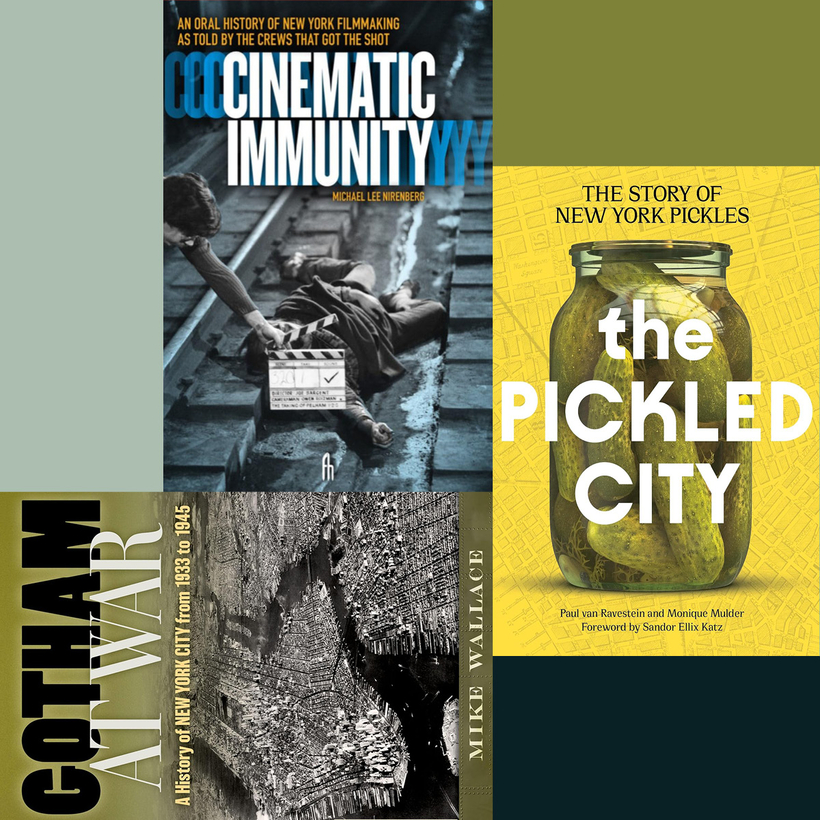
Do not pick up this book if you have to be someplace in an hour, because you won’t make it there. Michael Lee Nirenberg has put together an oral history of New York films and TV shows by the crew members that shot, lit, designed, and miked dozens of productions, from The French Connection to Network toThe Sopranos, and it is as addictive as the coke that James Gandolfini apparently consumed while playing Tony Soprano. You will learn that Sidney Lumet was considered the best director to work with, that the famed Steadicam shot in Goodfellas of Ray Liotta and Lorraine Bracco walking into the Copacabana through the kitchen took at least 15 meticulously choreographed takes, and that Michael Jackson as the Scarecrow in The Wiz had Reese’s Peanut Butter Cups wrappers covering his nose. There is plenty of tech lore about how certain shots were achieved, which Nirenberg handles without slipping into jargon, and the reader comes away with an appreciation that the real stars of these productions were behind the scenes. A revelation on every page.
Paul van Ravestein
Even if you do not love pickles, you will savor this delightful history of New York’s versions, which stretches four centuries thanks to the Dutch, who wished to preserve vegetables over the winters. The trade became a way for immigrants to make a living, and the varieties (kosher dill, sour, cornichon) reflected ethnic preferences, not to mention the spices used (garlic, peppercorns, caraway seeds, coriander). Pickling was not invented in New York City, of course (you can thank Mesopotamia in 2400 B.C.E.for that), and other American cities have embraced it (Pittsburgh even has an annual Picklesburgh festival), but the Amsterdam-based authors jubilantly explore why the Big Apple really should be called “the Big Pickle.”