
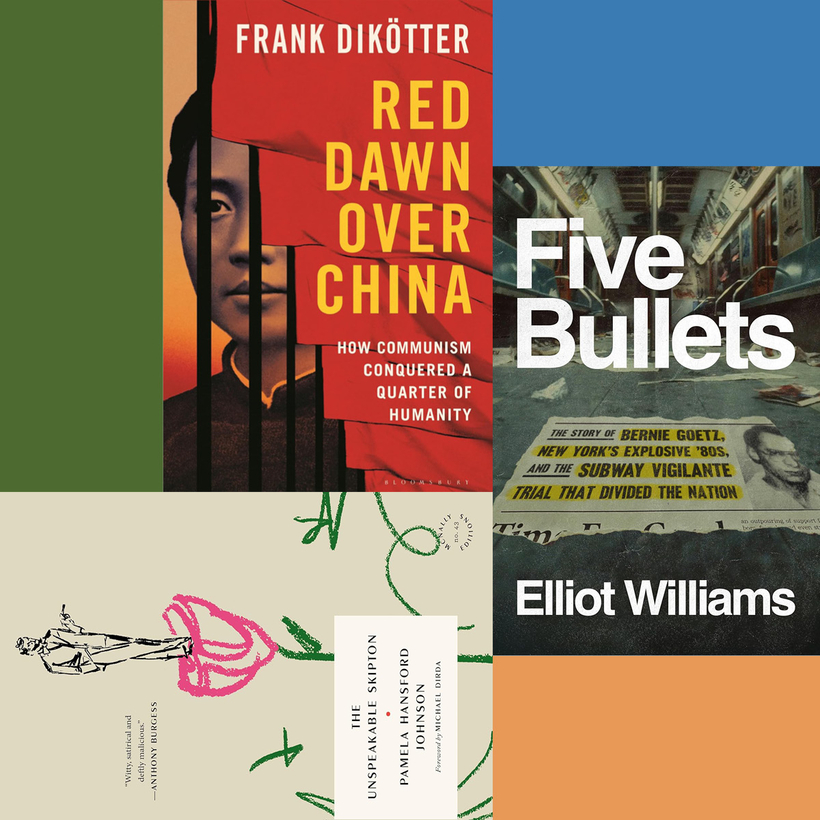
The writing of history belongs to the victors, so it is no surprise that for decades after the Communist Party of China came to power, in 1949, Mao Zedong was seen as the revered ideologue, and the man he overthrew, Chiang Kai-shek, as a corrupt Fascist forced to flee to Taiwan. What Frank Dikötter has done, elegantly and persuasively, is to blow up that myth and demonstrate, thanks to troves of official records, that beginning with its birth in 1921, the party was not so much a popular force as a cruel and poorly led one that never would have survived without Russia’s help or its own inhumane tactics. The C.P.C. has always had a fat streak of paranoia, and though this exceptional history ends in 1949, one cannot help wonder if, as he purges his top-ranked generals, Xi Jinping is not succumbing to that streak.
In the annals of urban crime, few tales are as resonant as the day in 1984 when a white man named Bernie Goetz shot four Black teenagers on a New York subway. He said they were about to mug him, they said they were panhandling, but in an era of urban fear, the question of who was most at fault split opinions across the world. Elliot Williams does a brilliant job of re-creating the atmosphere of the 1980s, including the trial of Goetz, dubbed the “Subway Vigilante” by the press, that resulted in his being acquitted of attempted murder but guilty of criminal possession of a weapon. He served eight months in jail. Five Bullets has a cast of characters—Al Sharpton, Ed Koch, Curtis Sliwa, Rupert Murdoch,Rudy Giuliani—that would make Ryan Murphy salivate, but Williams smartly stays focused on the five main characters and the legal questions raised during the trial. Four of the five men are still alive, and in a fascinating interview with the author, Goetz remains as unrepentant as ever.