
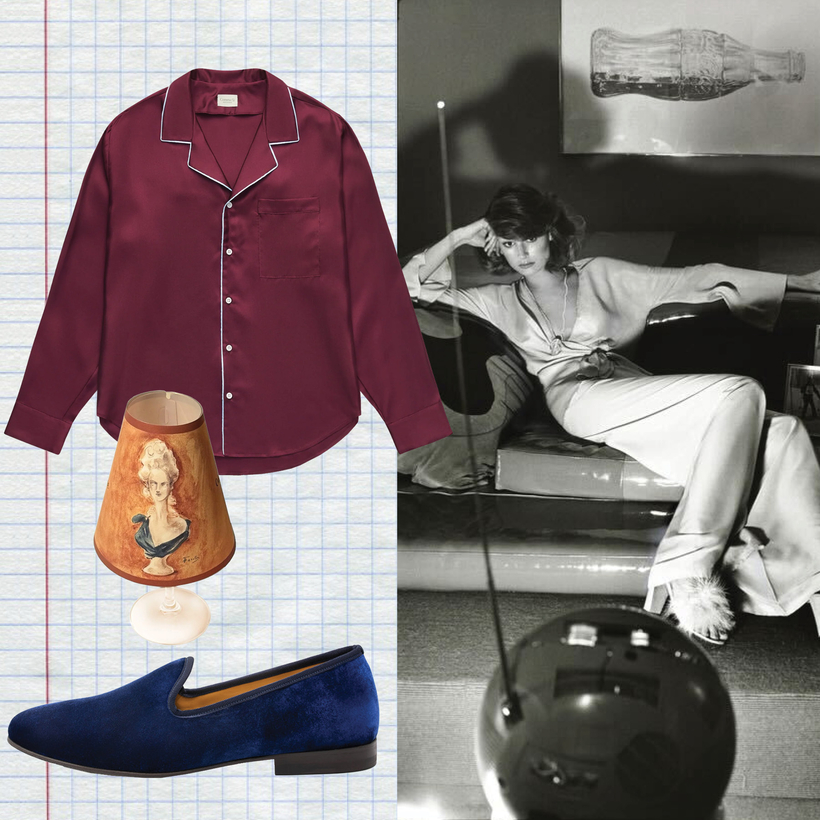

The hostess pajamas are back. If that seems trivial, your at-home priorities may require review. Let’s be clear about what hostess pajamas are not. They are not athleisure. Not sleepwear. Not the sweat-suit set you collapse into after work and immediately look defeated in. We’ve confused comfort with surrender: they’re not the same thing. Hostess pajamas are intentional. You don’t slump in them—you recline. Preferably with a drink in hand and the kind of posture that suggests you’ve just finished reading something smart and might read more.
The idea is hardly new. Coco Chanel wore wide-legged silk pajamas in her Paris apartment and was photographed lounging in them, like staying in was the most subversive thing she could do. These were garments that said, “I’m not going anywhere, and I’ve never looked better.” It was the European tradition of dressing for dinner, even when dinner was just you and a novel.
After years of toggling between rigid structure and total ease, hostess pajamas sit squarely in the middle, dressed but not dressed up. They suit the woman hosting a small dinner where four is the upper limit and everyone has already taken off their shoes. They elevate a Saturday night at home from default to deliberate. When answering the door mid-delivery, they make the courier wonder if they’ve interrupted something important.
The silhouette matters. Wide-leg palazzo trousers, or a floor-length skirt or dress that skims the ground. No ankle exposure! The fabric should drape like it has architectural training. Nothing that wrinkles the moment you sit down. The Park Ramya dress does this effortlessly in whisper-light fabric, just sheer enough to suggest you’re not trying.
The neckline should suggest discretion and taste in equal measure: a deep V, a cowl, something that implies you’ve read Colette and possibly own a first edition. No camisole required—you’re at home. Behave accordingly. The Comme Si silk pajamas understand the assignment: they channel Prada’s Spring/Summer 2008 Fairy Collection. Romantic without being precious, structured without being rigid. The kind of thing that makes you wonder why you ever wore anything else at home.
For men (hostessing knows no gender), the equivalent exists but requires slightly more commitment. A smoking jacket in velvet or heavyweight silk, worn over trousers, burgundy, navy, forest green—never novelty. The more contemporary route: cashmere trousers (the kind Jacques makes, with a straight leg and no pretense) paired with a fine gauge merino or cashmere knit. Suede slides or velvet slippers, never socks. For the particularly committed, there’s the substantial Anderson & Sheppard herringbone robe, belted and worn over a thin roll-neck and trousers. The distinction between refined and resigned is in the details, fabric that holds its shape, trousers that actually fit.
Color: jewel tones work best—emerald, burgundy, navy. Ivory works if your lighting is good. Black works regardless. Hair should be undone, not styled. Makeup, if any, should be minimal, maybe a lip. Jewelry: one good piece. A cuff. Long earrings. A signet ring. Shoes are velvet slippers, silk mules, or bare feet with a recent pedicure. And this is crucial: hostess pajamas require dim lighting. Candles. Low lamps. Overhead lighting is not a friend. The Chez Dede tabletop lampshades do this work quietly—small shades balanced on a wineglass over a tea light, creating the sort of flattering, amber glow that makes candlelight seem almost too bright.
But the real reason to own hostess pajamas has very little to do with hosting. They signal that staying home isn’t an afterthought, it’s edited, deliberate, and fully part of your life. You’re not going out because you don’t need to. You’ve created a space and a look worth staying in for.
Jennifer Noyes is the Editor and Chief Merchandiser at AIR MAIL’s AIR SUPPLY
