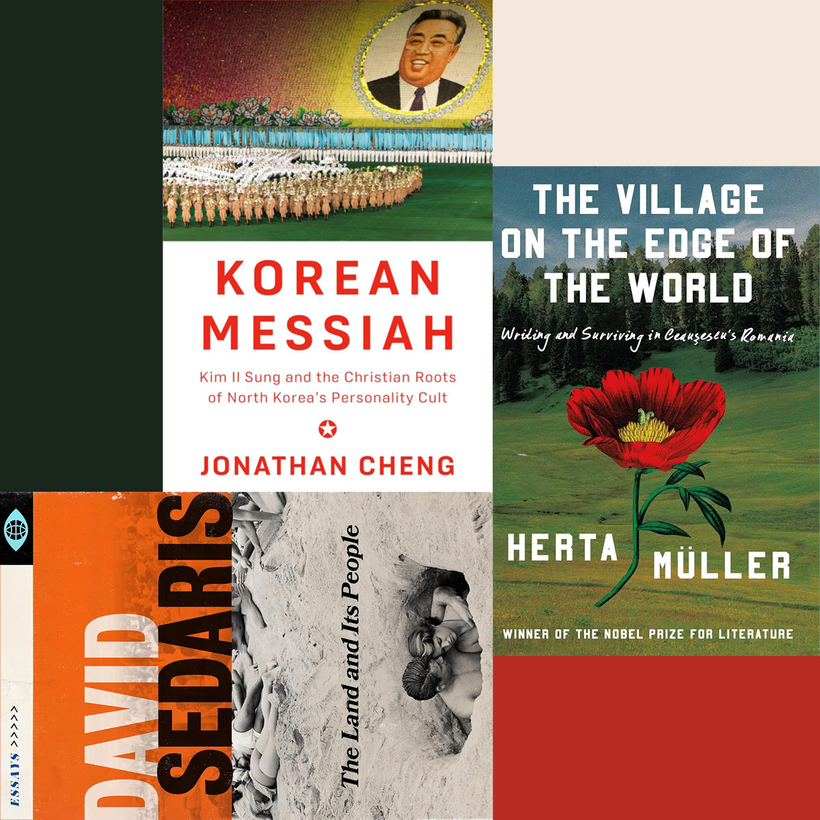
North Korea is as much a personality cult as it is a nation, and Jonathan Cheng does a masterful job explaining how the country’s founder, Kim Il Sung, pulled it off. It helped that he was the son of two fervent Christians and grew up during a period of such high missionary zeal that Pyongyang earned the nickname “Jerusalem of the East.” He knew the power of religion and that by persecuting Christians he could become a deity, even developing his own rituals and symbols. He killed millions of his citizens, but he also dramatically improved health care and education, ensuring the loyalty of those who chose to believe. The cult became strong enough to sustain both his son Kim Jong II, who ruled from 1994 to 2011, and now his grandson Kim Jong Un. Korean Messiah is equal parts enlightening and disturbing, which translates into journalism at its best.
The title of this book refers to the tiny village in Romania where novelist Herta Müller was born and lived as a young child, beaten daily by her mother for any reason imaginable: “A stain on her Sunday best, a bad mark at school, returning home with cows too early or too late.” She was not alone; most kids were beaten by parents or by teachers, just one of the many ripple effects of living under the cruel and paranoid regime of Nicolae Ceaușescu. His rule soured and distorted everything, and in this affecting memoir Müller captures the fear with clinical precision. She immigrated to Germany in 1987, where she could write her novels in freedom, and returned to her home country several times after Ceaușescu had been overthrown and executed in 1989, each visit an attempt to understand her past. Müller won the Nobel Prize in Literature in 2009, and The Village on the Edge of the Worldunderscores just how much she deserves that award.