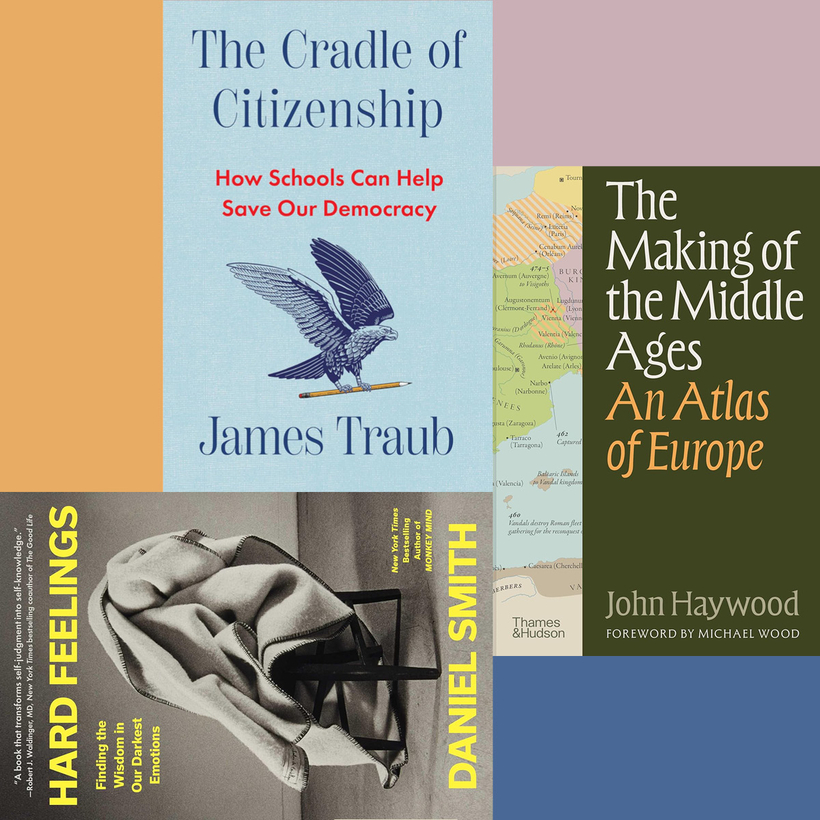
How do we go about making better citizens, Americans who know their history and the value of participating in our democracy? James Traub engagingly delivers the clear-eyed and persuasive answer: start with our high schools, and ideally by instilling a love of great books and the study of what constitutes character. To paraphrase Ralph Waldo Emerson, our goal should not be to be happy but to lead lives that are useful, honorable, and compassionate. Traub visits public schools across the country, interviewing teachers and students, most notably at what he calls the “classical school,” where Latin is taught and kids take classes in logic and rhetoric. At a Dallas-area charter school, he sees firsthand how this curriculum plays out with a less privileged student body. Certainly, detailing what a class of eighth-graders can learn by discussing Lincoln’s Gettysburg Address should give hope to those who think America has never been more disunited.
Remember when the centuries after the fall of Rome, in 476 A.D., were called the “Dark Ages,” a period of tumult in Europe that implied decline and backwardness? No historian calls early medieval Europe by that name anymore, and in this intelligent and incisive survey John Haywood explores how migration, the spread of Christianity, and the rise of Islam transformed the end of a crumbling empire into a new Europe. The author is a fine stylist with an eye for the surprising detail (raise your hand if you knew that the Irish got to Iceland before the Vikings did), but what makes this beautifully produced volume so valuable are the 90 colorful and detailed maps that bring so vividly to life the flow of history.