Skip to Content
Search results (487) for
“wine”
Coque
In 2017 the Sandoval brothers—Mario, Diego, and Rafael—moved Coque from the small village of Humanes, on Madrid’s outskirts, to the bustling city center. Seven years on, it has accrued two Michelin stars. Don’t expect to arrive and passively take a seat at a table. The experience starts in the wine cellar, where bull steak tartar is paired with a glass of champagne. You’ll then be lead into the kitchen, where you’ll be served chargrilled sea royal cucumber, a personal favorite. Finally, the dining room awaits, where the star dish—roasted suckling pig—is paired with other delectables.
La Castela
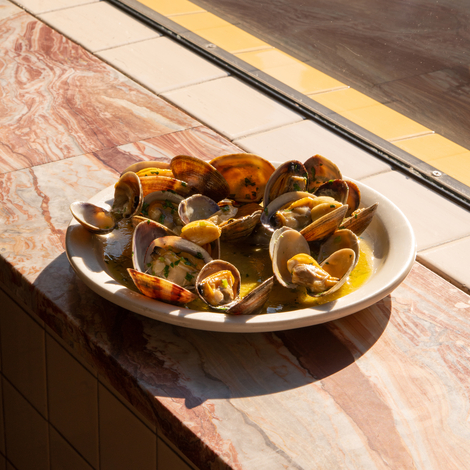
La Castela is one of my go-to restaurants. This old-school, typical Spanish tasca has an elegant marble-top bar, outdoor seating, and wine for all occasions. It always delivers, whether you’re in the mood for a casual, spontaneous lunch at the high tops or a more indulgent affair at the main restaurant. Both the restaurant and the bar are known for their tapas—chickpeas with prawns, octopus with sticky rice, eggs with beans. My personal favorites are the coquinas (Andalusian shellfish) and the croquetas, which are probably Madrid’s finest.
Charrúa Madrid
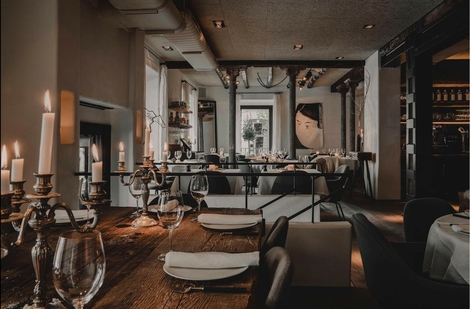
In the 16th century, the Charrúa tribe occupied the Southern coast of Uruguay. They were fierce hunters, and obsessed with fire. Perhaps for this reason, Galician and Uruguayan owners of this refined restaurant appropriated the name when they opened off the Paseo de Recoletos. Uruguayan culture centers around group asados (barbecues) paired with red wine. At Charrúa, wooden table tops play host to dozens of candles, and plants dot the room. The grilled starters—chorizo,morcilla (blood sausages), and mollejas (cow pancreas)—are not to be missed. Be sure to save room for the Lomo Simmental for the main course. And if you’re feeling brave, try Uruguay’s Garzón wine—it’s heavy on the palette, but very satisfying.
The Mahabharata of Literary Festivals
Forget glitchy microphones and cheap white wine. The Jaipur Literature Festival is the biggest and best of its kind in the world
Andrew Edmunds
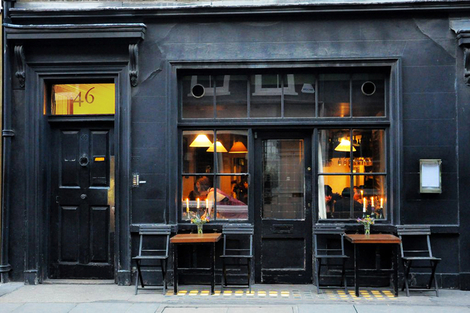
You’ve probably heard that the English aren’t known for their food, but that’s a damn lie. They are, it’s just that they’re known for it being gloriously bad. It’s telling that their biggest contribution to global cuisine is the gastropub, which, like most things beginning with “gastro,” can be off-putting. As with all rules, though, there are exceptions. The eminently snug Andrew Edmunds is one of them. Located on Lexington Street in the heart of Soho since 1985, it’s a bulwark of that neighborhood’s old school. Unlike most of the country’s pubs, and in defiance of its inky exterior, Andrew Edmunds is pleasantly lit, especially at night when candles pressed into old wine bottles give a gentle glow to buttery walls and ashen faces. The wine list is good and fairly priced, the staff amiable, and the menu, which is scrawled out by hand and changes daily, exactly what you want to eat: simply prepared fishes and meats, light salads, and deceptively flavorful sautéed greens. It all makes sense when you know that the place owes its name to the recently departed art dealer. His spirit endures by way of the steady stream of literary folk who come for the Academy Club, which is upstairs and shares a menu. And what better way to have your name live on than in one of London’s most romantic spots? More desirable than, say, having it attached to a pub called the Horse’s Ass.
Not a Rosé Future
It’s the best of times and the worst of times for the quintessential summer drink. Hotter temperatures have boosted the wine’s popularity, but they’re also threatening its vineyards
Stir Crazy
“New, good restaurants in L.A. are few and far between,” the Los Feliz-based jewelry designer Sophie Buhai told me on a recent summer evening as we walked into Stir Crazy. Buhai, it soon became clear, was not alone in singling out the intimate wine bar, which co-owners Mackenzie Hoffman, Macklin Casnof, and Harley Wertheimer quietly opened on Melrose in May 2023; nearby, similarly discerning Angelenos—Grammy-winning producer Emile Haynie; Yola Mezcal founder Gina Correll Aglietti—were also delighting in the plates of chili-laced melon, romesco-roasted zucchini, and cherry blossom-topped crudo (paired, perhaps, with an off-menu bottle of Marioni rosé) that flowed from the open-format stainless steel kitchen. Which is all to say: with its casual, European cafe-esque ambience and refreshingly light, farmer’s market-driven fare, Stir Crazy’s arrival was well worth the wait.
Night + Market
Since 2010, Kris Yenbamroong’s Night + Market has been serving inventive Thai food on the Sunset Strip, down the street from Whisky A Go Go. The restaurant, which has neon-orange walls and floral tablecloths, puts a twist on classic street dishes, from uni fried rice to lamb larb meatballs. Yenbamroong has perfected the classics, too. L.A.’s most beloved food critic, the late Jonathan Gold, praised their pad thai as “the minimal, barely sweetened version you can never find even in L.A.” Now, there are outposts in the East, in Silver Lake, and farther West, in Venice. And don’t miss the restaurant’s well-curated natural wine menu, which is among the most extensive in the city.
Roscioli
From the outside, Roscioli Salumeria con Cucina looks like a bar. Or is it a deli selling cheese and cured meats that hang from hooks? Or is it an old wine dealer? The answer is all three. Located steps from Campo de’ Fiori, it feels more like a deli with tables than it does one of the best restaurants in Rome. But that’s part of the unique vibe of the Roscioli family’s masterpiece. Once you squeeze inside, you’ll find bartenders renowned for their Negronis (no small feat in Rome), thousands of wines, and seemingly just as many food choices, all inspired by products for sale at the counter, with dishes ranging from a buffalo-mozzarella tasting menu and spaghetti alla carbonara to the lasagna di Marco, which is so comforting I want to winter inside it next year. (If you find the wait too long, check out the to-go outpost, just up the street. It sells arancini as big as oranges.)
Capo
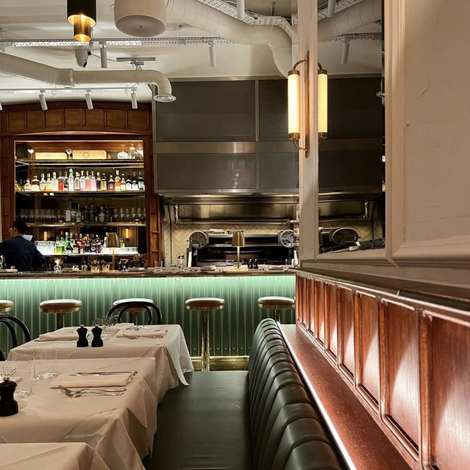
It’s unassuming from the outside, but those who know, know. A sophisticated and classic West Side spot, this is one of the few establishments in the city where the servers aren’t trying to be movie stars, because to be a waiter at Capo is a career in and of itself. Impeccable service, impeccable food, impeccable wine list. Astronomical prices. If you can’t get a table, sit at the bar by the roaring fire, which doubles as an open grill.
Lucien
Walking around downtown New York, you can spot a Lucien customer from afar. They’ll look suspiciously French, will likely be smoking a cigarette, and might be wearing a beret over their disheveled hair. This small French bistro on 1st Street and 1st Avenue is as much about people watching as it is about red wine, steak frites, and dirty vodka martinis. Tables often pile over each other (be prepared for a long wait), and on Thursday and Friday nights people stay for hours, alternating cocktails with cigarette breaks. Though the food is good, the restaurant is more about the ambiance than what’s on the menu. As any patron there knows, either you go all the time, or you don’t go at all.
Da Giacomo
Milan is not the most fabulous food city in Italy. How can it be, when ragù Bolognese comes from Bologna, pesto from Genoa, pizza from Naples, cacio e pepe from Rome, and the greatest Italian wines from the vineyards near Alba? Nevertheless, among my all-time favorite restaurants is Da Giacomo, a deceptively simple fish restaurant. Here, the variety is endless, the cooking perfect, and the proprietors generous. The building is very old, the fish (sea bream, sea bass, turbot, john dory, snapper, seabream, and scorpion fish, to name a few) extraordinarily fresh and thoughtfully prepared, and the staff particularly kind to travelers. This is currently my second-favorite seafood restaurant on earth. Also wonderful, and even more charming, is Da Giacomo’s pastry shop, just across the street from the restaurant.
Dorian
Notting Hill is known for its iconic Portobello Road Market, its cheerfully colored residences, and, subsequently, for the massive number of tourists looking to shop, snap pictures, or perhaps find love in a Julia Roberts-and-Hugh Grant kind of way. But, by dinnertime, all that is left are the hungry locals making their way to chef Max Coen’s renowned wine bar and restaurant. Located at Talbot Road just a stone’s throw away from the Portobello Road Market, Dorian is known as a “bistro for locals.”
The Four Horsemen
Nestled in Brooklyn’s Williamsburg, the Four Horsemen is a culinary oasis, with dishes ranging from nori fritters with parmesan to Dungeness crab with daikon radish, garlic, and chives. The menu showcases seasonal variety with an emphasis on putting produce first, while the intimate, cozy ambiance sets the mood for memorable evenings and makes for a perfect date-night spot. The wine list is just as exciting as the food—especially if you’re a natural-wine lover—and the staff is both charming and knowledgeable. Be sure to stop by Night Moves, the restaurant bar next door, for a nightcap.
Le Bernardin
This four-star fish restaurant has made it to 40 by maintaining its exceptional
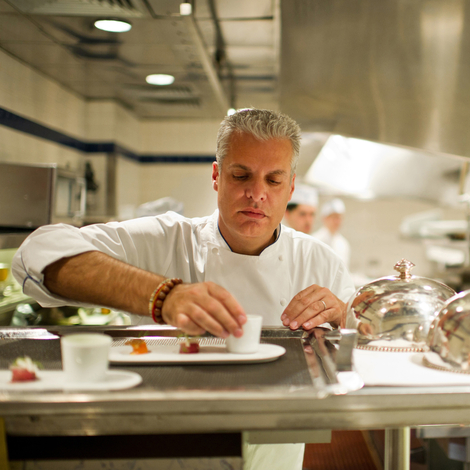
standards in food and service—and by staying curious. Chef Eric Ripert continuously channels his world travels into new dishes while freshening up the few classics that remain (for good reason). Wine Director Aldo Sohm is constantly exploring, as well-versed in white Burgundy as he is in obscure Spanish varietals. (I’m biased, having written Wine Simple with him in 2019. Then again, I’m doubly biased, having written On the Line: Inside the World of Le Bernardin with Chef Ripert.) And founder Maguy Le Coze shows the kids how a real restaurant is run. Dining here, whether in the well-spaced dining room or—my preference in recent years—tucked into the plush lounge, you’d never know that professional service is essentially a thing of the past.
Sant Ambroeus Soho
Those who don’t like Sant Ambroeus will dismiss it as Euro-trashy. Yes, there’s a lot of sunglass-clad people out front wearing flashy watches, but there’s a reason for that. In a city where you’re used to hearing a lot of “we need the full party here to seat you at this time,” Sant Ambroeus is always welcoming—a slow-paced European haven in an otherwise fast-paced city. The managers remember people’s names, and, unlike at many other Italian restaurants in New York, the pasta here is made with semolina grain and there’s no use of butter or cream, just olive oil. We recommend the rigatoni strofinati, the veal milanese, and the vitello tonnato. The cocktail list is plentiful, the martini perfect, and there are great Sicilian wines on the menu. The terrace, on Lafayette Street, is probably the best place to sit in the sun in all of downtown New York.
King
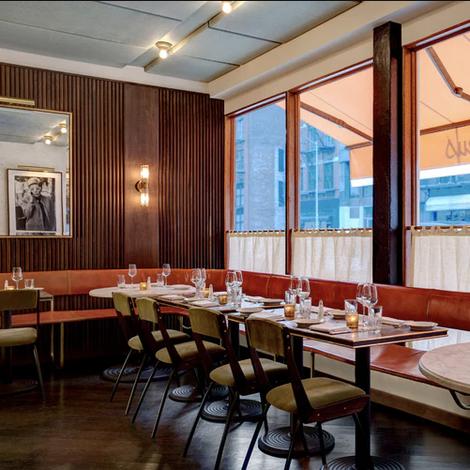
King remains one of New York’s subtlest, and most satisfying, restaurants. Young London chefs Jess Shadboldt and Clare de Boer bring their River Café training to the plate with daily-changing Italian dishes like beef grilled over rosemary branches with favas, wild herbs, and horseradish cream; supple pasta with fresh peas and speck; a proper torta di noci; and a Nemesis-leaning chocolate cake. Co-owner Annie Shi’s wine list continues to deepen and delight. And the no-frills dining room, designed on a shoestring by de Boer’s mother, is just right. It’s especially lovely during Sunday lunch, when the sun slants in just so.
Huitrerie Régis
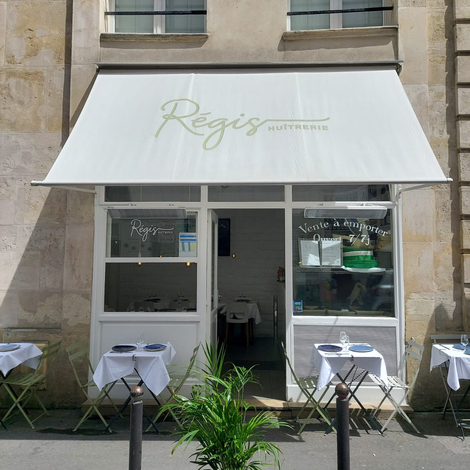
Sometimes, all you want to pair with whatever you’re drinking (which, in France, should take the form of a crisp white wine or champagne) is a tower of oysters which you can satisfyingly swallow whole before turning the shells back over onto the ice. This vest-pocket-sized bar in Saint-Germain-des-Prés is a charming place to do just that after a long day perusing the shops. There are just a handful of charming tables with white table cloths, white chairs, and walls in white brick. The waiters speak English here, and are very kind—a rare feat in a Parisian restaurant. The oysters are the main draw, and some of the freshest in the capital, but don’t miss the prawns or the sea urchin, either.
Hotel Plaza Athenée
You can’t really discuss hotels in Paris without at least mentioning the Hôtel Plaza Athénée. It opened its doors in 1913, the same year the Théâtre des Champs-Élysées opened on the Avenue Montaigne. Soon afterwards, a crowd of sophisticated regulars flocked there, including Marlene Dietrich, Rudolph Valentino, and Christian Dior, who were known to stop by for a glass of wine or two. Though the hotel underwent a massive, $268 million renovation in 2013, it has retained its classic French interior design. There’s a new bar, ballroom, and much else. Pas mal.
Cervo’s
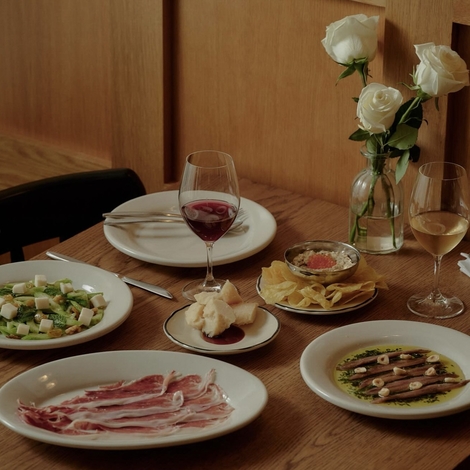
Located smack in the middle of the city’s popular Dimes Square neighborhood, Cervo’s is often overshadowed by Dimes and Corner Bar to the East, Clandestino bar to the West, and Kiki’s just south. But not to step into this small, low-ceilinged, utterly charming Portuguese-Spanish restaurant with dimmed lights, flickering candles, tiny tables, and a bar that transforms into an open kitchen, would mean missing out on something special. The place is always great, but feels particularly cozy on cold winter nights. We suggest pairing the clams in wine sauce, crispy shrimp heads, and piri piri chicken with whatever sherry the waiter recommends.
L’Avant Comptoir du Marché
In Paris, it can be hard to find a restaurant that’s open until 11 P.M. Or seven days a week. Or a place where you can have a few perfectly executed snacks and a glass of wine and be on your way. It’s all possible at Yves Camdeborde’s profoundly casual wine bar, where stools and high tables line the corner of the Marché Saint-Germain, inside and out. The extensive chalkboard menu can overwhelm. Keep in mind Camdeborde’s dedication to artisanal pork products and exceptional seafood (especially raw), and you can’t go wrong.
Le Bon Georges
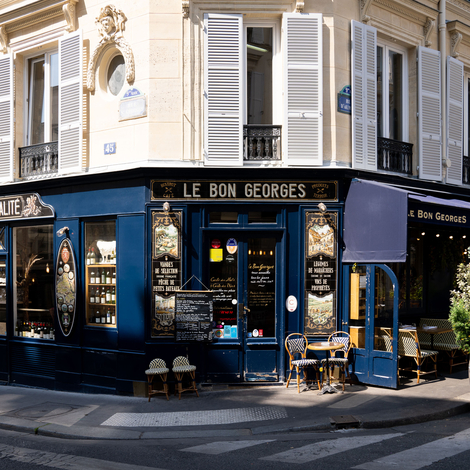
Sometimes, in Paris, all you want is a quintessential bistro—an outstanding wine list, a steak tartare, and homemade frites. Enter Le Bon Georges. It’s just a few steps away from the Rue des Martyrs, in the ninth arrondissement. The owner, Benoit Duval-Arnould, got his start as an agricultural engineer before opening this restaurant in 2013. After the tartare, make sure you try the gratin dauphinois. There are over 2,000 wine bottles in the cellar, so you’ll find there’s nothing lacking in that department, either.
Petersham Nurseries
Petersham Nurseries used to be the site of a 17th-century hunting lodge in Richmond before it became the Boglione family’s home in 1997. They still live there today, amidst an eclectic art collection, which comprises work by Anselm Kiefer and Paula Rego. When the adjacent nursery went up for sale, Francesco Boglione purchased it, and, in 2004, the family transformed their backyard into a restaurant, delicatessen, wine cellar, and florist. The Mediterannean menu is satisfying (we recommend the vegetables, which are as fresh as you can get), but the main draw of the place is its cool—imagine sitting in a friend’s garden, and then imagine that the garden has all the trappings of a restauraunt. It’s a great place to spend a lazy weekend afternoon.
Graham Veysey
The design entrepreneur reimagining Cleveland with sleek apartment buildings, canned wine, and the best deli in America