
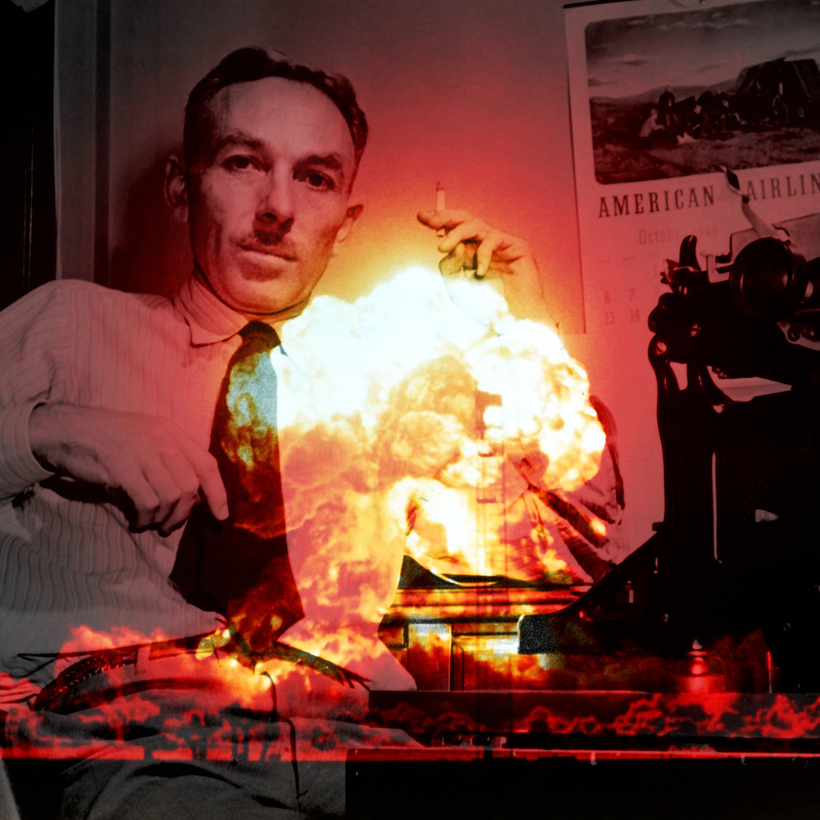

Following Japan’s surrender to the Allies on August 14, 1945, newspapers across the U.S. and around the world feverishly reported on and celebrated the nuclear bombs that had destroyed Hiroshima and Nagasaki, and the once secret Manhattan Project operation that had conjured up those brand-new mega-weapons. At that point, few journalists delved into the profound implications of humanity’s entrance into the atomic age.
E. B. White—then a longtime staff writer at The New Yorker, although now perhaps best remembered as the author of the children’s classics Charlotte’s Web and Stuart Little—was not among the giddy celebrators. America had indeed ended a global war with the atomic bomb, he wrote in an August 18 Notes and Comment column, but it had also instigated a “complete human readjustment.” Although the war had concluded just three days earlier, that conflict already belonged to another epoch. A new era of unfathomable peril had begun. Mankind was, he wrote, “stealing God’s stuff.”