

I am more or less always listening to music, yet I’ve never been able to bring myself to invest in high-end headphones. Whether it’s Apple, Beats, or Bose, I find the most ubiquitous examples in that part of the market to be simply too ugly. My prayers were finally answered by London-based electronics company Nothing, which released their instant-hit Headphone (1) model last year. Much like their flawless smartphone designs, the striking look of these headphones uses hardware-exposing transparency in the shell, not dissimilar to my beloved Atomic Purple GameBoy Color, the original iMac, clear Swatches, and other such glorious Y2K-era artifacts. (God, remember when tech actually inspired?) The Headphone (1) has everything you’d want in 2026—adaptive noise cancellation, app-based EQ control, Find My support, and so forth. And if you need any more convincing, they’re a favorite of Charli XCX. ($299, us.nothing.tech) — Spike Carter
subscribe
Heywood Hill
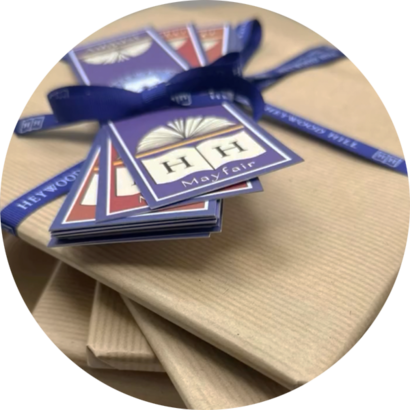
Heywood Hill, the storied Mayfair bookstore known to be the favorite of magazine royalty (Graydon Carter, Anna Wintour) and actual royalty (Queen Elizabeth II, Queen Camilla, both of whom awarded the shop the Queen’s royal warrant), is offering a new iteration of their popular gift book subscription. Called Refused to Be Scared, the subscription offers 12 books hand-selected by writers and journalists including Patrick Radden Keefe, Kara Swisher, Walter Isaacson, and Tina Brown. The books, which skew toward nonfiction, arrive in pairs, six times throughout the year, accompanied by the usual Heywood Hill accoutrements: brown-paper-and-blue-ribbon wrapping, bookmarks and bookplates designed by Cressida Bell, and titillating anecdotes from the bookshop’s rich literary history. ($262, heywoodhill.com) —Paulina Prosnitz

read
Plunkitt of Tammany Hall
George Washington Plunkitt may not be the most corrupt politician in New York’s history, but thanks to a diligent reporter named William L. Riordon, who collected his words, he is surely the most quotable corrupt politician. Published in 1905, Plunkitt of Tammany Hall remains an instructive text on not just how machine politics worked in the late 19th century but on how there is something eternally true in Plunkitt’s most known quote: “I seen my opportunities and I took ’em.” He loved patronage, thought the civil service was ruining the country, and made some not very fine distinctions between honest and dishonest graft. There are many versions of this classic volume, but this new edition, brilliantly annotated and with a fascinating introduction by Kevin W. Hula and Douglas B. Harris, is the one to buy. ($31, cornellpress.cornell.edu) —Jim Kelly
cut
Florentine Kitchen Knives
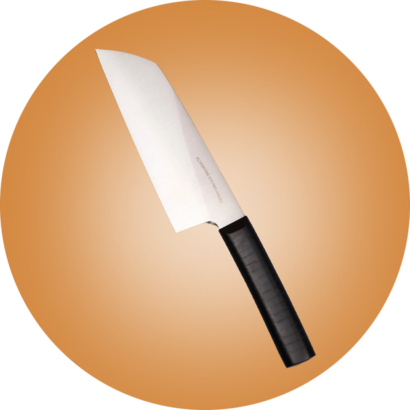
I have no business (and even less desire) to be in the kitchen, but these Spanish knives make a compelling case for more time at the cutting board. Florentine Kitchen Knives, based out of Barcelona, makes its blades by hand from high-hardness stainless steel, and with black leather handles, they’re the kind of knives that get passed down rather than thrown out. The colorway options alone look considerably better than anything I’ve ever had in my drawer. (florentinekitchenknives.com) —Catherine Scott

watch
The Cabinet of Dr. Caligari
Don’t let this silent film’s 1920 release date deter you: The Cabinet of Dr. Caligari will have you at the edge of your seat. Directed by Robert Wiene and set in a nondescript German town, this seminal horror classic recounts the tale of the eccentric Dr. Caligari and his somnambulist, Cesare. After a gruesome series of murders, the town begins to suspect the mysterious pair. The set design is intricate and distorted—visible paintbrush strokes, acute angles, crooked lines—lending the film a surreal quality and supporting its cast of expressive actors, exaggerated costuming, and eerie makeup. Reconstructed by the Bundesarchiv-Filmarchiv of Germany, the film is divided into acts and retains the original abstract intertitles, which contribute to its unsettling mood. At one hour and 20 minutes, this prime example of German Expressionism leaves its audience with disquieting visuals and a twist. (amazon.com) —Eve Eismann

cook
Lebanon
“Summer is such a rich season for cooking Lebanese food, because our kitchen contains so many salads and grain and vegetable dishes, just the sort of food that tastes really good on a hot day,” says Anissa Helou, the renowned food writer and chef. Just released, the beautifully photographed Lebanon: Cooking the Foods of My Homeland is Helou’s 10th cookbook. Between the lines, it’s also a fascinating and poignant memoir which tells the stories of three strong women—the author, her mother, and her Syrian aunt (Helou’s father was Syrian), all of them exceptionally talented cooks. “They were my mentors,” she adds. Let her become yours, and that of a friend or two, too, since this book makes an ideal house gift as summer approaches. ($50, amazon.com) —Alexander Lobrano