Many of the world’s pioneering camera companies were located in Germany, where brands such as Voigtländer, Zeiss, Goerz, and Leica were all established before the First World War. But it wasn’t until the creative chaos of the Weimar Republic that Germans really figured out what to do with their cameras. That period gave the still-emerging discipline of photography the giants August Sander, creator of analytical but humane portraits, and Albert Renger-Patzsch, who could make flowers look like animals and factory floors look like forests.
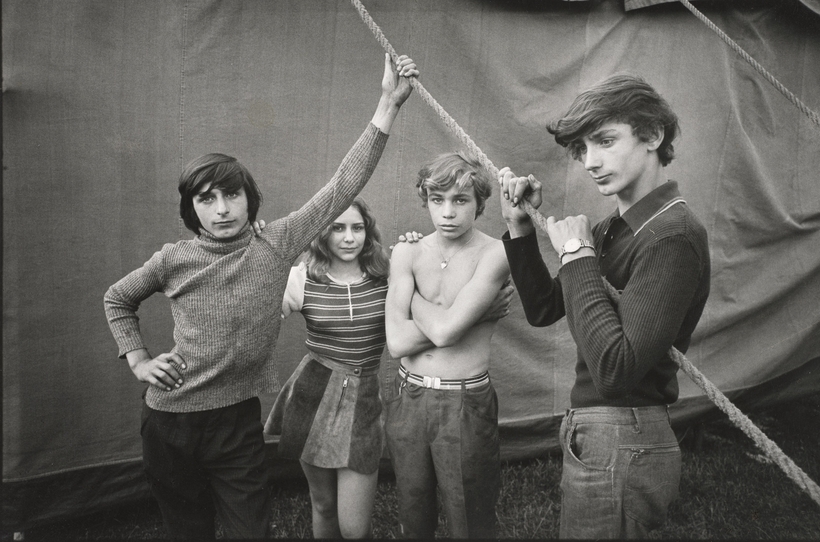
Those Weimar masters bore fruit in the mature careers of Bernd and Hilla Becher, the postwar Düsseldorf duo who blurred the line between photography and conceptual art with their gray-on-gray depictions of industrial architecture. The Bechers, in turn, taught and inspired the next generation of German artists, greats of contemporary photography like Andreas Gursky, Thomas Struth, and Thomas Ruff. During the latter decades of the Cold War, before the demise of the Soviet Union in 1991, a divided Germany fostered a number of remarkable if lesser-known figures, and they are the collective subject of an exhibition that opened last week at Cologne’s Museum Ludwig.