

New York Review Books has done the world a solid by republishing Nancy Lemann’s 1985 cult novel, Lives of the Saints. Written when Lemann was just 28, the debut describes a New Orleans of languid hedonism and antebellum manors and sensual bamboo groves populated by an ensemble of gentile southerners, all seemingly on the verge of “breakdowns.” At the center is Louise, who has recently returned home from college, and Claude Collier, a heroic but self-loathing “wastrel youth” prone to “catastrophes.” Phrases are repeated in a hypnotic rhythm, the words themselves unexpected. Rain slashes into azaleas, sidewalks steam and mist. It’s also laugh-out-loud funny at times—but as Geoff Dyer aptly notes in his introduction to the new edition, “funny novels are invariably more serious than humorless ones.” ($16.95, nyrb.com) —Paulina Prosnitz

read
Vermeer
For two centuries after his death, in 1675, Johannes Vermeer was pretty much a forgotten artist; it took a French critic in the mid–19th century for the world to re-discover the painter, and ever since we have been seduced by his works, which often depict women lost in their tasks at hand and caught in wondrous light. What Andrew Graham-Dixon does in this beautifully produced book, Vermeer: A Life Lost and Found, is just as magical. He brings Vermeer out of the shadows and illuminates why he painted what he did and what the paintings actually mean. You will never look at Girl with a Pearl Earring again without thinking of Mary Magdalene. ($45, amazon.com) —Jim Kelly

sip
Blunk Shop
Sculptor JB Blunk was one of California’s greatest back-to-the-land and made-by-hand artists. His study of Zen Buddhism enabled him to channel the deepest wells of inspiration, and his remarkable work’s legacy has only grown posthumously. Blunk’s daughter, Mariah Nelson, is director of the estate and runs Blunk Shop, which sells superlative artisan reproductions of her father’s pieces. The exquisite Blunk Cups, now in their second edition and made in collaboration with Oakland designer Stephanie Intelisano, are smooth to the touch and retain the silhouettes and details of Blunk’s originals. And while you’re at it, add a copy of Leonard Koren’s Undesigning the Bath to your cart, a long out-of-print gem reissued by Blunk Books, featuring wonderful photos of and thoughts on baths from the man behind WET: The Magazine of Gourmet Bathing. ($90, blunkshop.com) —Spike Carter
watch
Reefer Madness
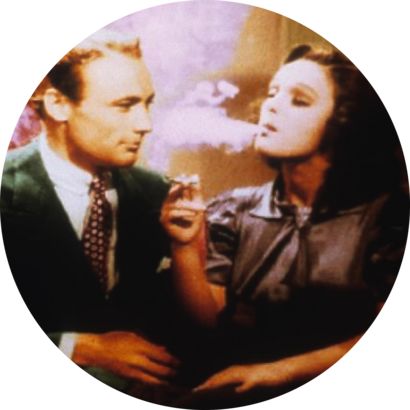
Despite its intention to scare teenagers straight, Reefer Madness is best watched high. The 1936 propaganda film—originally titled Tell Your Children and funded by a church group—opens with a Star Wars–style scrolling prologue declaring marijuana “a violent narcotic—an unspeakable scourge—The Real Public Enemy Number One!” What follows is a fictionalized cautionary tale, framed as a lecture to concerned parents, in which a group of teens smoke weed and promptly spiral into murder, attempted rape, and “shocking violence!” To the contemporary viewer, the hysteria is so extreme it reads as satire—which is exactly how college audiences received it when the film was re-discovered in the late 60s and 70s. The cross-fade montages and dizzying marijuana smoke sealed its fate as a midnight-movie staple, and by 1972, NORML was using it as an ironic rallying cry for legalization. Nearly a century later, it remains a must-watch on 4/20. (youtube.com) —Eve Eismann

shop
La Ligne
It’s been 10 years since La Ligne made the striped sweater feel like a personality trait and quietly revamped the modern basics. To mark the milestone, the brand isn’t indulging in nostalgia so much as refining it with its Perfect 10 Capsule Collection: a greatest-hits lineup of tailoring, shirting, denim, and knitwear that still holds up. There’s a well-cut suit, a practically perfect shirt, a robe that reads more “out the door” than “off duty,” and jeans that split the difference between polished and casual. Fronting it all is Connie Britton (forever Tami Taylor), who gives a master class in looking better, not louder, with time. Call it a throwback, if you must. More accurately, it’s proof that some things are worth repeating. (lalignenyc.com) —Jennifer Noyes

listen
Ambiguous Desire
To be lost on the floor of a nightclub, dancing without abandon, is a euphoric feeling I wish I could bottle up forever. Luckily, Arlo Parks has done just that. Inspired by dancing in New York City clubs like Nowadays and Basement comes her new album: Ambiguous Desire. The tracks pulse with grounding bass yet delicate synths. It’s reminiscent of the sobering comedown at five A.M. when daylight approaches, the music softens, and the party is at the beginning of the end. The entire album is a head rush of ethereal adrenaline, but I have “Heaven” on repeat, a track inspired by a night of dancing at Brooklyn’s Under the K Bridge. (spotify.com) —Maggie Turner