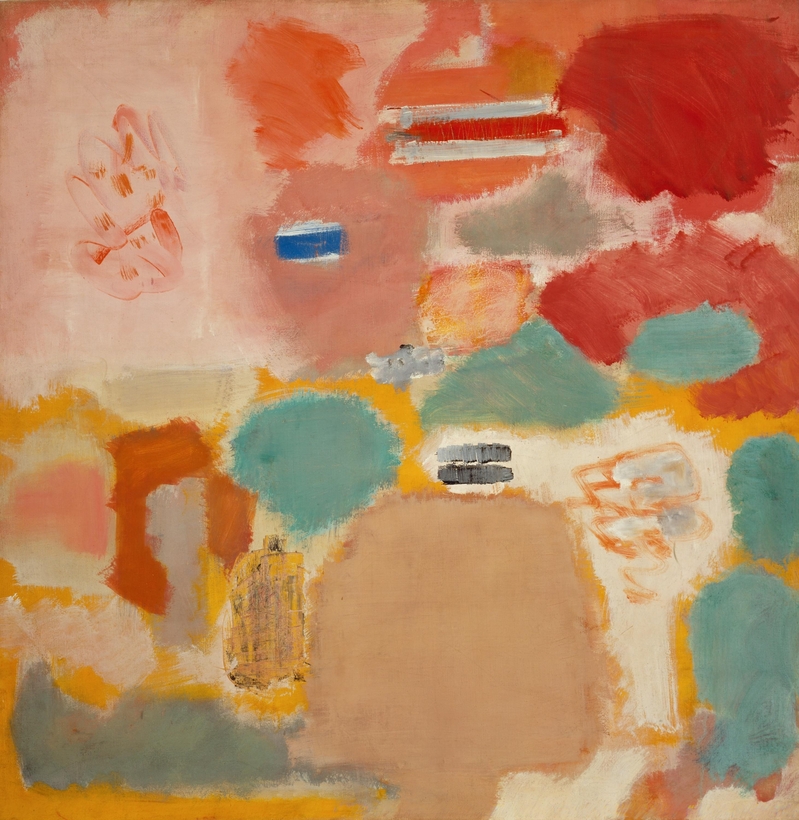

Writing from the French Riviera in the spring of 1950, Mark Rothko confided to his friend the sculptor Richard Lippold, “I am still looking for the fabulous, which they say I will find in Italy.” Rothko was 46 and in the middle of a five-month European tour. Organized by his wife, Mell, the trip was meant to help him recover from a nervous breakdown brought on by his mother’s death, in 1948. His work, too, had recently—and momentously—changed. Rothko was now painting his breakthrough color-drenched abstractions.
Left cold by the grand museums of Paris, Rothko yearned for art that might transcend his sense of institutional ennui. In war-scarred Florence, he found the “fabulous.” It was there among Fra Angelico’s light-filled murals in the monks’ cells of the Museo di San Marco, and within the niched and portaled spaces that Michelangelo designed for the Biblioteca Medicea Laurenziana.