

Last December on the Côte d’Azur, guests at Lily of the Valley, a sea-facing wellness hotel near St. Tropez, sat outside on the sunny terrace having lunch. They were dressed in light sweaters and thin jackets. After 30 minutes in the warmth, a layer came off.
It was hard to imagine that London—a two-hour flight away—was being pummeled with rain. Though the French Riviera has become known as a summertime hangout, where super-yachts crowd the bays, it was historically a wintertime destination.
Between the late 1800s and the 1920s, travelers from northern Europe would descend upon the coastline as a cure for illnesses like consumption (tuberculosis) and “nervous” disorders. Hotels—such as the legendary Hôtel du Cap-Eden-Roc, founded in 1870 in Antibes, the Grand-Hôtel du Cap-Ferrat, and Nice’s Le Negresco—initially opened for clientele seeking winter sun.
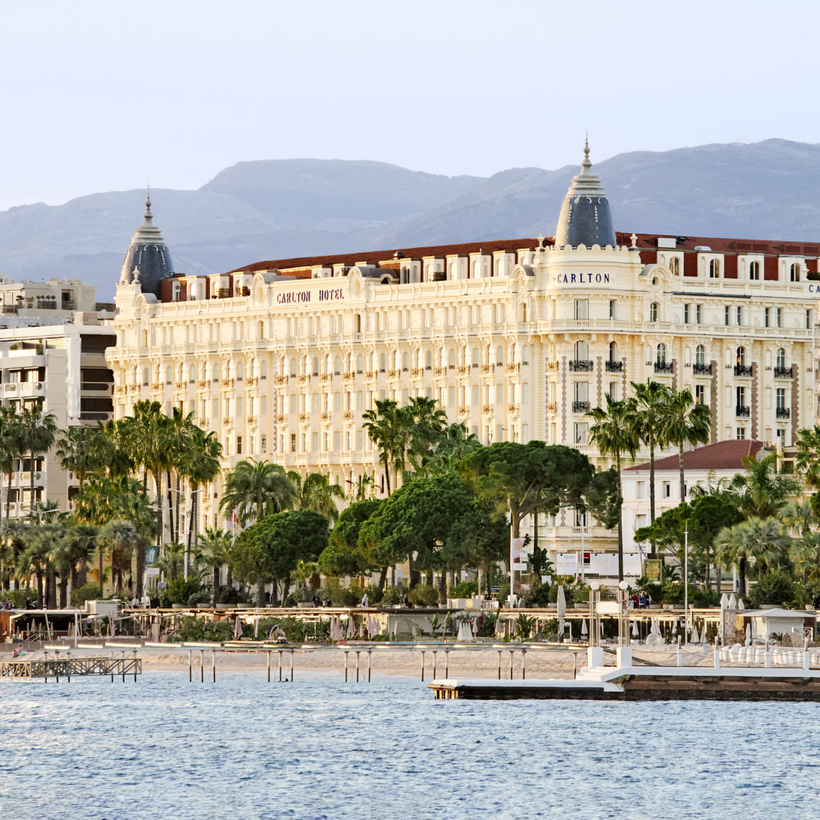
Today, the Côte d’Azur is quietly re-emerging as an escape from the cold. “We are absolutely seeing a rise in winter travel, with guests increasingly choosing the French Riviera as a purposeful cold-weather destination rather than a seasonal alternative to summer,” Pierre-Louis Renou, the general manager of the Carlton Cannes, says, noting that the hotel’s swank renovation in 2023 further drove demand. Last year, the nearby Hôtel du Cap-Eden-Roc (now open only in the summer) unveiled Villa La Guettière, a nine-bedroom art-filled home that’s open year-round to meet guest demand. Lily of the Valley has also seen an uptick in off-season guests. “The Carlton Cannes was originally conceived as a winter destination prior to the 1930s,” Renou says. It “makes today’s resurgence feel both timely and authentic.”
According to the Nice Côte d’Azur official Web site, there was a 10 percent increase in overnight stays in Nice during the 2025–26 season (compared to the previous winter) and a 20 percent increase in online searches for the French Riviera in the wintertime.
No wonder people flock here from December through February, when most of the Northern Hemisphere is either gray or frozen over. Lily of the Valley’s general manager, Stéphane Personeni, explains that this stretch of coast receives little rainfall. When the mistral blows through, it scours the sky to a crystalline blue, and by late February the hills ignite with mimosa—the electric yellow bloom that once lured Picasso and other modernists south. Daytime temperatures hover between a mild 50 and 57 degrees Fahrenheit. Earlier that morning, some guests at the hotel did a sea-wading class, where, clad in wet suits, they bounced around in brisk water doing aqua aerobics under a blue sky.
The demand for winter travel is driven by a few factors, including soaring summer temperatures in southern Europe. “People now travel more throughout the year, often working remotely, and are less constrained by traditional holiday calendars,” Lucie Weill, founder and owner of Lily of the Valley, adds. The off-season also presents a calmer atmosphere where roads aren’t jammed with traffic, and you don’t have to fight for a spot at the bar for your glass of rosé. “The atmosphere is more contemplative, and the landscapes take on a different, softer beauty,” says Weill.
Nowhere is the shift more visible than in Nice, where winter brings a flurry of new offerings. One coveted new destination is Hôtel du Couvent, set in a meticulously restored convent that has been overhauled into a hotel and features an old-school wood-clad herbalist shop and underground Roman baths.
On bright Sunday mornings, the promenade is crowded with runners and walkers. Some even dash across the pebbled beach for an icy dip. In the evenings, when the temperature drops, restaurants such as Le Bistrot des Serruriers and the Michelin-starred Restaurant Jan fill with patrons, settling inside for a cozy meal and a glass of Châteauneuf-du-Pape. It’s also peak sea-urchin season, when briny plates of oursins arrive cracked open on silver trays.
Myriam Kournaf-Lambert, the general manager of the Hôtel du Couvent, adds that culture is another reason the city is in demand, with museums such as Musée Matisse and the Musée National Marc Chagall. It’s “the second destination in France for museums, after Paris,” she says.
And if you decide you do want a wintery fix after all, there’s that too. With resorts such as Isola 2000 and Auron, all an hour away, you can easily hit the slopes. “Some beautiful ski resorts [are] only 45 minutes from Nice,” says Kournaf-Lambert. “You can ski in the morning and enjoy the beach in the afternoon, which is pretty cool!”
Mary Holland is a New York–based writer who contributes to the Financial Times, The Wall Street Journal, and Monocle