
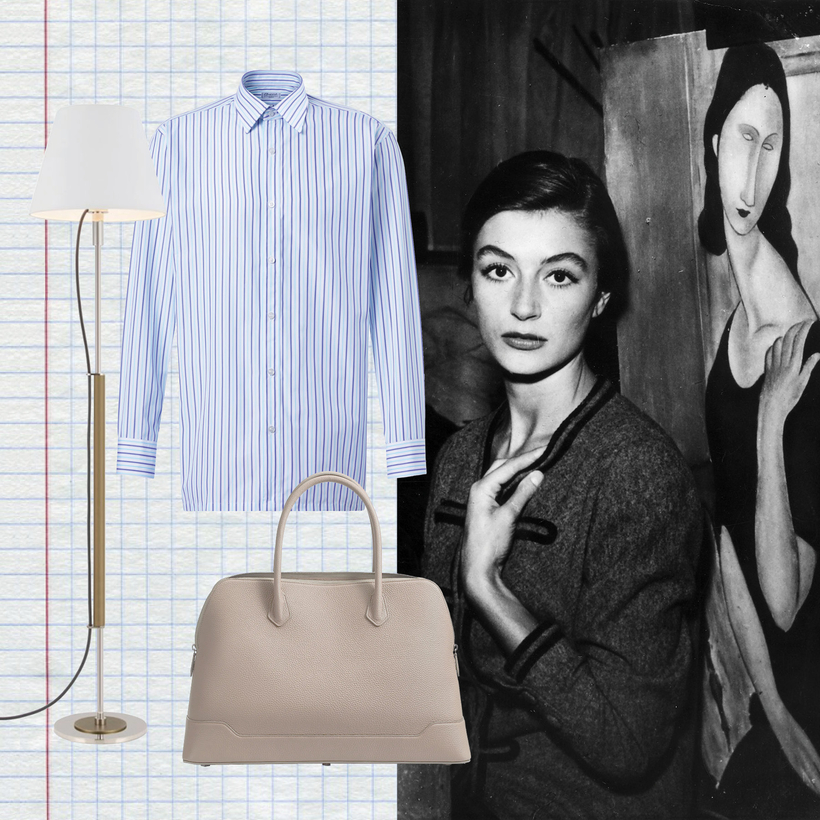

“Intentionality” has become a buzzword. Wellness influencers chant it. Marketing copy editors scribble it. It’s been lumped in with cringey manifestation journals and unthinking gratitude practices to mean something spiritual and aspirational and—most often of all—vague. But intentionality, properly understood, is not any of these things. It is the difference between choosing thoughtfully and defaulting to what’s easy, expected, or trending. It’s consideration without self-consciousness.

It’s finally admitting you don’t need the drawer full of gadgets that promise to save you 15 minutes: the herb scissors, the avocado slicer, the immersion blender you used once when you decided you were “getting into soup.” It’s choosing the mortar and pestle that lives on your counter (the one you actually use, and that also happens to be beautiful) instead of the drawer of single-purpose tools you forget you own. It’s the act of being deliberate in what one does.

This is often confused with perfectionism, which is something else entirely. Perfectionism is exhausting and joyless. It’s the living room with the carefully styled shelves, the books turned just so, the objects spaced exactly right, and the white bouclé sofa nobody is allowed to sit on. It mistakes control for care and collapses under its own demands. Intentionality is lighter. It reflects clarity, not fear. It allows for imperfection, but not for negligence. The goal isn’t flawlessness; it’s coherence.

Similarly, minimalism promises freedom through subtraction, but often delivers just another set of rules to obey. It has become its own form of excess—deprivation re-framed as virtue. It’s the five basics that go with everything: the straight-leg jeans, the blazer, the black trousers, the white shirt, the perfect T-shirt. And yet every morning still feels like starting from nothing. You don’t need fewer objects; you need objects you chose with care.

You can see intention most clearly in how people dress. The intentional wardrobe isn’t sparse; it’s decisive. The coat you saved for because it would last a decade. The trousers you altered because “almost” doesn’t count. The sweater you chose for longevity rather than novelty. Not less, but better—and worn often. Knowing the difference between “I need a coat” and “I need this coat” is the point.

The same logic applies to the kitchen. One good knife instead of an impressive block set. The coffee method you actually use, not the machine you thought you should want. Tools chosen for daily life. Or in the living room, it’s one lamp that enhances the space rather than five that just fill it. A chair with a history instead of a duplicate of everyone else’s. Books that have been read—or will be—rather than shelved for effect. Intentionality extends to setting the table when you’re alone. Writing thank-you notes on paper because some gestures deserve friction. The ability to turn daily life from something rushed into something considered.

At its core, intentionality asks uncomfortable questions: Do I actually like this—or just the idea of liking it? Does it belong in my life, or in someone else’s? We live in a culture optimized for speed: one click, same-day delivery, infinite scroll. But frictionless living erodes thought. Pausing has become a radical act. Intentionality isn’t about getting everything right. It’s about choosing consciously, again and again, until your life feels less like something that happened to you and more like something you built on purpose.

Jennifer Noyes is the Editor and Chief Merchandiser at AIR MAIL’s AIR SUPPLY