
Dealing with Lawrence Schiller—improbable, inescapable, impossible to define—can be exhausting, as can writing about him. Depleted one night by unending battling and bargaining while profiling him for Vanity Fair in 1996 following the O. J. Simpson trial, in which he’d played a crucial behind-the-scenes role, I sought refuge in cable TV, watching Muhammad Ali refight Joe Frazier in the notorious “Thrilla in Manila” from 21 years earlier. And there at ringside, his good eye peering through his Rolleiflex, was Schiller. When the memoir of Schiller’s I worked on—possible titles included “The Original Zelig” and “The Lies I Told to Get the Truth”—failed to sell, I was disappointed, but also relieved. I still think, though, that passing on the project constituted myopia, if not malpractice, on the part of book publishing.
For no one had ever lived a life like Schiller, who, as a photographer, book packager, filmmaker, and indefatigable operator, leapfrogged from celebrity to celebrity, saga to saga, scandal to scandal, attaching himself to everyone from Lee Harvey Oswald to Marilyn Monroe to Charles Manson to Patty Hearst to Norman Mailer, with whom he had—“enjoyed” wouldn’t be quite right—the most bizarre and productive literary collaboration ever.
Lawrence Schiller was born on December 28, 1936, in Brooklyn, where Mailer, 13 at the time, had lived since he was 5. Schiller was about that age when he looked up the dumbwaiter in his apartment building the moment a neighbor threw an umbrella down; it cost him his left eye.
In 1942 the Schillers moved to San Diego, where Schiller’s father ran a camera store. It was there that Schiller got his first lessons in photography and salesmanship. But in school, for reasons no one understood at the time, he couldn’t read, spell, or learn like everyone else. He took pictures instead, earning pocket money monitoring the police radio, then bicycling to accident scenes and photographing the skid marks insurance companies used to get off the hook.
In late 1953, when Schiller was 16, Jacob Deschin, the influential photography columnist, spotted the blend of talent, instinct, eagerness, ambition, and anxiety that propelled him. “Larry’s fortune is his earnestness, his willingness to tackle each assignment for the best, his interest in the world around him, and his love for what he is doing,” Deschin wrote in The New York Times. But Schiller also talked to the people he photographed, and listened; the education he missed in school he picked up from them. Sometimes the conversations mattered more to him than the pictures.
Something about him—his innocence, his ungainliness, his doggedness—brought out the protectiveness in others; he was taken under lots of wings. William Holden tutored him on how to eat octopus. Walter Matthau and Jack Lemmon showed him how to bet at the track. Joanne Woodward taught him needlepoint. Sitting on the steps of her house in Bel Air, Bette Davis counseled him on sex (“You’ll find out, Larry, that the tips of your fingers are more important than your cock,” she told him) and divorce, which would come in handy at the end of his first four marriages. When Schiller shot the filming of Anatomy of a Murder for The New York Times Magazine in 1959, its director, Otto Preminger, offered some more valuable advice. “If you’re going to be successful, Larry, learn to surround yourself with people who are more successful than you,” he said. And he did.
Schiller photographed movie stars at the La Jolla Playhouse and tennis stars at the Beach & Tennis Club. At Pepperdine, which let him in despite his poor grades, he surreptitiously took portraits of Playboy Bunnies in the basement studio he’d set up in the university president’s home. There soon came assignments from The Saturday Evening Post, Life, and Sport. Athletes became a sub-specialty: among those he photographed were Bill Russell, Pancho Gonzalez, Sandy Koufax, and the Olympic long-jumper-gold-medalist-to-be Ralph Boston.
Over the next 15 years or so, it felt as if the indefatigable Schiller—one reporter called him “possibly the least still photographer of all time”—shot just about everybody: Robert Blake, Buster Keaton, Sophia Loren, Konrad Adenauer, Princess Margaret, Martin Luther King Jr. And Diana Ross, Paul Newman, and Robert Redford: it was he who took the stills in Lady Sings the Blues and the sepia-toned montages in Butch Cassidy and the Sundance Kid. His images in the latter greatly impressed everyone but the film’s director, George Roy Hill, who felt circumvented and upstaged by Schiller’s creation. “If I knew I’d have lost my fingers,” Hill told him, “I’d have never shaken your hand.”
Impressed by those projects, Schiller theorizes, the Canadian filmmaker Budge Crawley asked him to expand a short clip of the Japanese mountaineer Yuichiro Miura skiing down a portion of Mt. Everest in 1970 into a feature film about the trek. This Schiller did, using stock footage from a prior expedition and concocting (and filming) a back story. (Assisted by a snowmaking machine and some reflecting sunglasses, he restaged the final ascent on a hillside off Mulholland Drive.) Schiller was floored, and miffed, when Crawley called it a documentary, then won himself (but not Schiller) an Oscar for it.
Schiller captured Pat Nixon crying as her husband conceded to J.F.K.; Spencer Tracy and Jimmy Stewart at Clark Gable’s funeral; and a grief-stricken Joe DiMaggio, standing alongside his son in his Marine regalia, at Monroe’s. Barbra Streisand summoned him at three one morning during the filming of On a Clear Day You Can See Forever because, as she told him, “I feel beautiful.”
But impressive as his accomplishments were, they were never enough for him. Physically unprepossessing, a poor schmoozer, he felt disrespected by assignment editors and bureau chiefs, who passed him over for the choicest assignments—foreign wars and civil-rights protests—in favor of more polished, swashbuckling types. So he embroidered his résumé. Though Paris Match hadn’t sent him to Idaho in July 1961 to photograph Hemingway’s funeral, he simply told people it had and that, in addition to the pictures, he supplied the headline, something about how, in taking his own life, the adventurous Hemingway had embraced the greatest adventure of all, which was death.
But he eventually tired of photography—“different heads on the same bodies,” he called it—and aspired to more: to ferret out, then tell, then sell the stories other people told him. And to put together his own books, starting with Marilyn: A Biography.
“Get Me Norman Mailer!”
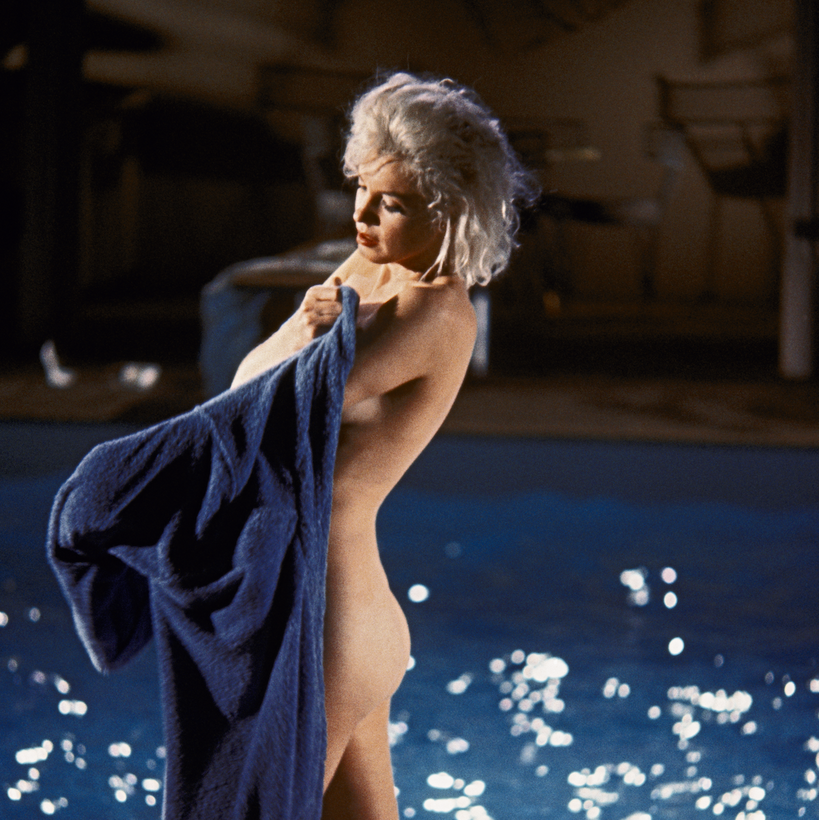
It began with an exhibition of photographs of the actress—taken by, among others, Richard Avedon, Cecil Beaton, Ernst Haas, Milton Greene, Arnold Newman, Bert Stern, and Schiller—that Schiller had assembled for a Los Angeles gallery in 1972 to mark the 10th anniversary of her death. He’d then set out to turn the collection into a book, one that would be, as he liked to say, as “lovable, huggable, and fuckable” as Monroe herself.
As Schiller envisioned it, the text accompanying the pictures would be strictly secondary—as he put it, mere “foreplays” before the “orgasms.” In his mind, potential authors were interchangeable; when he first took the idea to Random House (which passed), he suggested Pauline Kael or Rex Reed, whom he’d sort of heard of but never read. But by the time he reached Grosset & Dunlap, which ultimately bought the book, he was aiming higher. “Get me Gloria Steinem, get me Norman Mailer!” he says he told them.
Schiller, of course, knew next to nothing about Mailer either; to him, he was just a guy who shouted louder than anyone else, got into fights, and drank too much. “I just threw out the name,” he said. And damned if, in November 1972, Grosset didn’t promptly go out and sign Mailer up.
Schiller was elated: Mailer’s very involvement, whatever the hell he wrote, would guarantee the covers of Time and Life. Here, too, Schiller’s account is disputed—in this case by Robert Markel, the Grosset editor who’d corralled Mailer, then handled the book. Schiller strutted around town as if “he had invented Norman Mailer,” Markel later said. “And I remember accusing Larry right to his face, saying, ‘Listen, let’s get this straight, buddy boy. I thought up Norman for this project, not you, and brought him to you. You had never read a word that he’d written and I seriously doubt whether you still have read a word.’” Schiller, Markel said, took his accusation in stride: “He would laugh. He was impervious to insult.”
No one had ever lived a life like Lawrence Schiller, who leapfrogged from saga to saga, scandal to scandal, attaching himself to everyone from Lee Harvey Oswald to Marilyn Monroe to Charles Manson.
The publisher gave Mailer $50,000 plus royalties for a 15,000-word essay on Monroe, which he’d have three months to write. (That was also what Schiller would be getting and what the photographers would split among themselves.) Strapped as always—five marriages and seven children had left him with, as he once put it, “a financial nut larger than [my] head”—Mailer grabbed the dough, even though, whether or not he realized it, under the contract Schiller would be his boss.
During their first meeting, Schiller laid out the pictures on the floor of a room in Mailer’s house in Stockbridge, Massachusetts. Far from the ogre he’d been anticipating—“I expected somebody almost like the Hulk or something,” he says—he found Mailer to be soft-spoken, courteous, and thoughtful. Schiller was thrilled, even proud. “He thought this was a wonderful deal he was pulling off,” Markel recalled. “It was no longer just groveling around in the Hollywood Hills; he’d hit it in New York, big.” Mailer’s first impressions of Schiller weren’t so favorable. To him, Schiller was an operator, sweaty and maniacal—a bush-league Sammy Glick. It was a matter of class, Mailer later told Larry Grobel, the veteran Playboy profiler whom Schiller had hired to help him write a memoir, that Schiller was “very obviously a man on the make,” while he, having become a literary prodigy at 25, was already a made man. It was “like being part of the Old Rich, sneering at the New Rich.”
Still, he and Schiller started hanging out some; attending to Mailer’s dire finances, it was Schiller who’d urged him to charge admission (30 bucks a head, or 50 per couple) for his much-anticipated, and much-ridiculed, boozy 50th-birthday bash in early February 1973 at the Four Seasons. It was, according to Michael Lennon, “the first of many financial schemes [Schiller] would suggest to Mailer,” and surely the least remunerative, netting Mailer a paltry $600.
Like so many men of his generation, Mailer had long had a thing for Monroe; he was still steamed at Arthur Miller for not inviting him to stop by the couple’s Connecticut home, even though he lived just down the road. Mailer quickly became “intoxicated” with the project, he said, and a good thing, too, given the short deadline, which accounted for his lifting liberally from two prior Monroe biographies; the plagiarism charges that inevitably ensued necessitated payoffs to both authors. But after barely a month, Mailer bragged to Markel that he’d completed the first 65,000 words of a 25,000-word project—and he still hadn’t gotten to Miller!
To Schiller’s horror, Mailer soon tendered an essay of 105,000 words, one that threatened to blow up the layout of the book. More alarming even than Mailer’s prolixity was his convoluted and utterly unsubstantiated speculation about Monroe’s alleged dalliances with former attorney general Robert Kennedy. Mailer’s byzantine theory (which even he didn’t believe) was that 1) Bobby had broken Monroe’s heart and that, having learned this, 2) rogue elements of the F.B.I. and C.I.A., still fuming at the Kennedys for the Bay of Pigs fiasco, had 3) murdered Monroe but 4) made it look like suicide, thereby 5) leading people to blame J.F.K. and R.F.K. for her death, which would 6) embarrass said Kennedys.
To Schiller, the Bobby Kennedy business was not only nonsensical but, far worse, distracting—by taking the focus off Marilyn—and even dangerous, threatening to turn off the folks at Time and Life. “You are gonna fuckin’ ruin the book if you let Mailer put this Bobby Kennedy shit in,” he warned the publisher. Mailer made things worse through his sloppy—or even nonexistent—reporting, failing to interview the one person who could have corroborated his cockamamie theory: Monroe’s maid, Eunice Murray, who was with her the last night of her life. (He’d been told, he said, that Murray had died “under violent circumstances” in Germany; in fact, she was alive and well and listed in the local phone book.)
Like so many men of his generation, Norman Mailer had long had a thing for Marilyn Monroe.
It was, Schiller quickly realized, a pattern with Mailer, who’d spent more time watching Monroe’s movies than talking to people who’d known her, including Joe DiMaggio. Through the celebrity lawyer Melvin Belli, Schiller had wangled an interview with the notoriously reticent slugger, but Mailer hadn’t talked to him either because, as he later explained, Joltin’ Joe was “renowned for saying very little” to reporters and he’d “just lose the comfort of being able to write about him without owing any favor for the interview.” “Norman wasn’t one for researching,” Schiller says.
When it came right down to it, the two had fundamentally opposed ambitions for the book. All Schiller wanted from him, Mailer complained, “was some nice gray matter” to run between the glitzy photographs. “I didn’t give a goddamn about all those fancy publicity shots,” Mailer later said. “I wanted the other side of her, what she looked like when she got married to her first husband, what she looked like in off moments with Joe DiMaggio.” Or, as he put it on another occasion, “I felt I’d written a good book about Marilyn, and who gave a fuck about [Larry’s] photographs?” He demanded that Schiller’s pictures be shrunk down or moved around or supplemented by snapshots depicting the real Marilyn.
As if that weren’t enough, there was also Schiller’s decision to leave Mailer’s name off the cover, which, as he envisioned it, would consist simply of a photograph of Marilyn with no words at all. “Everyone’s gonna know it’s Norman Mailer’s book,” Schiller told Markel. “What’ve we gotta smear type all over it for?” Mailer’s name, he decreed, would go on the book’s spine—but that was it.
So as Mailer later put it, he and Schiller had quickly gone from “looking at the other and saying, ‘Who the hell are you?,’ to being ‘absolutely adversaries.’” To iron things out, Grosset & Dunlap pushed for a summit meeting between the two; with both in transit, it had to be held in the United Airlines Friendship Lounge at Kennedy Airport. There, Schiller laid out the photographs as they’d appear in the book, and Mailer tried moving them around—essentially redesigning the whole thing. “And I’m not even listening to him,” Schiller remembers. “The book is designed, we’re going to the fucking press.” Markel watched it all with amazement. “Larry was going right nose-to-nose with him,” he recalled. “Larry Schiller is taking on Norman Mailer, all the way.”
Schiller threw Mailer a few crumbs, agreeing to run some of the snapshots Mailer had pushed for, in the margins. “But you’re fucking up the book,” he says he told him. “And he’s saying, ‘Don’t tell me. I know more about book publishing. You’ve never published a book before.’ He said something like, ‘Larry, you don’t know a damn thing about laying out books.’ And I said, ‘Well, what do you fuckin’ know about Marilyn Monroe?’ He said, ‘What do you know?’ And I said something like, ‘At least I fucked her.’” (Whether this is another “Schiller legend” is impossible to know.) Schiller says he and Mailer “almost” came to blows. Toward the end of the meeting—and much to Markel’s consternation—Mailer and Schiller went outside. But rather than duke it out, Schiller simply took Mailer’s picture—for what, he didn’t say—capturing him at his seething, suspicious best.
“Some Absolutely Ungodly Gifts”
By that point, Markel’s goal was simply to keep a lid on things until Schiller boarded his flight to California. But watching Mailer watch Schiller that day, he spotted something else, different and surprising: appreciation. “Norman is really quite patient with this character and sort of amused with him,” Markel recalled. “And I see that there is a bit of … they’re falling in love a bit, too … Norman admires certain aspects of Larry, Larry the wheeler-dealer, Larry who gives no quarter to any man, Larry who stands right up to him in a way few men do. Norman thought he was a grand curiosity, a phenomenon. He tolerated him as being sort of terrific, eccentric, crazy. He saw something of himself in this guy.”
“I had no idea of what he really thought of me after that meeting,” Schiller says. “And, quite honestly, I didn’t care. I was on a train of success with the book and nothing was going to deter me.” In fact, he wound up printing nearly everything Mailer wrote, including all that “Bobby Kennedy shit.” How could he not? “I’ve got Norman Mailer. I’m gonna have to live with him,” he came to realize.
All along, Schiller had told people the book would land on the cover of Time, and it did. He also said he and his team would design that cover themselves, something the magazine had never let anyone do, and they pulled that off as well. It featured a collage of a smiling and seductive Marilyn (in living color, taken by Bert Stern), standing above a black-and-white, glowering Mailer (the photo Schiller took outside the Friendship Lounge), tousling his hair. Schiller knew it would infuriate Mailer, but didn’t care. “Norman Mailer had served his purpose,” he explains. “And he’d fucked me over with this Bobby Kennedy shit.” By having been made to look silly, Mailer believed that photo cost him a Nobel Prize. And on this, oddly enough, Schiller agreed with Mailer. For ever after, he was haunted by the thought, and vowed that some day, he’d make it up to him. (John Buffalo offers another hypothesis for the Nobel snub: “Maybe stabbing his second wife was the thing.”)
Other skills he observed in Schiller, like his uncanny ability to win over strategically placed people in the publishing house, also impressed Mailer. “I began to discover this man, who I had been sneering at, had some absolutely ungodly gifts,” he recalled. Markel, he said, “couldn’t stand Larry any more than I could, and we used to plot and plot and make our plans on how we were going to stop this maniac.” But thanks to his office spies, Schiller learned of and thwarted their base schemes. “I began to have, willy-nilly, an undue respect for him. This guy knew things about the world I didn’t know, and as a novelist, those are the only people who truly interested me. Because when you’re a novelist, if you want to be a good one, you have to keep learning, and this was one guy I could learn from, whether I wanted to or not.”
Besides landing the covers of Time and Life, Schiller also got the book on 60 Minutes, though not with the results he’d imagined; “Monroe, Mailer, and the Fast Buck,” the segment was entitled. Schiller watched in horror as Mike Wallace eviscerated the unprepared, overheated, and stammering Mailer, who admitted to having taken the job because he “needed some money very badly,” adding for good measure that he didn’t “believe in fact-gathering.” Wallace also produced the missing Eunice Murray, who laughed off Mailer’s Bobby Kennedy fantasies. “Norman,” Schiller says, “was terrible on a lot of things in his life.”
By Schiller’s calculations, Mailer’s dismal performance cut book sales in half. But he’d Mailer-proofed the book in advance through sales to book clubs, foreign publishers, and magazines. Marilyn wound up selling an extraordinary 400,000 copies worldwide, earning Mailer half a million dollars despite himself. An unapologetic Mailer later claimed it was “among my better books,” despite having been written in three months for “a couple of psychotic liars.” But never, he vowed, would he work with Schiller again.
Schiller wasn’t much happier with Mailer, but hedged his bets. Any frustration he’d felt with Mailer felt picayune next to the gift Mailer had given him. “It was an incredible education. Matching myself against Norman. Matching my gut with his intelligence.” So the two stayed in wary proximity.
In 1974, for another $50,000 from Schiller, Mailer furnished an essay for The Faith of Graffiti, an art book Schiller packaged. Things worked smoothly between them this time around, but only because the two barely interacted, and neither was much invested in the book. And at the “Thrilla in Manila,” in October 1975—which Schiller covered for Sports Illustrated and where Mailer unveiled Norris Church, soon to become his sixth and last wife—Ali and Frazier exchanged more words than Mailer and Schiller did. (Schiller did change some money for Mailer at the airport, but for years afterward Mailer was sure Schiller had ripped him off.)
But on some level, Mailer felt a twinge of sadness over the state of things. Additionally, his financial problems only deepened, and having discovered a new and ready source of cash, he wasn’t turning off any spigots. “There was this love-hate for a while,” Schiller recalls of their relationship. “We weren’t talking to one another. But we were talking.”
David Margolick, a longtime reporter for The New York Times and Vanity Fair, is the author of several books, most recently When Caesar Was King: How Sid Caesar Reinvented American Comedy. He is currently completing a biography of Jonas Salk
