
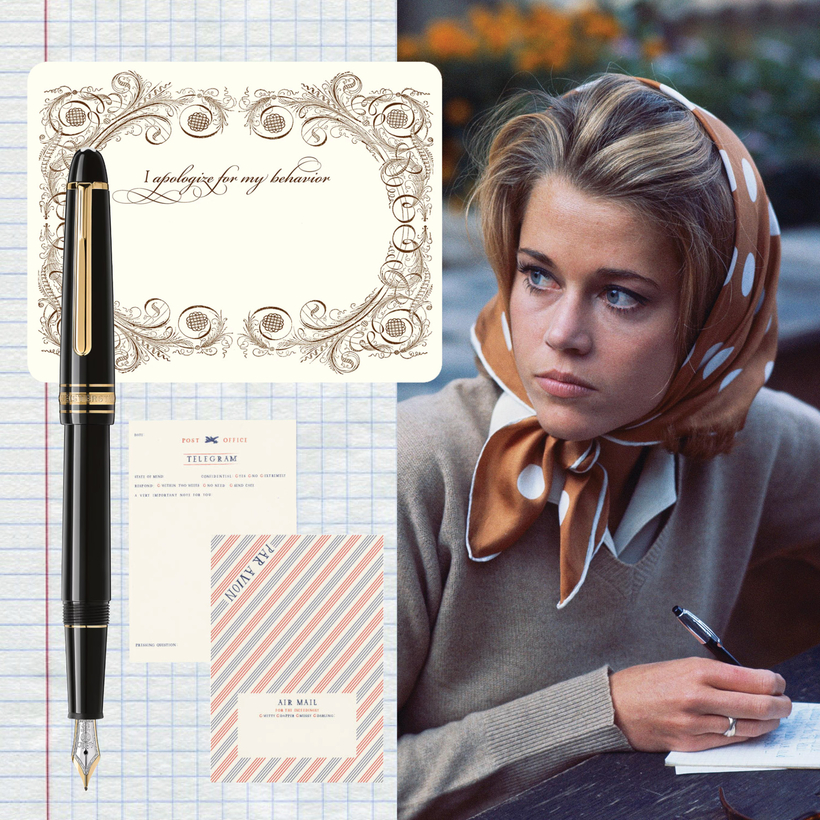

Thank-you notes are not a generational relic. They should not be something your parents forced on you, or your grandparents perfected out of boredom. They remain, very simply, the most civilized way to acknowledge effort. They are the last remaining proof that someone noticed what you did and cared enough to respond like an adult. Handwritten correspondence endures because it carries intention. The paper, the ink, the envelope—none of it is incidental. These choices register, even when the recipient can’t articulate why.

Paper matters. Weight, first: too thin and it feels apologetic, as if you weren’t sure the gesture was worth committing to. Too heavy and it veers theatrical. The best stock should feel deliberate in the hand—something that bends slightly. Texture is personal: smooth for the minimalists, lightly grained for those who want a whisper of romance. Envelope liners are the private indulgence—seen only once, but remembered.

If you’re ready to do this properly, Smythson remains the gold standard. Their bespoke program is a consultation, not a transaction. And if you know, really know, you’ll try to find your way to Ruth Baxter. (Trade in favors. Do what you need to do. And if you get her, say very little and listen carefully.) She has had eyes on the finest stationery and invitations of the last several decades. She will never confirm it, but if you’ve admired something quietly perfect, chances are she had a hand in it. She will steer you away from mistakes before you realize you’re making them.

Not ready for bespoke? Smythson’s bordered correspondence cards remain impeccable—balanced, timeless, correct in a way that never dates. There are also excellent small print shops worth seeking out. Local engravers, heritage presses, family-run businesses that still care deeply about paper mills and ink density. Supporting them is not only virtuous—it often yields the most interesting results.

Paper matters. Weight, first: too thin and it feels apologetic, as if you weren’t sure the gesture was worth committing to. Too heavy and it veers theatrical.

Electragram occupies a category of its own. And not just because it was created by Air Mail Co-Founder Graydon Carter and his wife, Anna. It sits neatly between a telegram’s wit and correspondence manners. Efficient, charming, and disarmingly stylish—perfect for when brevity is the point but effort still matters.

Alexa Pulitzer requires no context. Her “I apologize for my behavior” card is for people who know exactly who they are. You know when to use it. Buy a stack and keep them handy.

Mr. Boddington’s Studio is where you start early. The designs are clever and witty enough that adults don’t mind buying them, and smart enough to teach children that thank-you notes are not optional. You are not raising people who text their grandmother “thx for the $.” You’re raising little people who understand that effort matters, and Mr. Boddington’s Studio makes that lesson feel like good taste rather than discipline.

Texture is personal: smooth for the minimalists, lightly grained for those who want a whisper of romance. Envelope liners are the private indulgence—seen only once, but remembered.

And then there are pens. A world unto themselves. This is where stationery people reveal themselves. Japanese pens are revered for a reason: flawless ink flow, precision tips, zero skipping on quality paper. Western pens bring weight and gravitas. Montblanc, if you’re ceremonial. A fountain pen, if you’re committed. Black ink is traditional; blue is personal; anything else is a statement and should be chosen carefully.

Good stationery isn’t about sentimentality. It’s about taste. About understanding that some gestures still deserve care—and knowing exactly how to show it.

Jennifer Noyes is the Editor and Chief Merchandiser at AIR MAIL’s AIR SUPPLY