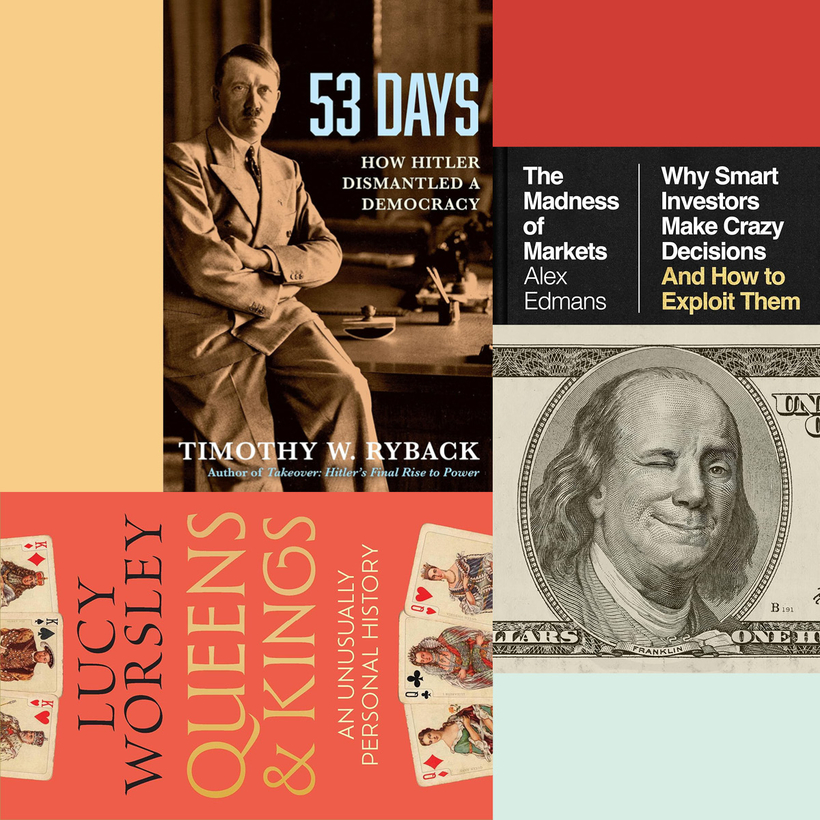
The flexibility inherent in a democracy can also be used against it, and no greater example exists than the way in which Adolf Hitler, once he was appointed chancellor on January 30, 1933, succeeded bit by bit in undoing German democracy in less than two months. No one who had read his book Mein Kampf should have been surprised, since the two-volume work is, as Timothy W. Ryback puts it, a “playbook for transforming a constitutional republic into an authoritarian state.” Suspending civil liberties, reining in the press, raising tariffs, establishing the first concentration camp: all happened with alarming speed until March 23, when the Weimar Republic ended and the Third Reich began.
In meticulous and telling detail, Ryback takes the reader through Hitler’s methods: using the rights of assembly and free speech, for example, to hold massive rallies and tell lies. It is sloppy and facile to compare current leaders to the most evil man of the 20th century, but it is foolish not to study and learn from the ways a person with the soul of a dictator can fracture a democracy. 53 Days is the essential blueprint in understanding how that can happen.