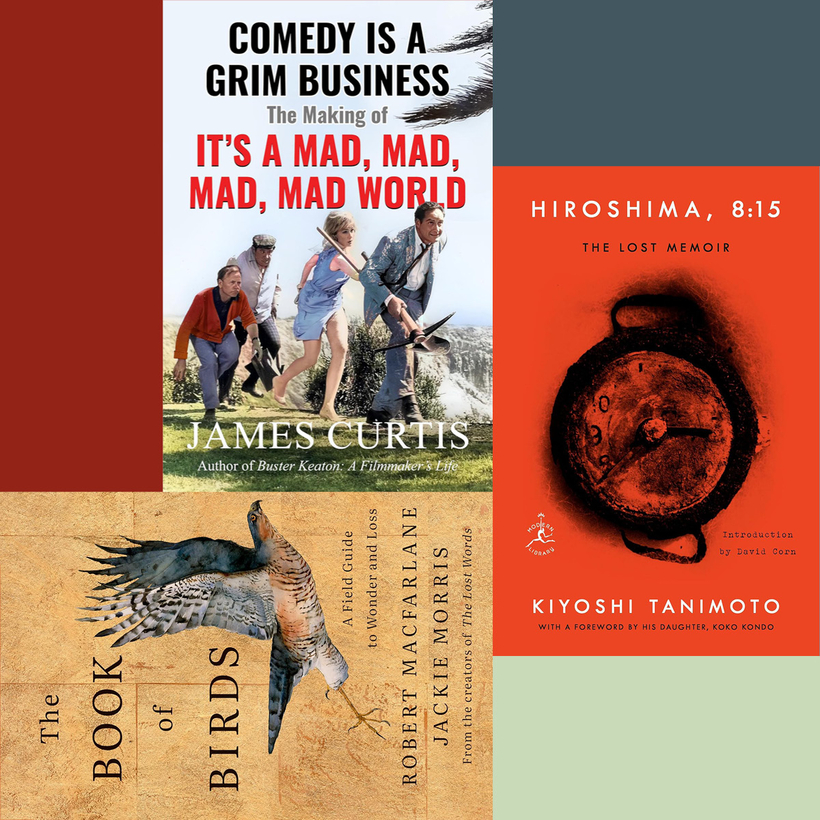
On paper, It’s a Mad, Mad, Mad, Mad World should never have worked as a film, and not just because the director of the 1963 comic caper was Stanley Kramer, who had helmed such knee-slappers as The Defiant Ones and Judgment at Nuremberg. But work it does, not so much because of the plot (a dying Jimmy Durante tells a group of motorists where treasure is buried, whereupon he literally kicks a bucket down a hillside and everyone races off to find the loot) but because Kramer assembled such an unlikely cast for his Technicolor classic, including Ethel Merman, Milton Berle, Sid Caesar, Buddy Hackett, Phil Silvers, Mickey Rooney, Buster Keaton, and the Three Stooges. James Curtis has written an utterly delightful book recapping the madness behind the camera, including the director calling Jonathan Winters, then in a mental hospital, to sign him up, and working with a then ill Spencer Tracy to spare him the slapstick routines. The author is especially good in capturing the period in which the film was made and released, the role of Cinerama theaters in making it a hit, and why the inspired animated opening credits by Saul Bass were their own challenge. See the movie if you haven’t, then read this book.
This month marks the 81st anniversary of the day the world changed forever, and though there are shelves of books about the atomic bomb that vaporized tens of thousands of Japanese civilians, few narratives are as powerful as this one, by a then 36-year-old Methodist minister. Kiyoshi Tanimoto observed the nuclear attack from the outskirts of Hiroshima, and his tale of that day was included by John Hersey in his famous New Yorker piece in 1946. Tanimoto was inspired to write his own recollections and sent them to Hersey, where they sat among Hersey’s collected papers at Yale until Hersey’s grandson found them in 2023. Hiroshimo, 8:15 is graphic and heartbreaking, told without purple-inked flourish, and is as powerful an argument against the use of nuclear weapons as you will read today. Tanimoto, who died in 1986, preached the lessons of Hiroshima the rest of his life, including to a young survivor named Setsuko Thurlow, who in 2017 accepted the Nobel Peace Prize on behalf of the International Campaign to Abolish Nuclear Weapons.