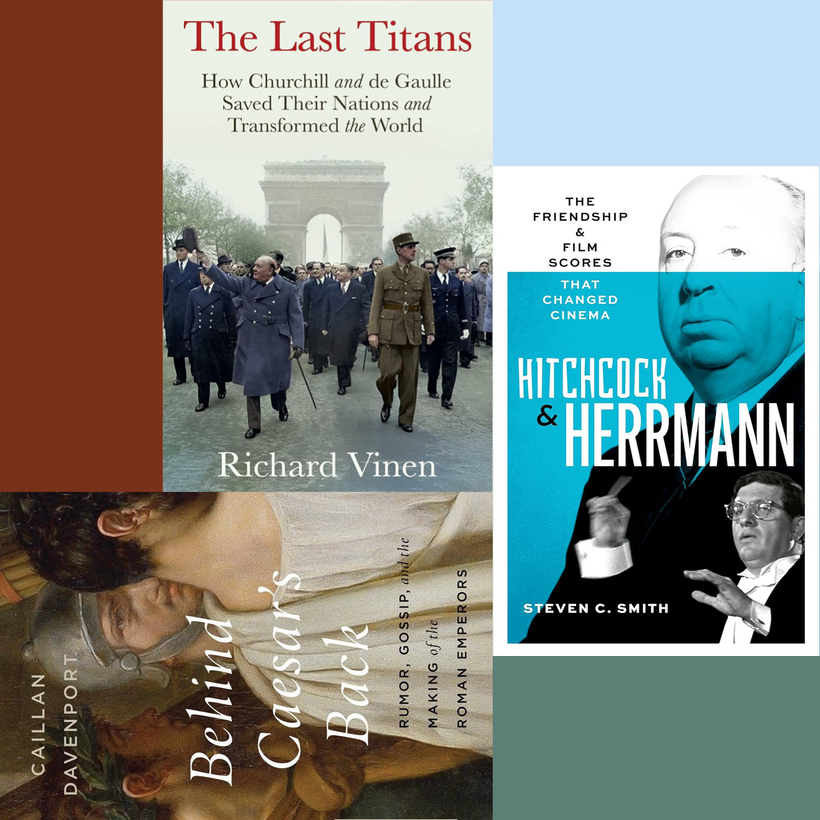
Winston Churchill and Charles de Gaulle towered above much of the 20th century, though it can be argued that Churchill’s finest hours were in the early stages of World War II and that de Gaulle’s best years stretched for more than two decades after it. Both held romantic visions of their countries, though de Gaulle was more aware that his was not realistic. What Richard Vinen does so brilliantly in The Last Titans is to show how the differences between these two leaders helped dictate the destinies of their people, and he does so with just the right balance of intimate detail and trenchant analysis. De Gaulle comes across as the cannier of the two, but that may be because he had a sharper sense of tragedy.
Roman emperors,by and large, were not exactly glad-handing politicians, but their power over their subjects was such that they were constantly gossiped about. Rumors abounded, thanks to the unreliability of official communications, and those rumors could easily shape public opinion about the emperors themselves. Caillan Davenport relies on letters, graffiti, songs, and other ancient evidence to construct an invaluable glimpse into how the Romans imagined their Caesars separate from the coins and banners that bore their likenesses. Davenport is at his most illuminating when he details the more sordid tales, since they say as much about the imagination of the populace as they do about its leaders. Did Hadrian really sacrifice his teenage male paramour Antinous in a magic rite gone awry? Did Tiberius force men to drink lots of wine and then tie their penises so they could not urinate? “Page Six” should be so sensational.