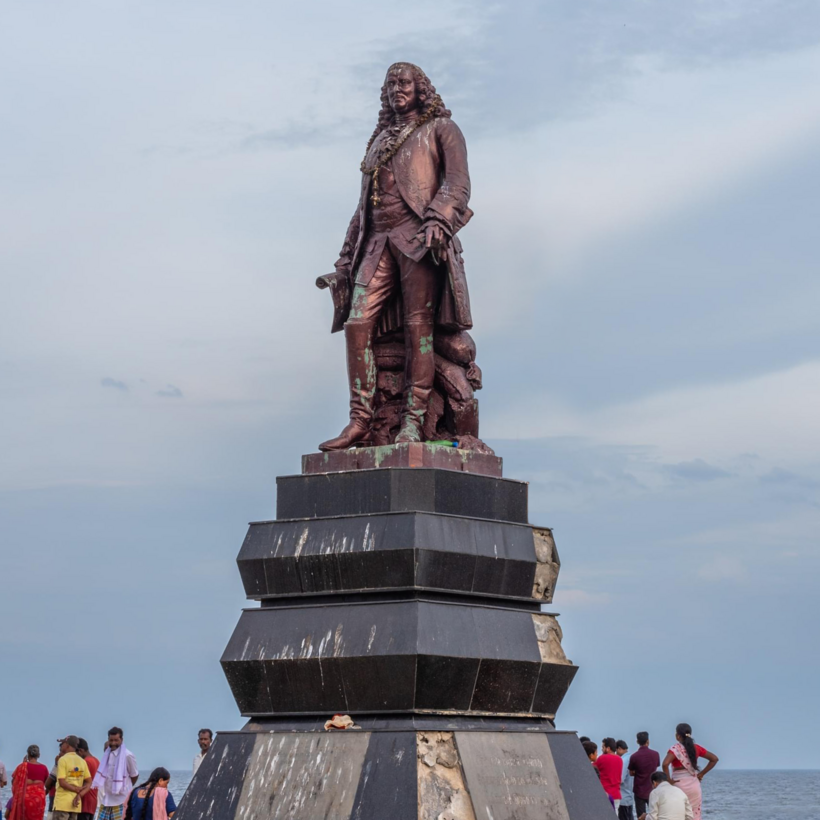

Robert Ivermee’s new study, Glorious Failure: The Forgotten History of French Imperialism in India, is an exquisite stew of oxymoron, irony, and idiosyncrasy. Failures are seldom glorious. Despite all appearances to the contrary—in fiction, general histories, and popular imagination—the French outlasted the British in India. And yet, their project in South Asia might be filed under the incongruous and justly restricted genre of “loser imperialism.”
Elizabeth I granted the English East India Company (E.I.C.) charter on December 31, 1600. It would be another six decades before the French imitated their rivals, forming the Compagnie des Indes in 1664. Their motives had little to do with India and everything to do with jealousy. “The principal object to French economic progress,” according to mercantilist wisdom, “was its overperforming northern neighbors.” As Ivermee points out, France spent half of the 150 years between 1665 and 1814 at war with Europe’s leading powers.