
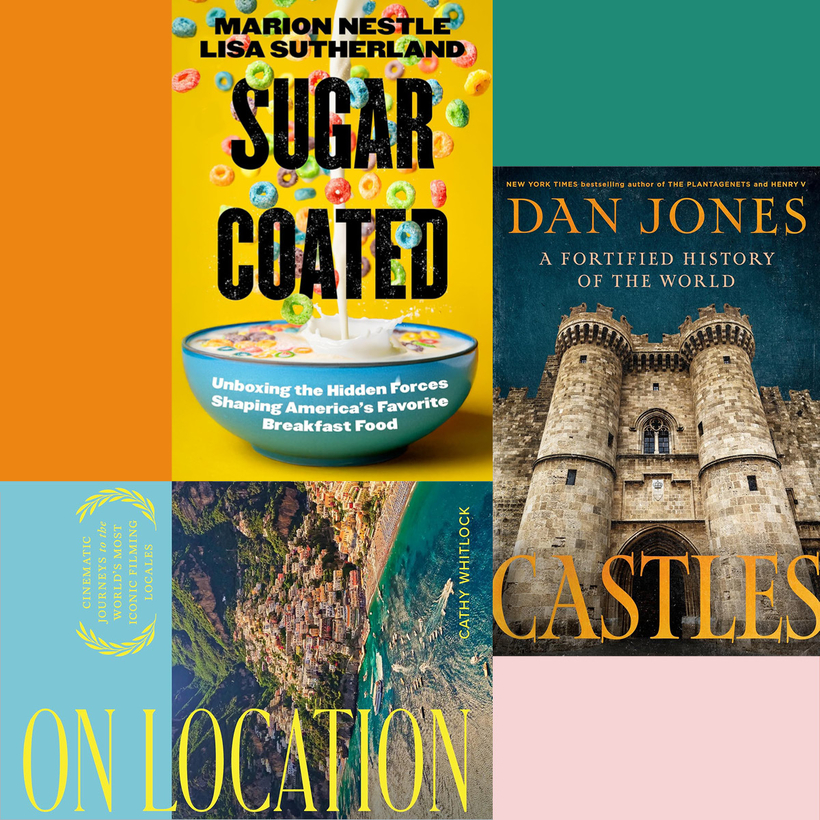
You don’t need to be a disciple of R.F.K. Jr.’s to believe that the cereal industry has been injecting enough sugar into our breakfast bowls to make a modern-day Gandhi diabetic. Marion Nestle, who has been writing about nutrition for decades, and Lisa Sutherland, who used to work at Kellogg, have written the best manifesto yet on how the food industry has enticed us to eat boxes and boxes of junk food but make the stuff look fun and healthy, whether by using cartoon characters and boy-band members for kids, athletes for men, or weight-loss promises for women. But unlike most manifestos, Sugar Coated is brightly written and fascinating in its detail, especially on how the cereal business has evolved over the past century or so. We are way beyond the days when Tony the Tiger never hid what he was selling—sugar-frosted flakes is, after all, truth in advertising—and now we must read the fine print to know that Cheerios once fibbed about its total protein count or that Fruit Loops trumpeted its fiber until that ploy got laughed off the shelves. The authors actually like to eat cereal, which makes their pleas for better food sincere and convincing. Pro tip: look for the smaller brands most easily found in health-food stores, but still read those labels to make sure the pea protein is not ultra-processed. Sugar Coated is a sweet read.
Dan Jones is often called a “popular historian,” but for me that description carries a whiff of the condescending, as if he simplifies his arguments or tries to be flashy with the facts. In fact, Jones is a first-rate historian with an impressive narrative gift, an excellent eye for the telling detail, and a nimble ability to connect the dots. These skills are abundantly apparent in Castles, whose subtitle, “A Fortified History of the World,” aptly describes the book’s ambition. Jones became immersed in castles through his study of the Middle Ages, but his fascination grew to include forts in revolutionary America and the ill-fated Maginot Line, built by the French in the 1930s to ward off the Germans. A castle, as Jones says, may be many things, and his survey brilliantly explores the multiple examples, ranging from the Great Wall of China to Disneyland, to bunkers created for the wealthy. Castlesdeserves to be a best-seller like some of his previous books, which I guess makes Jones a popular historian after all.