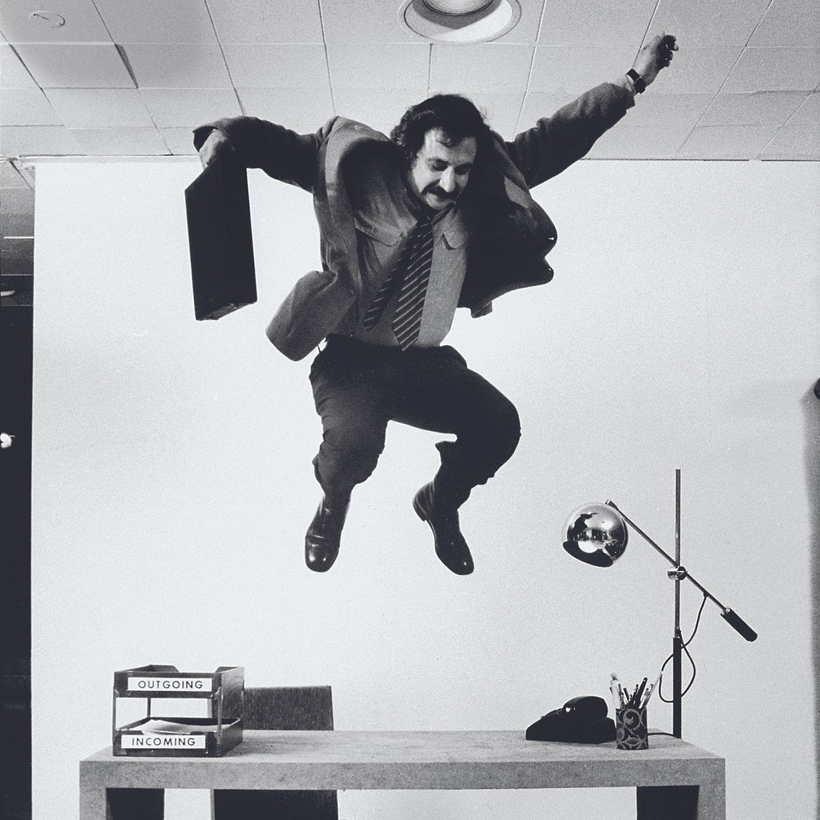
When I began working on Building Art: The Life and Work of Frank Gehry, the subject said to me, “You really should call this book ‘Goldberger on Goldberg.’” Born Frank Owen Goldberg in 1929, he changed his name at the urging of his first wife, Anita Snyder. Gehry had mixed feelings, but he was just starting his career, and his wife told him she was sure he would get more jobs without an obviously Jewish name. He went along with it, partly to please her and partly because he worried that she might be right.
And in the early 1950s, she might well have been, given the extent to which architecture was still largely a profession of Protestant men who looked like lawyers or insurance salesmen. But it was probably the last time Gehry did not follow his own instincts. His career, which spanned more than 70 years and ended only at his death last Friday at the age of 96, was the most influential, not to say profound, one in American architecture since that of Louis Kahn.
Like Kahn, and like another great American architect who made buildings that did not look like those that had come before, Frank Lloyd Wright, Gehry was an artist as much as he was an architect, which is not to say that he was indifferent to practical matters. He understood that buildings needed to stand up, and that you couldn’t call yourself an architect if you didn’t know where to put the toilets. He was not a sculptor. But he made buildings that had a powerful sculptural presence, and that at their best could combine the function of architecture with the power of art, as great architecture does.
Although Gehry was born in Canada and lived there until he was 18, it is fair to call him American, not only because he lived and worked in Los Angeles for all of his adult life, but because his creative energy came from that city, which so many others dismissed as sprawl and which he saw as full of vitality.
He once told me that he loved the way suburban tract houses looked before their framed structures of two-by-fours were covered up, and he made raw materials—plywood, chain-link fencing, asphalt, corrugated metal sheets—the elements of his early designs. It was not an accident that after he graduated from architecture school Gehry spent most of his time not with other architects but with artists; people such as Ed Ruscha and Larry Bell and Ken Price saw the city as he did, whereas his fellow architects were always trying to neaten it up.
He did not, of course, really love chaos, and his work was no more random than that of Mies van der Rohe. The side of him that reveled in celebrity loved the episode of The Simpsons that showed him crumpling up a piece of paper and discovering in it the form for a concert hall, but he knew that the price he paid for being famous enough to play himself in a cartoon would also mean that his work could be portrayed as a cartoon. That led some people to mistake it for something arbitrary and simple, even silly, which it never was.
Gehry was not immune to angst; he was as driven and ambitious as anyone I have ever met. But unlike most driven and ambitious people, he was full of self-doubt. The switch from Goldberg to Gehry was not sufficient to purge him of anxiety. I once described him as a curious combination of Frank Lloyd Wright and Woody Allen. When he saw his Guggenheim Museum in Bilbao, Spain, finished in 1997, which had already been acclaimed as one of the great buildings of modern times, his first thought, he told me, was “Oh my God, what have I done to these people?”
He quickly came around to agree with the world that what he had done to the people of Bilbao was just fine, and he took immense satisfaction when that work of avant-garde art achieved mass appeal, a rare feat in any field. Gehry, more than any other architect since Wright, made cutting-edge work that was genuinely popular, and that in itself was an extraordinary achievement.
It was not, however, enough for Gehry. He was proud of Bilbao’s popularity, but he was frustrated by it because he knew that it could be a trap. “Success,” he said, “is much harder to deal with than failure.” Success made it harder to do what he felt was most important, which was not to coast on his triumph and make the same thing again and again, but to keep creating. And so he pushed himself to be always making it new, in Ezra Pound’s phrase, and we got Walt Disney Concert Hall in Los Angeles and 8 Spruce and the IAC Building in New York and the Eisenhower Memorial in Washington, D.C., and the Fondation Louis Vuitton in Paris and the Pierre Boulez Saal in Berlin and so many other buildings, each one different from Bilbao, not to mention furniture and jewelry and a new house for himself and his wife Berta that they moved into when he was well past 80.
His passion for making it new kept him working almost to the end, meeting with colleagues about current projects only a few days before he died. His desire to find a fresh way for us to make an emotional connection to architecture—for that is what he was doing, making you feel the warmth and intensity of feeling that the richest architecture of the past gave you, but through entirely different forms—will resonate as long as there are people wanting to take joy in the art of building.
Frank Gehry was born in Toronto on February 28, 1929. He died in Santa Monica on December 5, aged 96
Paul Goldberger, a Pulitzer Prize–winning architecture critic, is the author of several books, including Building Art: The Life and Work of Frank Gehry and Why Architecture Matters