
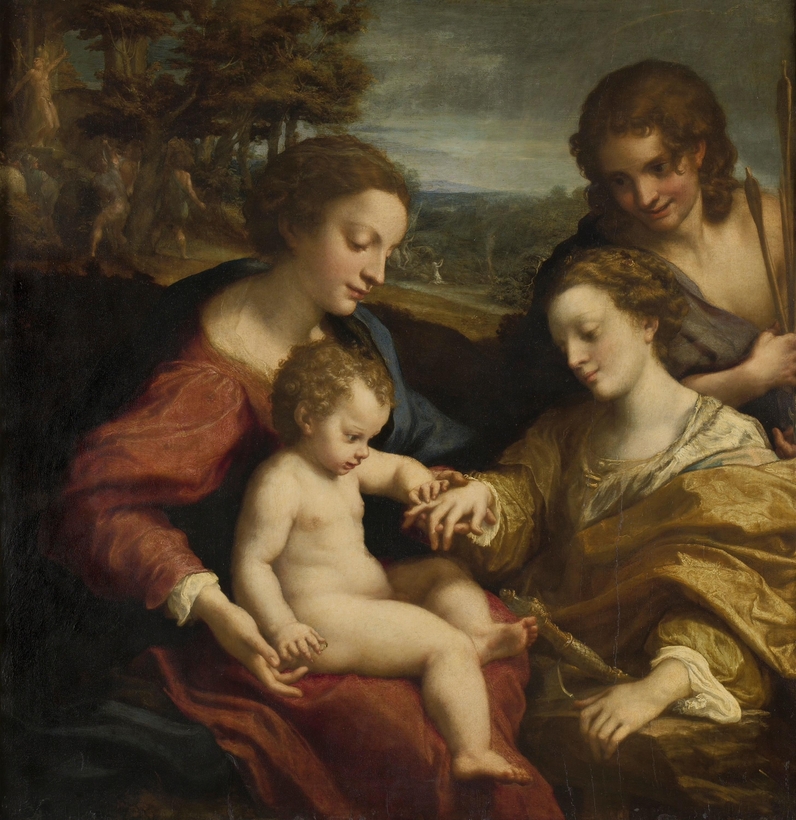

In his Lives of the Most Excellent Painters, Sculptors, and Architects, a book that established the canon for Italian artists, the 16th-century painter Giorgio Vasari, inventor of the term “Renaissance,” accorded Antonio da Correggio, “the first modern painter of Lombardy,” a sort of second-class status. If only Correggio, who lived from 1489 to 1534, had gone to Rome and studied antiquity, Vasari posits, he would have rivaled “the great artists.” Vasari is provocative about Correggio’s shortcomings. “Timid and overanxious, he subjected himself to severe and continuous labor for the support of his family. While he bore this oppressive burden, he afflicted himself further by resisting the temptations common to all mankind.”
What does Vasari mean? Was he alluding to some lack of personal fulfillment in Correggio, to suppressed desires that found expression in the sensuality that pervades his art? After all, Correggio’s paintings also won high praise from Vasari. “We may say that no artist has used color more effectively than he, nor has any painted in a more charming manner, or given more form to his figures. He used exquisite softness of color and finished his work with the most attractive grace.”