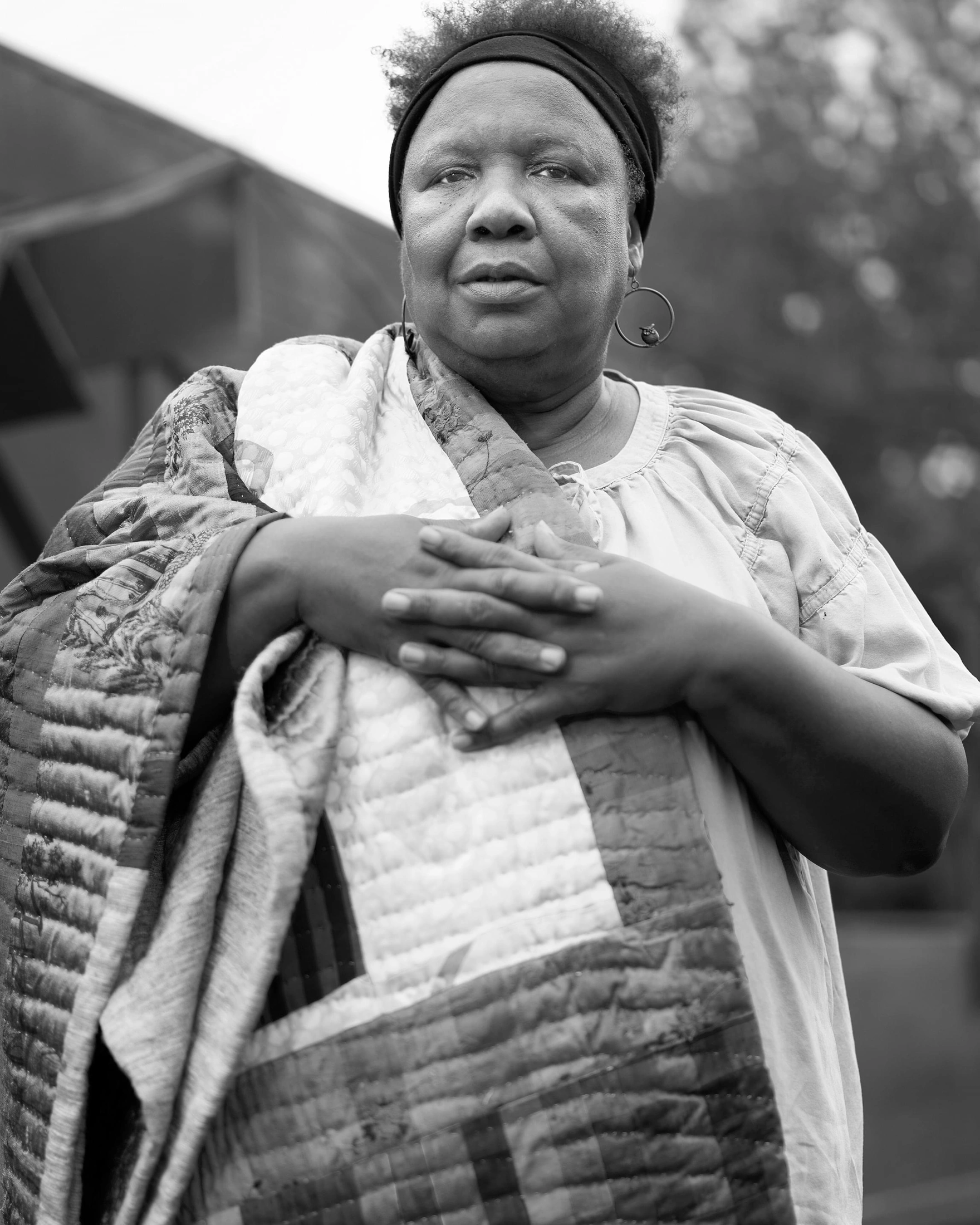
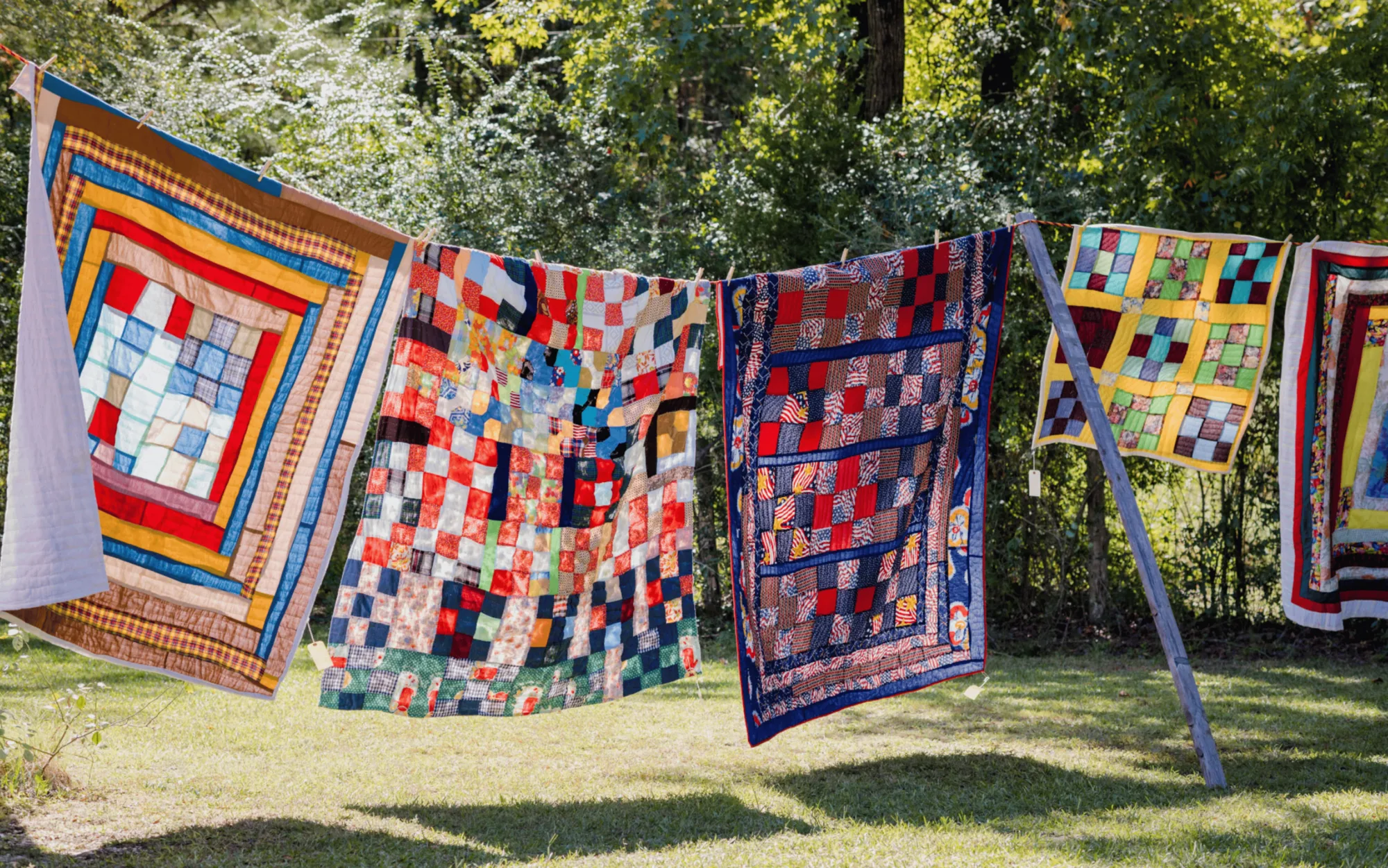
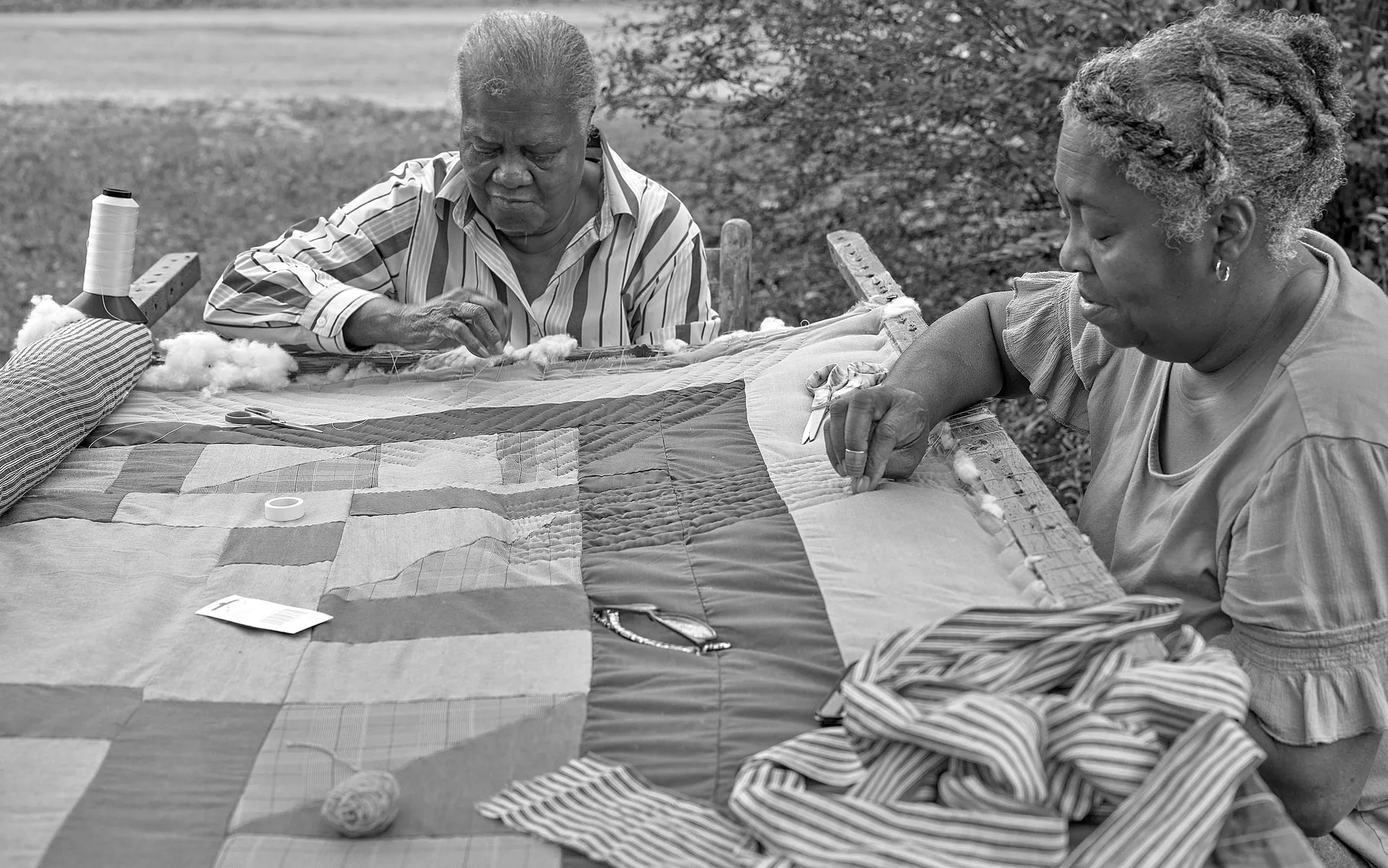
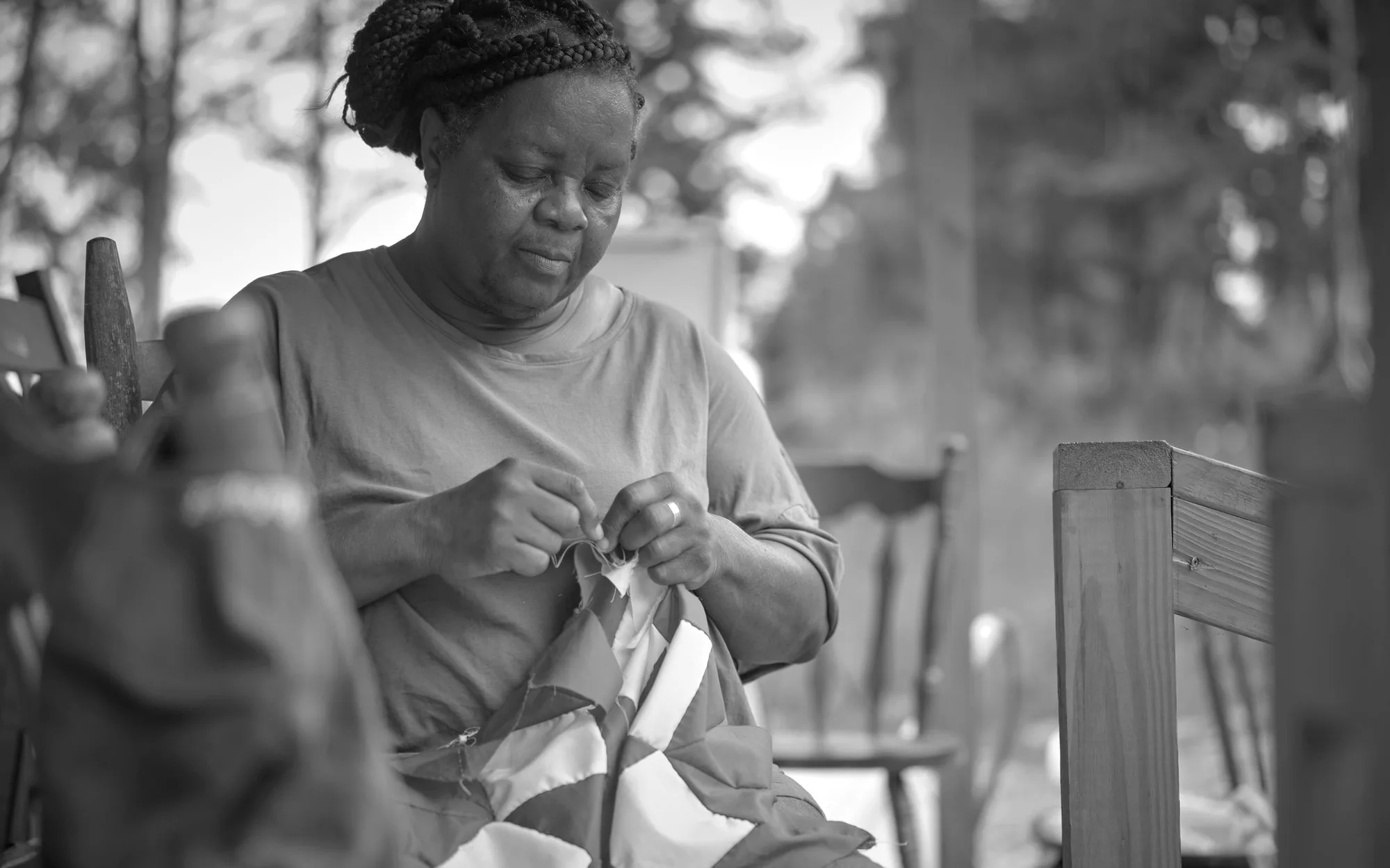
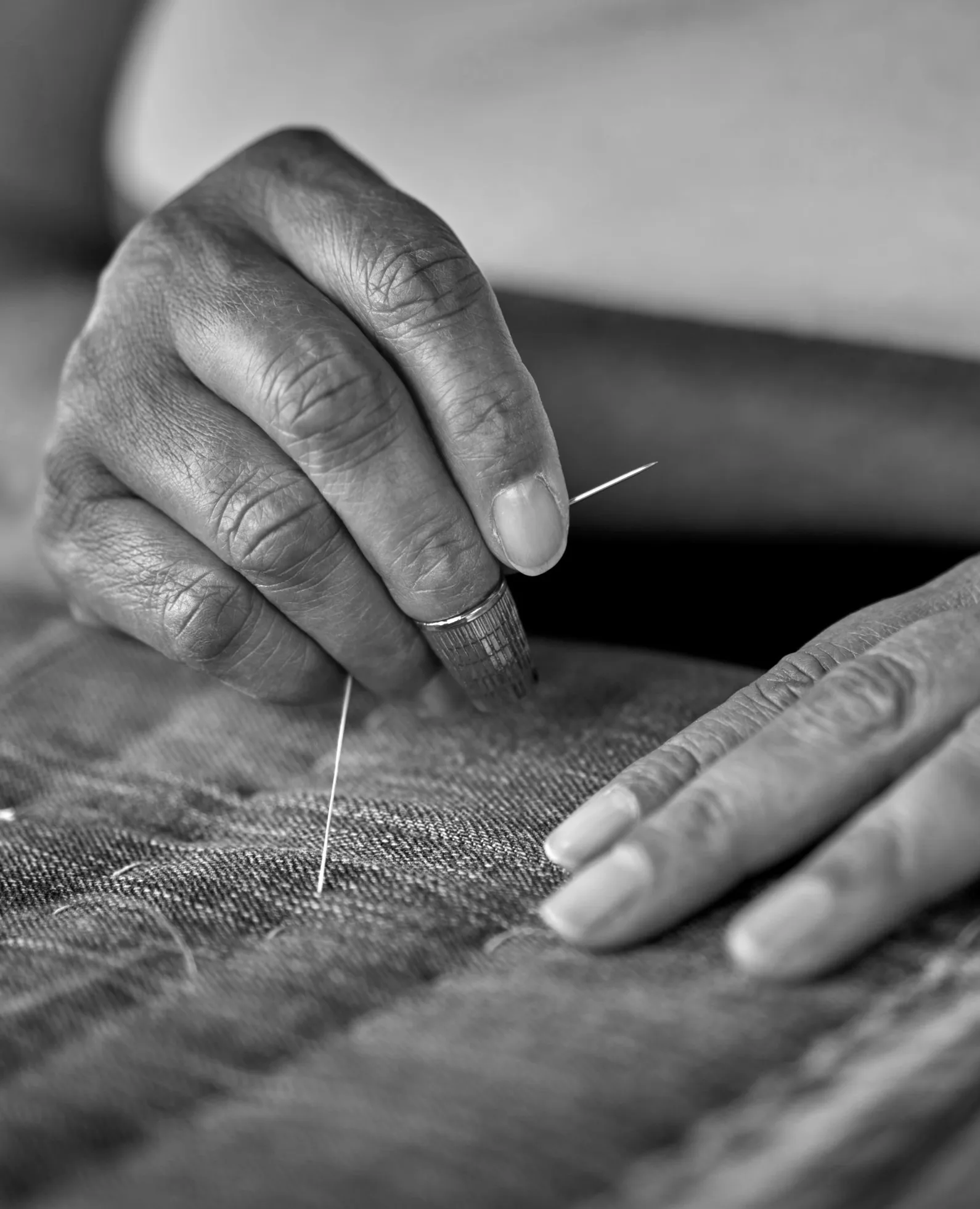
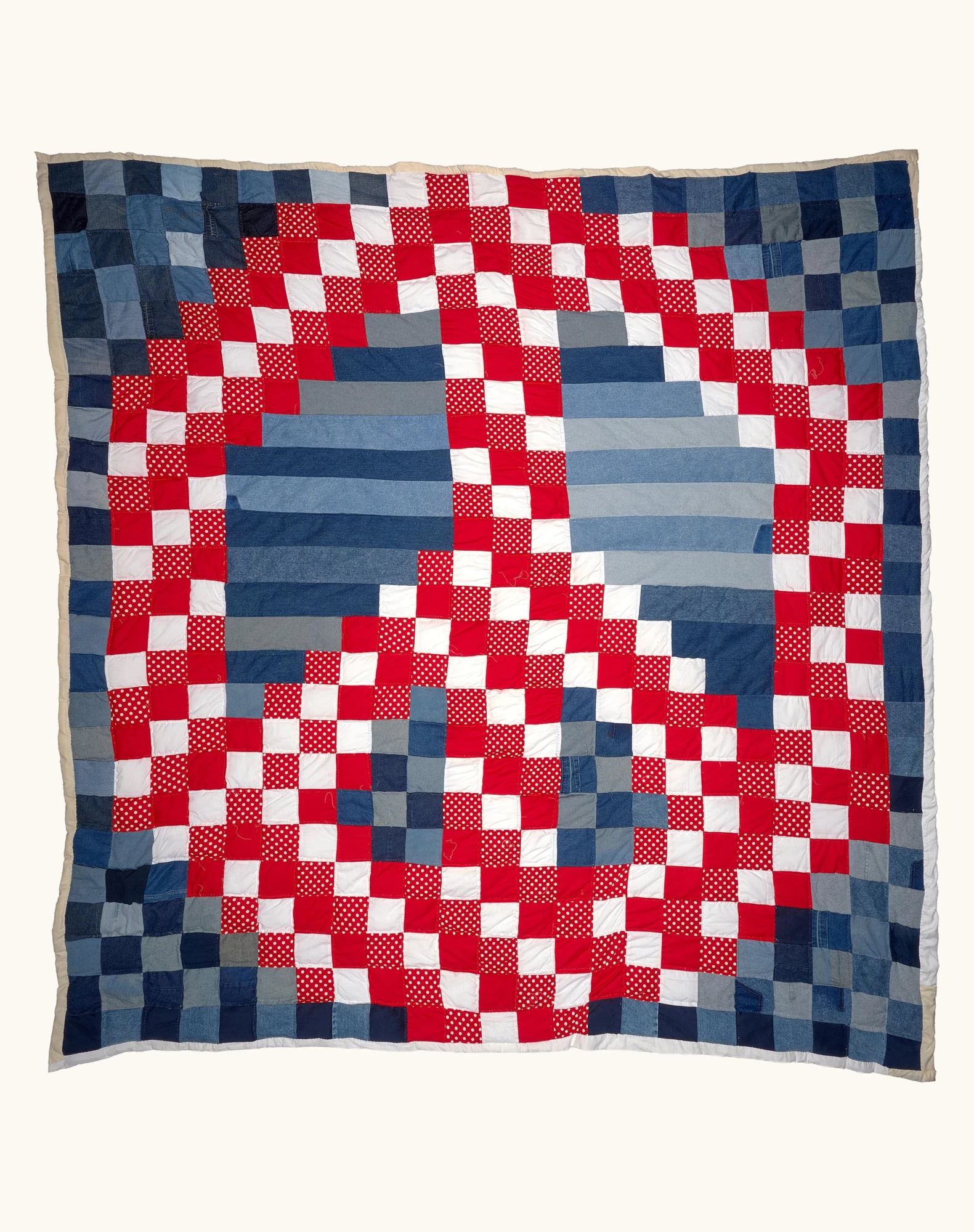
“Basically, we were made to quilt,” Mary Margaret Pettway says. Pettway is the fourth generation of quilters in her family—as far back as she can trace, anyway. She grew up in Gee’s Bend, Alabama, and is a direct descendant of the enslaved people brought there to work on the cotton plantations. Many residents still bear the surname Pettway, inherited from the plantation owners. The quilting tradition began as a necessity—scraps of worn clothing were stitched together to keep families warm through the winter nights. Over time, the practice evolved into an art form—bold, improvisational, and strikingly abstract. In 2002, when 60 Gee’s Bend quilts debuted at the Museum of Fine Arts, Houston, The New York Times called them “some of the most miraculous works of modern art America has ever produced.” By then, the women of Gee’s Bend had been making quilts for more than 150 years. “It’s a dying craft,” Pettway says. “And I didn’t want to see it die. Not on my watch.” Her daughter is a fifth-generation quilter. So is her son.
Gee’s Bend
Mary Margaret Pettway on an evolving Gee’s Bend
Lee Miller
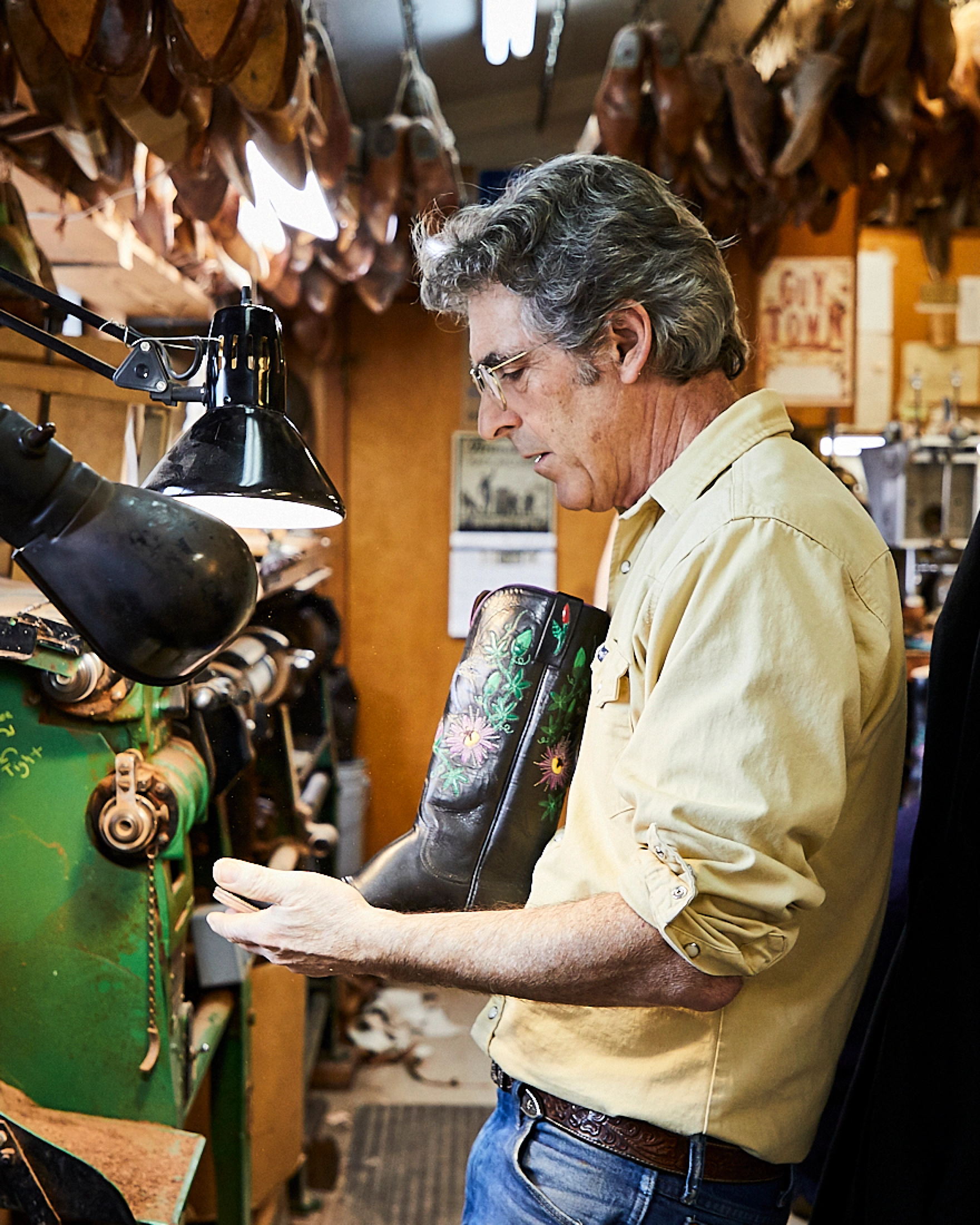
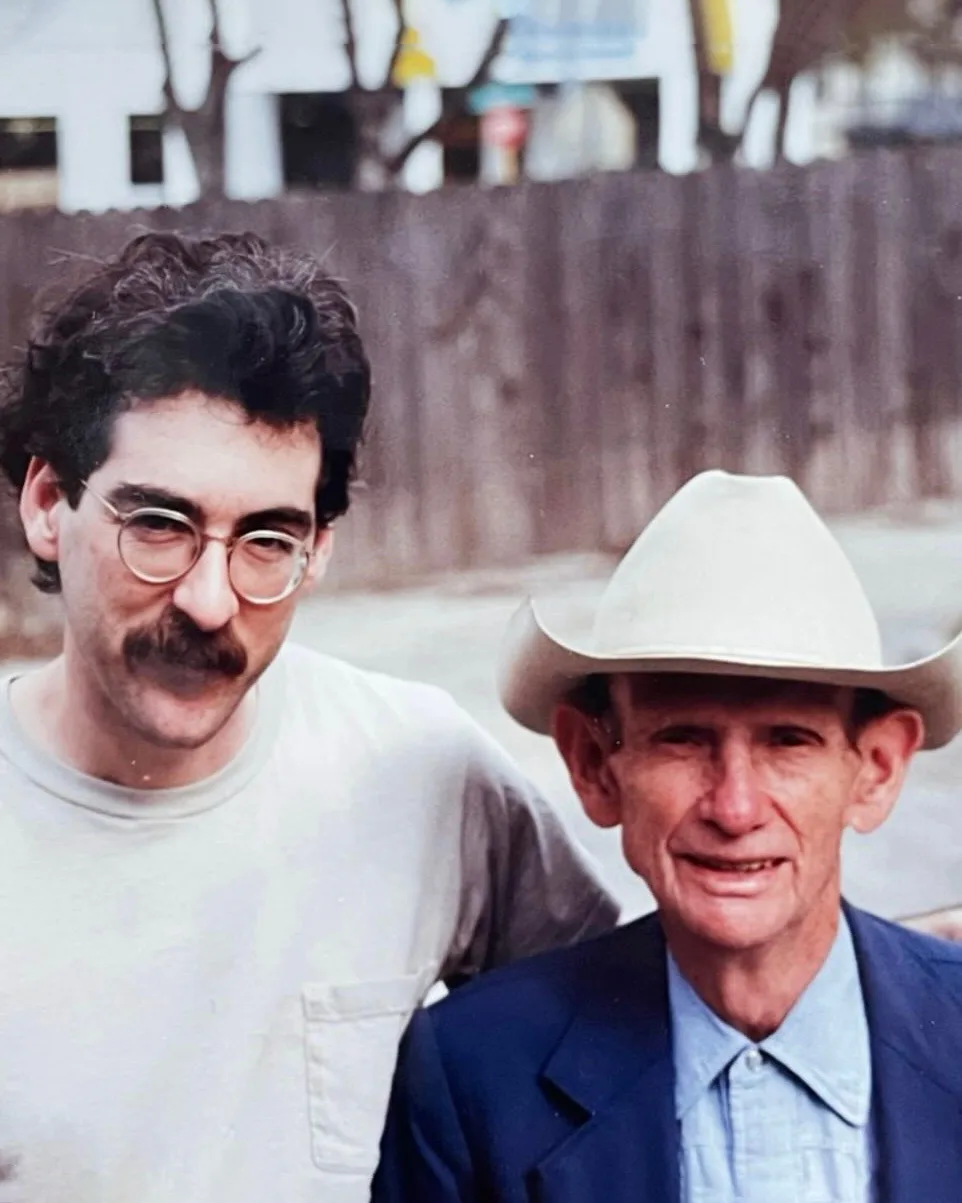
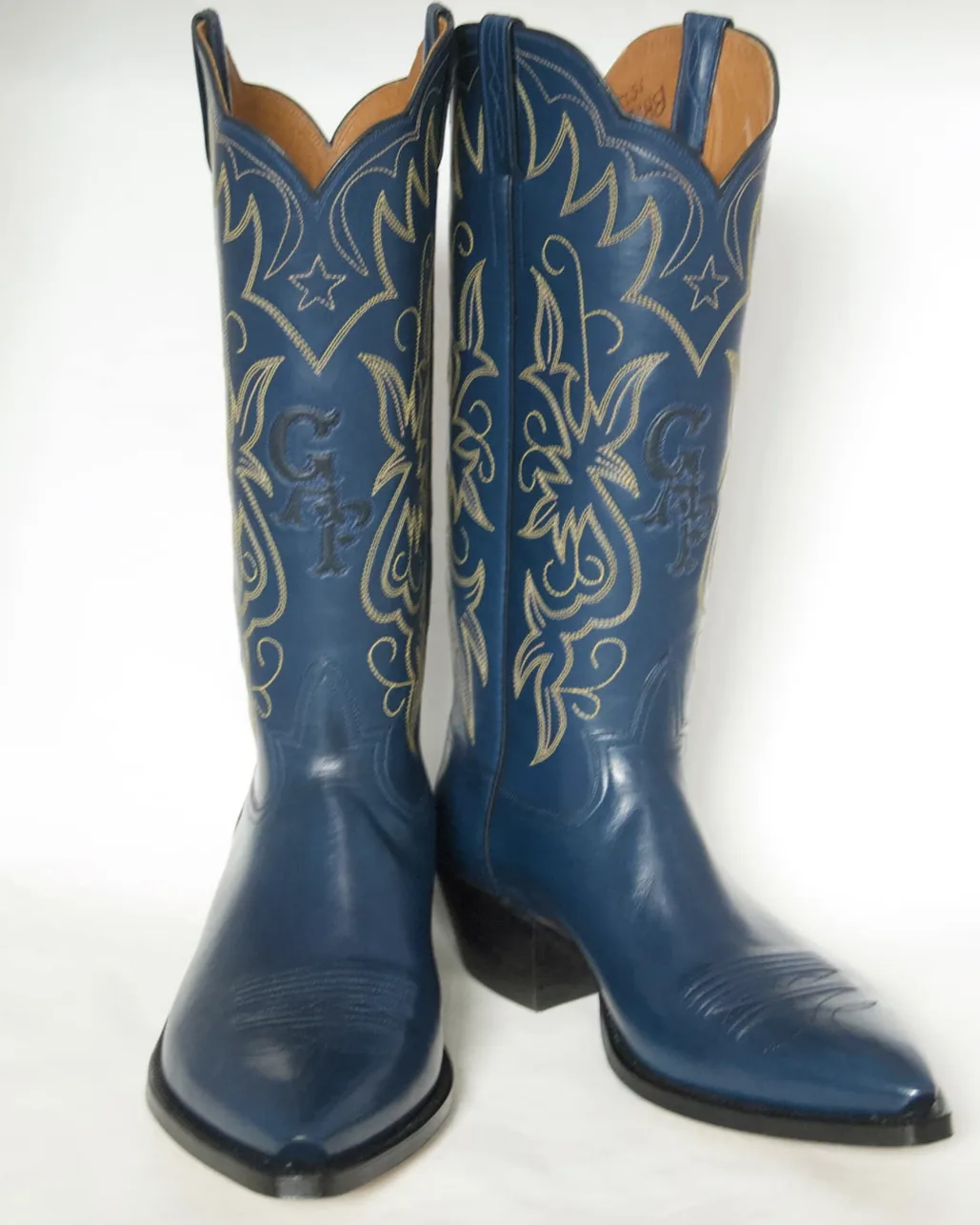
Bootmaking was always going to find Lee Miller. His grandfather was a Polish farmer before taking up shoe repair when he immigrated to America, and that instinct—to fix, to make, to work with his hands—resurfaced in young Miller. After high school, Lee took a job in a shoe-repair shop. What he didn’t expect was that a song would change his life. A friend of his, having just returned from a trip to Texas, played him Jerry Jeff Walker’s “Charlie Dunn,” its lyrics hailing a fourth-generation bootmaker known as “the Michelangelo of cowboy boots.” Well, that was that. Miller moved out West, studying shoemaking in Oklahoma and Utah until Dunn himself called, having heard there was a special new talent in town. At 23, Miller became Dunn’s apprentice at Texas Traditions, in Austin, weathering his mentor’s hot temper (he got fired every so often for a smirk, a glance, a daydream) while absorbing his technique. When Dunn died, in 1993, Miller took over the business. Three decades later, he counts Lyle Lovett, Tommy Lee Jones, and Willie Nelson among his many fans.
Lee Miller on meeting his mentor

Rhonda Holy Bear
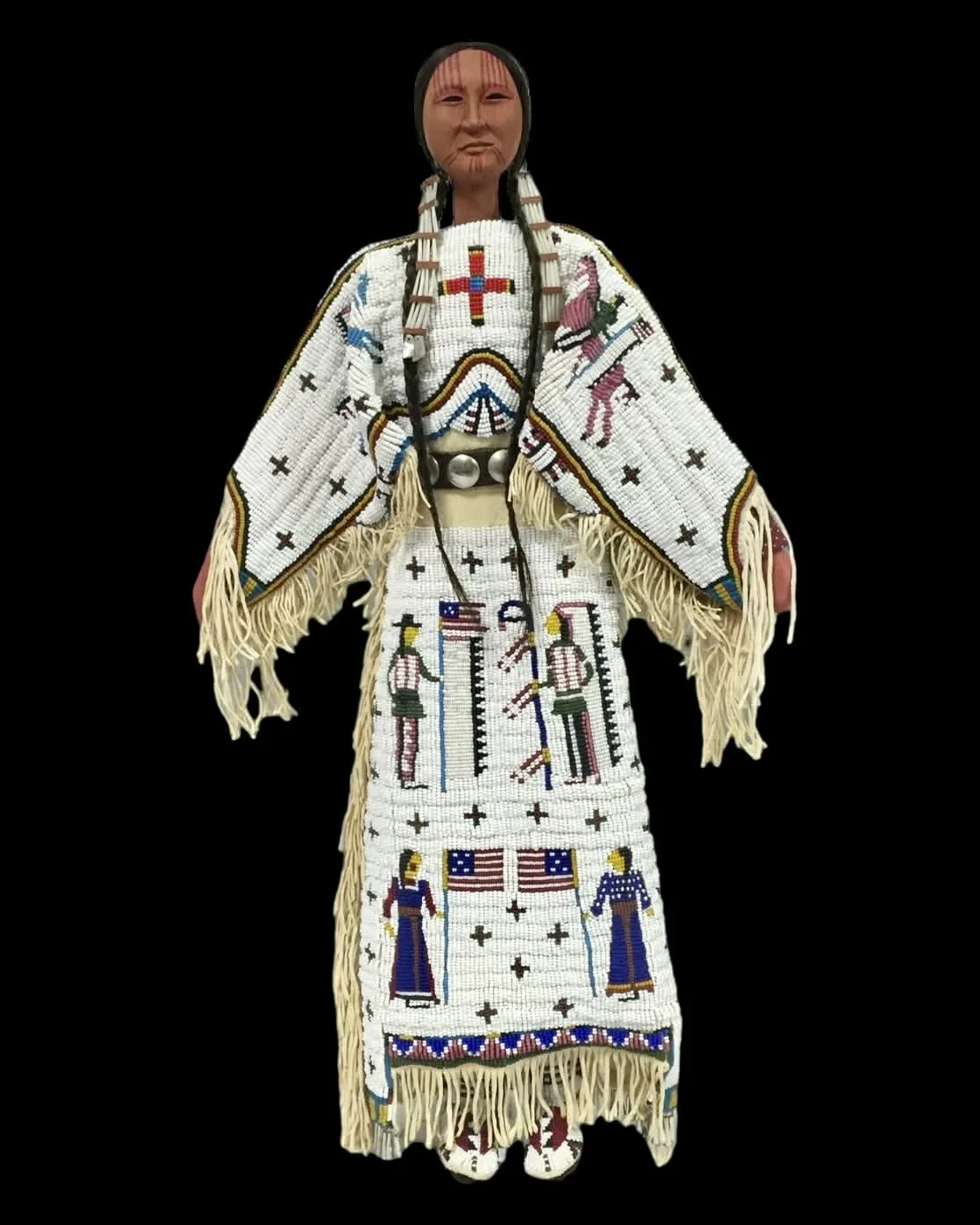
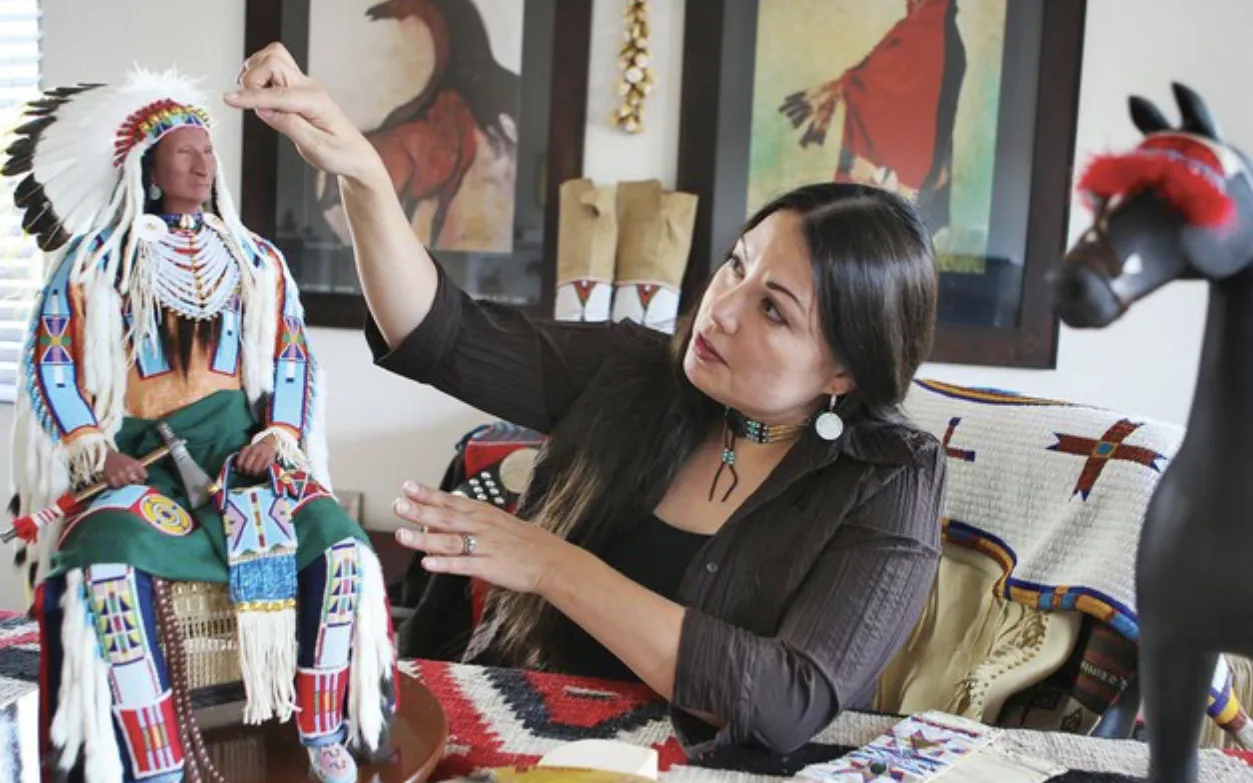
Rhonda Holy Bear grew up knowing the story of her grandmother Angeline’s beloved doll. It was made from beaded buckskin by Angeline’s grandmother, and at a tribal gathering in the 1920s, a tourist girl visited the family’s tepee and refused to leave without it. The doll was given away. Decades later, when Holy Bear came across a picture of an antique Indian doll—flashback! She began fashioning a doll body from her pillowcase, shaped an armature from a coat hanger, and with all the money she had—$10—bought cotton balls and a car chamois to simulate brain-tanned buckskin; she then sewed some of her own hair onto the doll’s head. The year was 1978, and Holy Bear had found her calling. Into many of her creations she layers beading, which she learned at nine from Ella Bear’s Heart, a community member. Holy Bear’s dolls—characters based on historical documents—are made with materials that are correct to their period. To her, making dolls is an act of reclamation: for the chiefs, the warriors, and for her Lakota relatives whose lives were consumed by alcoholism. Her work is now in the Smithsonian and the Musée du Quai Branly. It’s Angeline’s lost doll, re-discovered a thousand times over.
Adam Brand
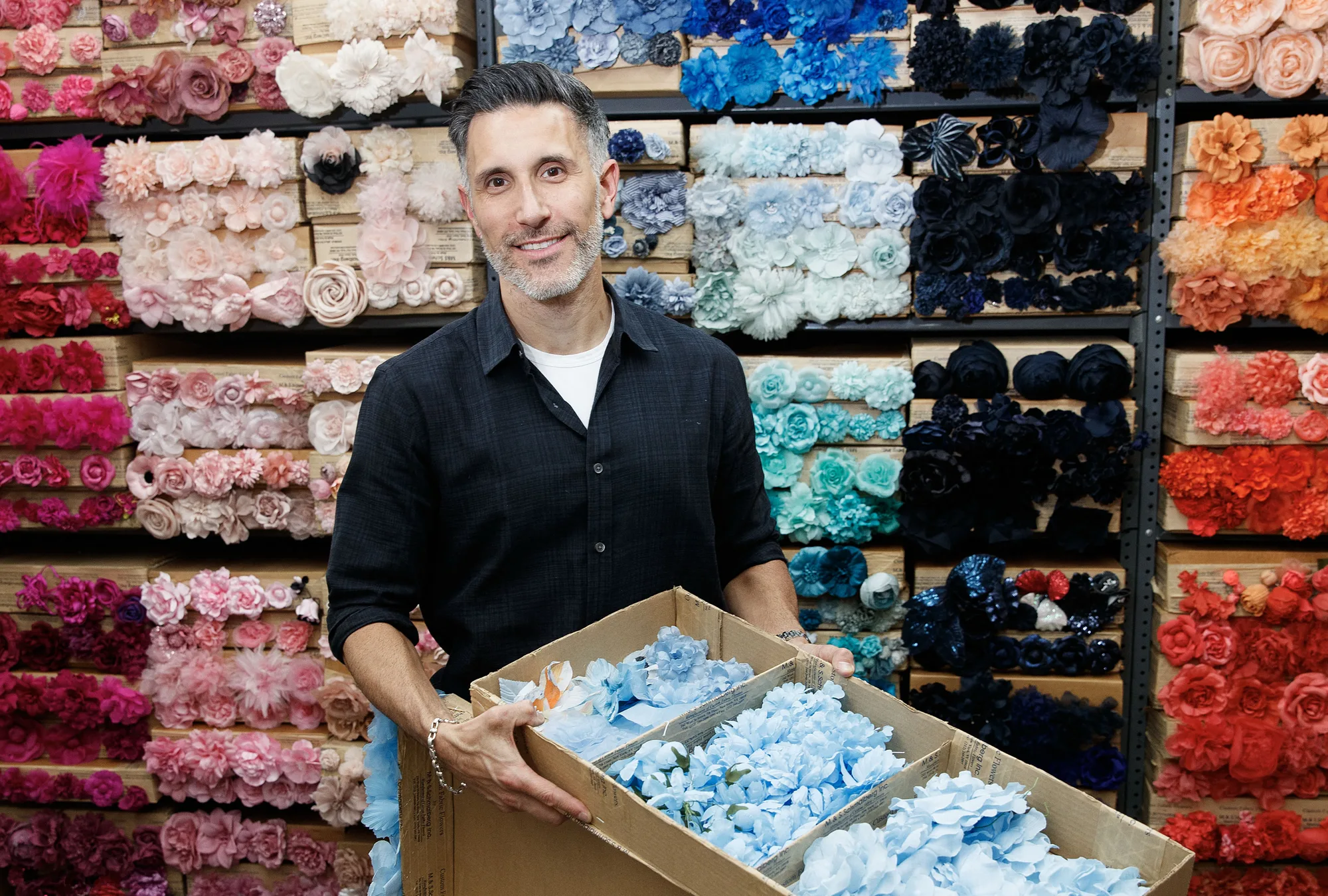
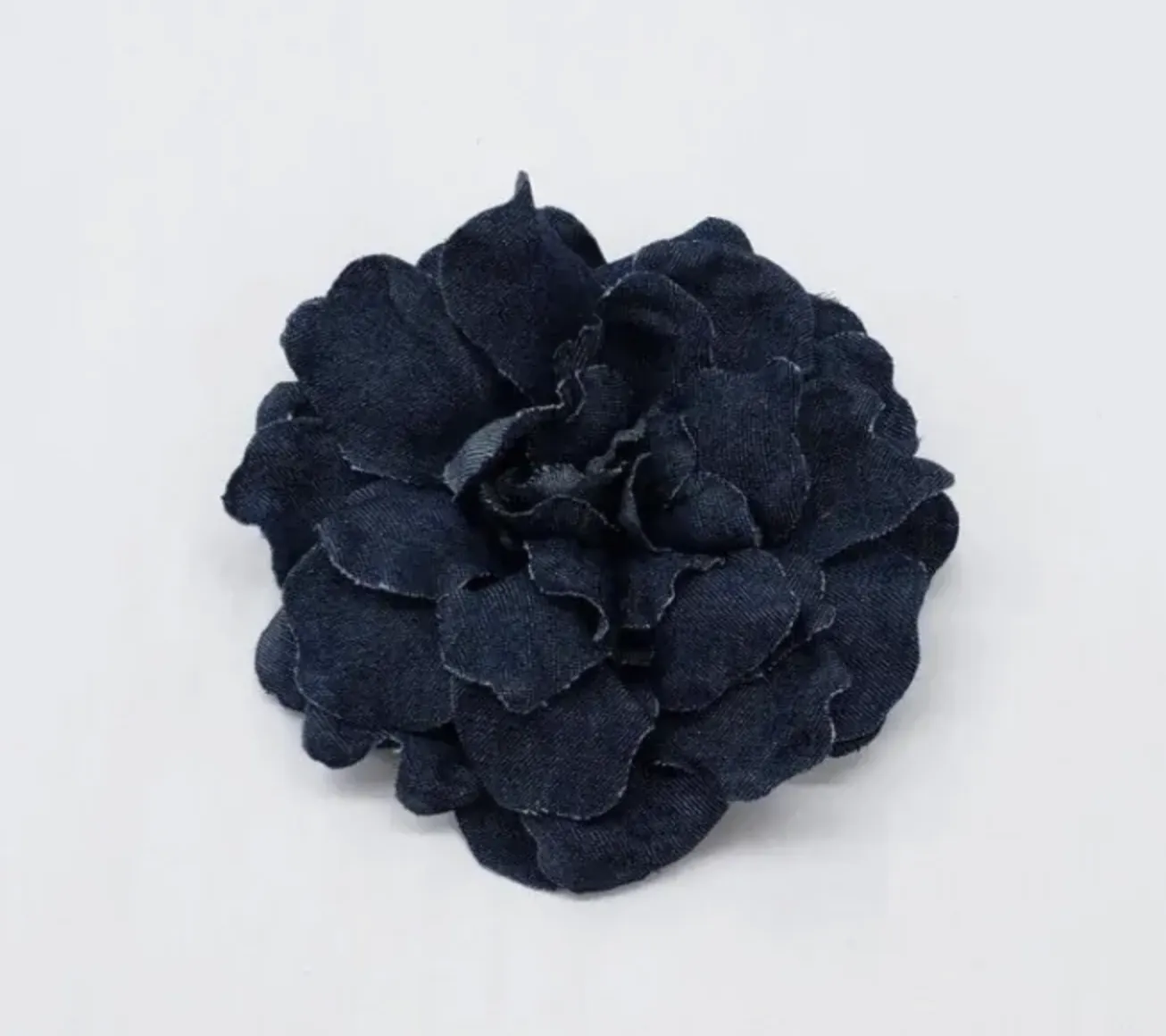
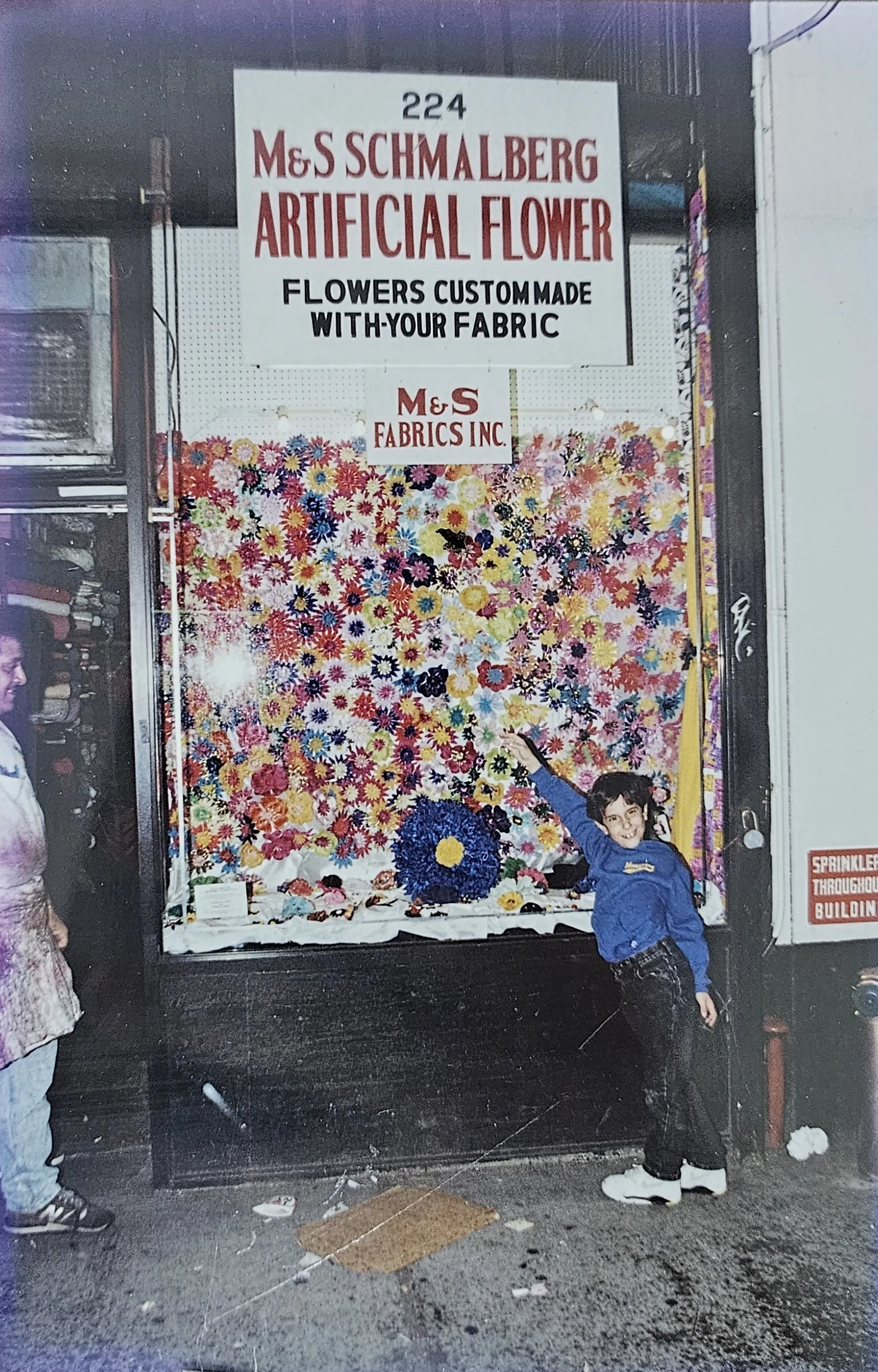
In 1916, two brothers from Poland—Morris and Sam Schmalberg—arrived in New York’s Garment District and began making fabric flowers. The city was full of people doing the same thing, with hundreds of little factories stitching and pressing petals in the buildings above the button guys and the zipper guys and the thread guys. One by one, they all closed. The Schmalbergs continued. After the war, they took in a nephew—Harold—who had survived the death camps and arrived in New York with nothing. He moved into their attic in Forest Hills, learned the trade, and spent the next 30 years paying back the brothers’ widows in monthly installments until the business was fully his. Harold’s son Warren finished college in 1977 on a Tuesday and started work on Wednesday; he brought his own son Adam to the factory as a boy, just as his father had brought him. Adam strayed: he got a psychology degree, worked in restaurants. Then one day he called his father and asked if he could come back. “Why would you want to?,” Warren asked. “We’re not making any money.” Adam came anyway. Today, M&S Schmalberg is the last handmade-fabric-flower factory in America, the old metal dies still pressing petals one by one. Adam’s daughter Dylan is already coming in on weekends.
Warren and Adam Brand on
joining the family business
Marc Savoy
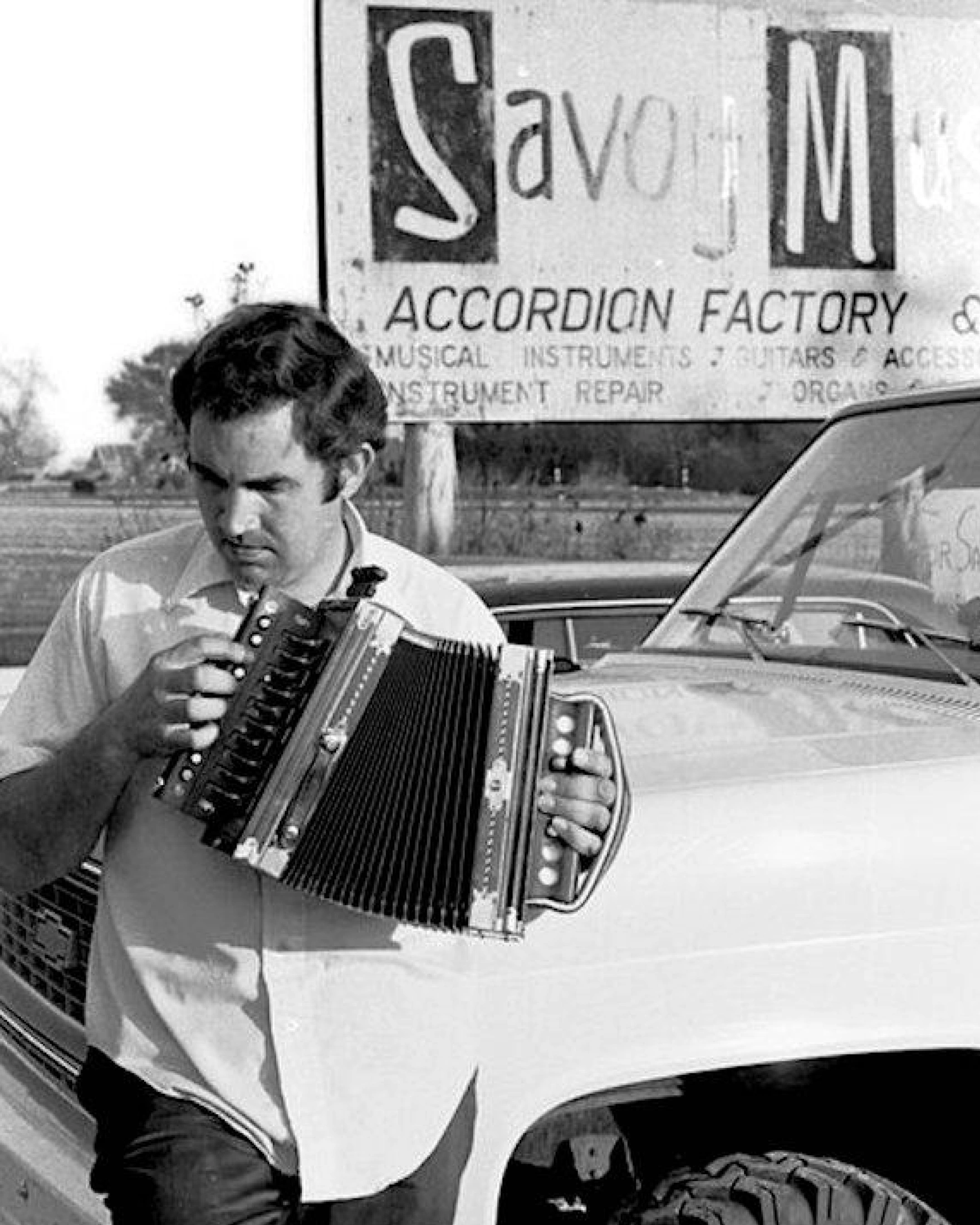
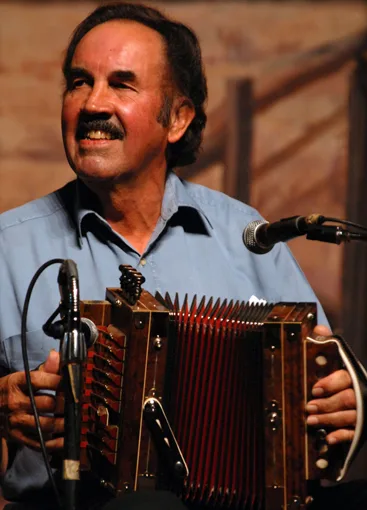
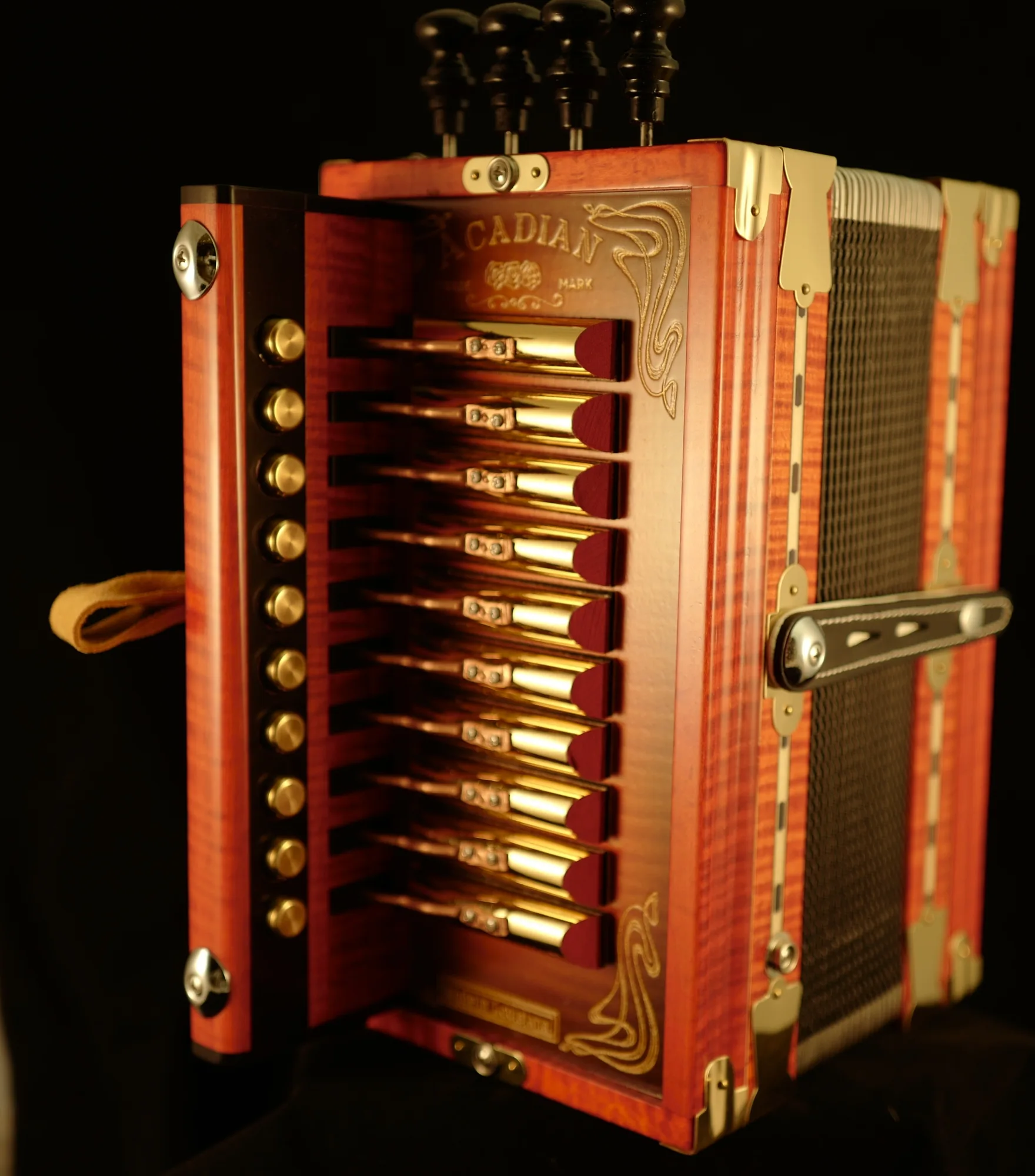
It began with a sound drifting across the fields. Marc Savoy was on his grandfather’s farm in Eunice, Louisiana, on the Prairie Faquetaïque, and something enchanting was rising from the catalpa grove, where a tenant farmer named Hiram Courville lived. It would be months before the boy would learn what sort of contraption made such a sound. At a Christmas Eve party hosted by his father, while the other kids were outside shooting fireworks, Savoy found all the wonder he needed in that brown wood box. Courville had brought his accordion. The instrument entered Cajun music in the early 20th century, when German manufacturers began producing them in the keys of C and D, which allowed fiddlers and accordionists to play in unison. At 12, Savoy got his first: a Hohner from Sears for $27.50. He began building his own accordion in 1960, throwing early attempts into the fire until he got it right. In 1966, when he was 26, he opened the Savoy Music Center in Eunice and has since produced nearly 1,000 Acadian accordions. Half a century later, Savoy still hosts a Cajun jam every Saturday morning, bringing together the region’s finest Cajun musicians and their protégés, including his own children, who have followed in his musical footsteps.
Marc Savoy on the party that changed his life
Andrea Cayetano-Jefferson
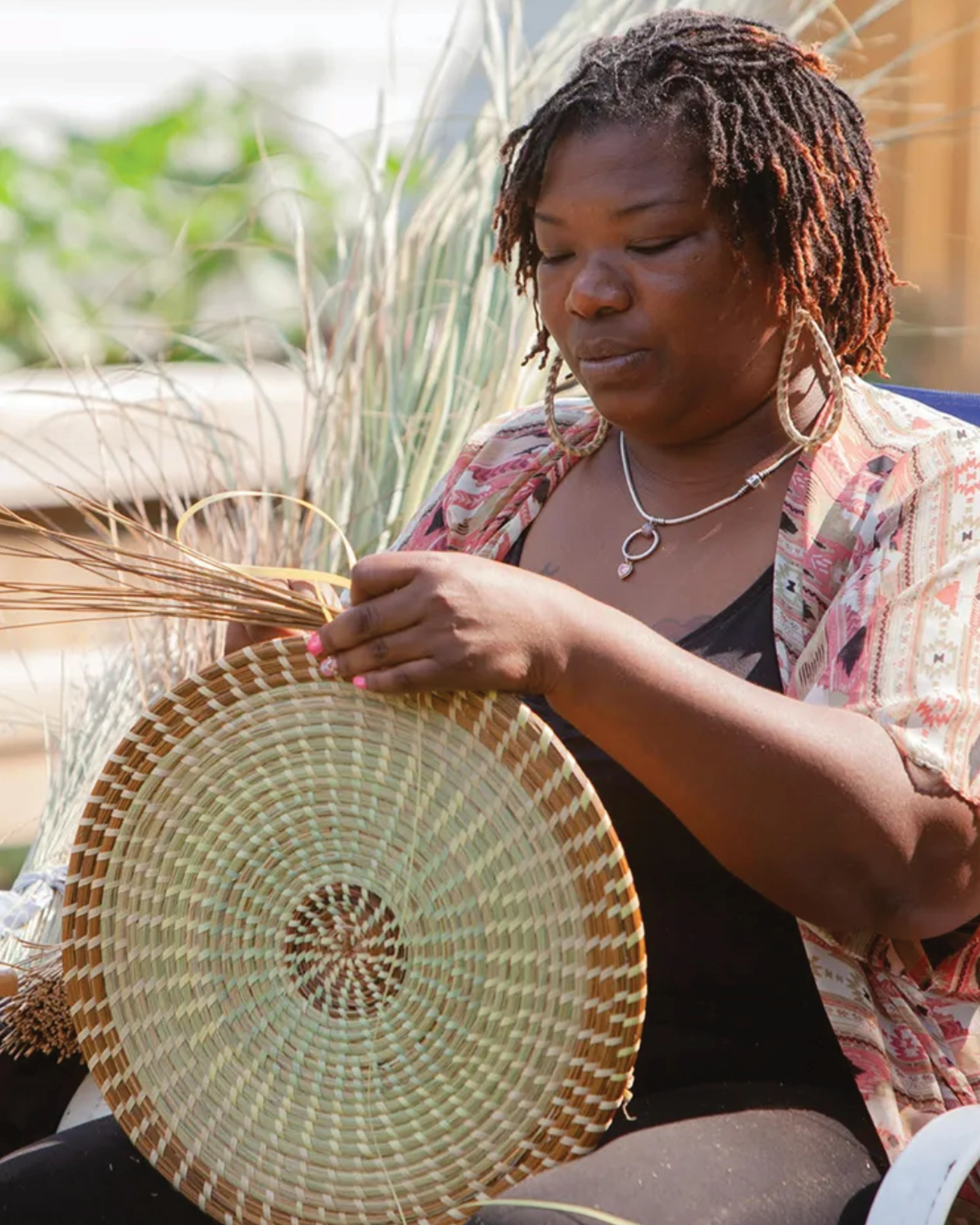
As a girl, Andrea Cayetano-Jefferson watched her grandmother, her mother, and her aunt sewing baskets on the front porch of their home outside Charleston. She was mesmerized by the art form that had been the heartbeat of her family for centuries. In the 1700s, when West Africans were shackled and shipped to the South Carolina–Georgia seaboard, some were forced to work in rice paddies, in cotton fields, and on indigo plantations, where the moist climate resembled that of their homelands. After slavery was abolished, the Gullah community settled in nearby villages, passing down the West African recipes, languages, and craft traditions that they’d kept alive all those years. Sweetgrass baskets are sewed with Low Country sweetgrass, bulrush, pine needles, and palmetto fronds. Cayetano-Jefferson is the sixth generation to master this precious technique. Her daughter, Chelsea, is the seventh.
Andrea Cayetano-Jefferson on the women who came before her
Curtis Buchanan
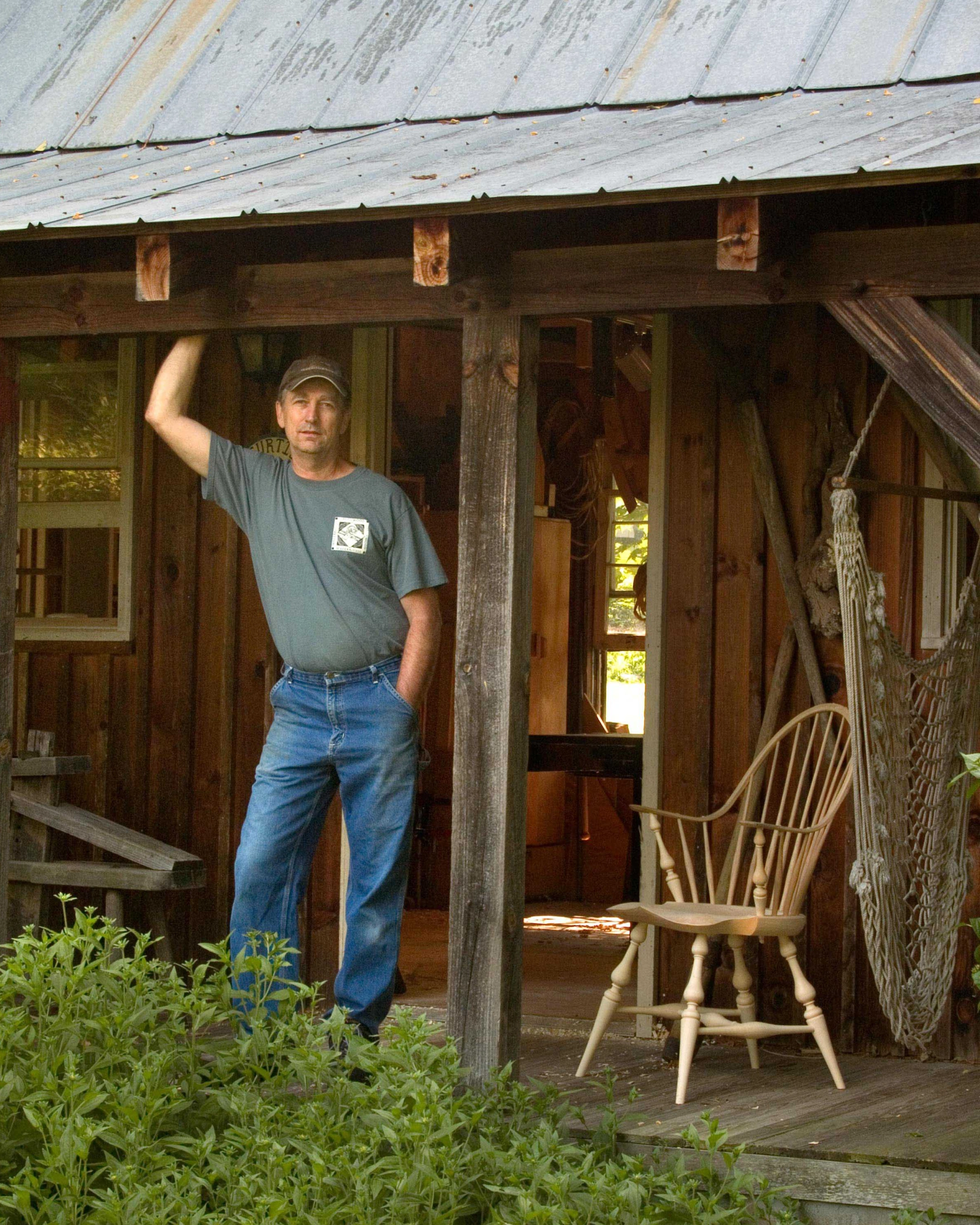
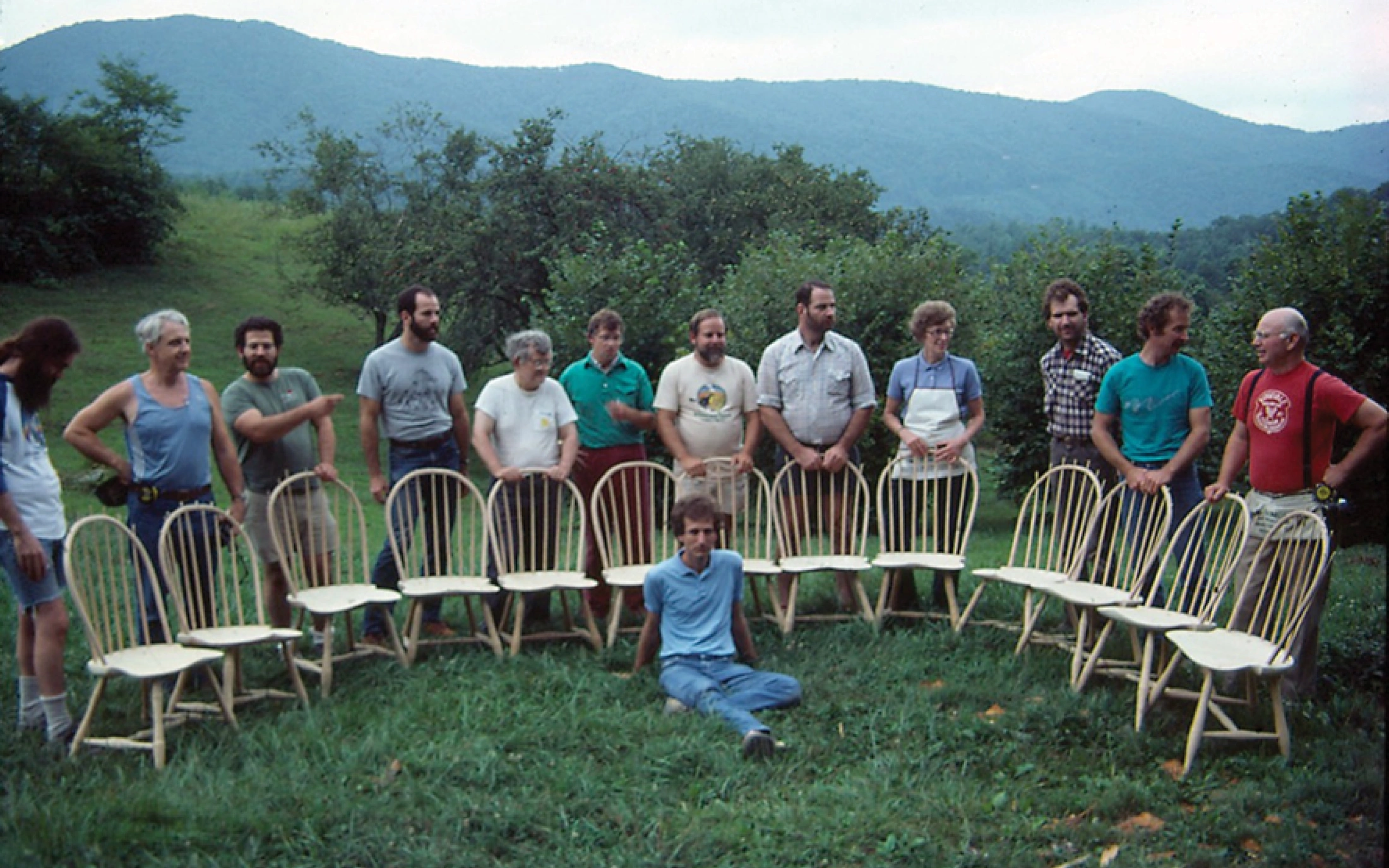
Curtis Buchanan never wanted a nine-to-five job. He just didn’t know how he’d avoid it. Living in North Carolina with young children and an encouraging wife, he tried gardening, then the idea of farming rabbits. The path to chair-making, funnily enough, began with the wood itself—his discovery that objects could be made straight from the log, free of wooden boards and power tools. The question was what to make. The answer came in 1983, in the form of Dave Sawyer, a master Windsor-chair–maker in Vermont, who welcomed Buchanan for a summer, alongside fellow craftspeople Drew and Louise Langsner. Today, Buchanan works from a 16-by-20-foot timber-framed shop in Tennessee’s Jonesborough Historic District, deep in the mountains of southern Appalachia. The Windsor chair has been around for nearly 300 years, and Buchanan honors that history, transforming logs of oak, hickory, ash, maple, and walnut into pieces that are simple, beautiful, built to last, and available for purchase. His chairs also grace the Tennessee State Museum, the Tennessee State Governor’s Mansion, and Thomas Jefferson’s home, Monticello.
Curtis Buchanan on
finding his way to woodworking
Tyrrell Tapaha
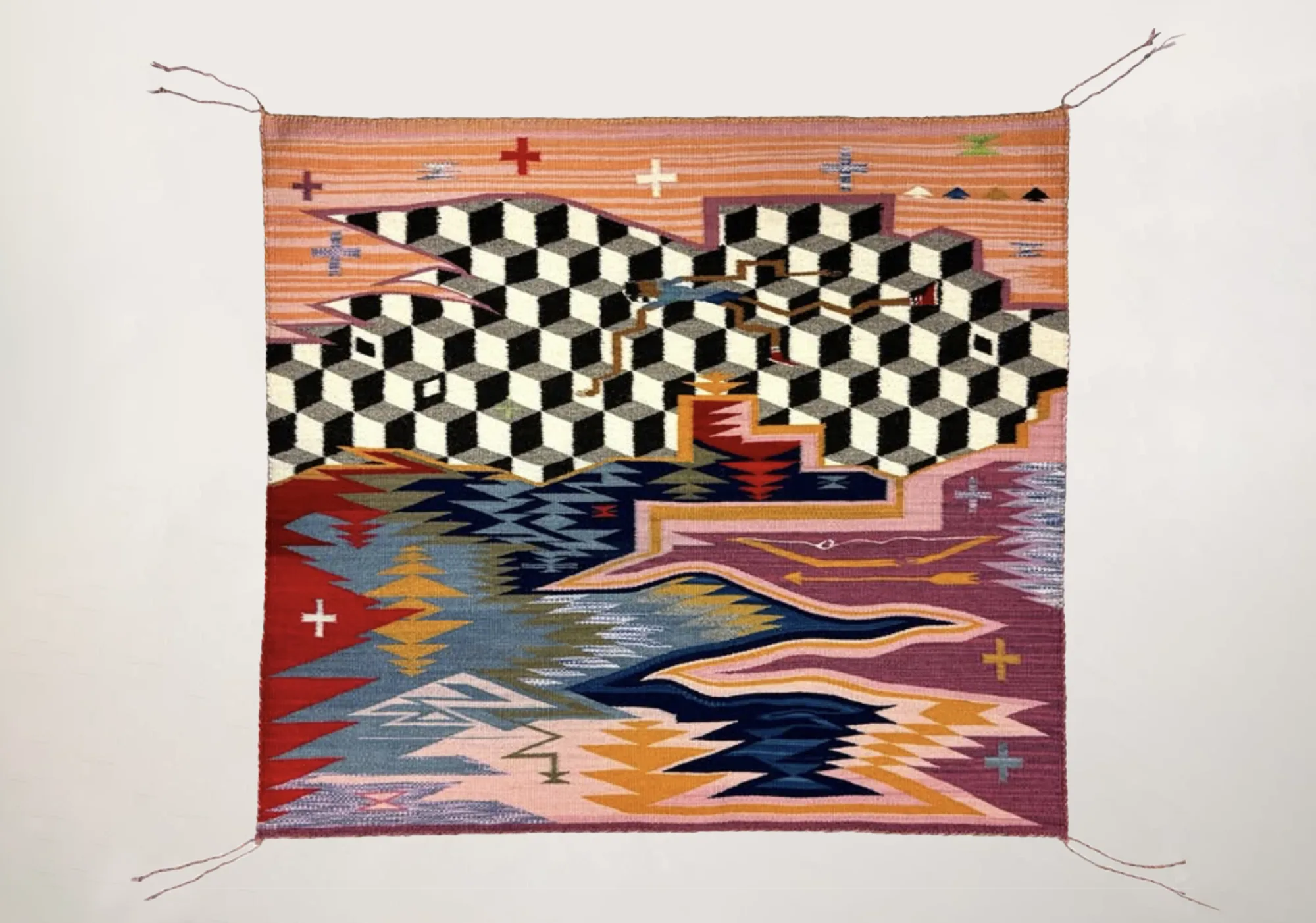
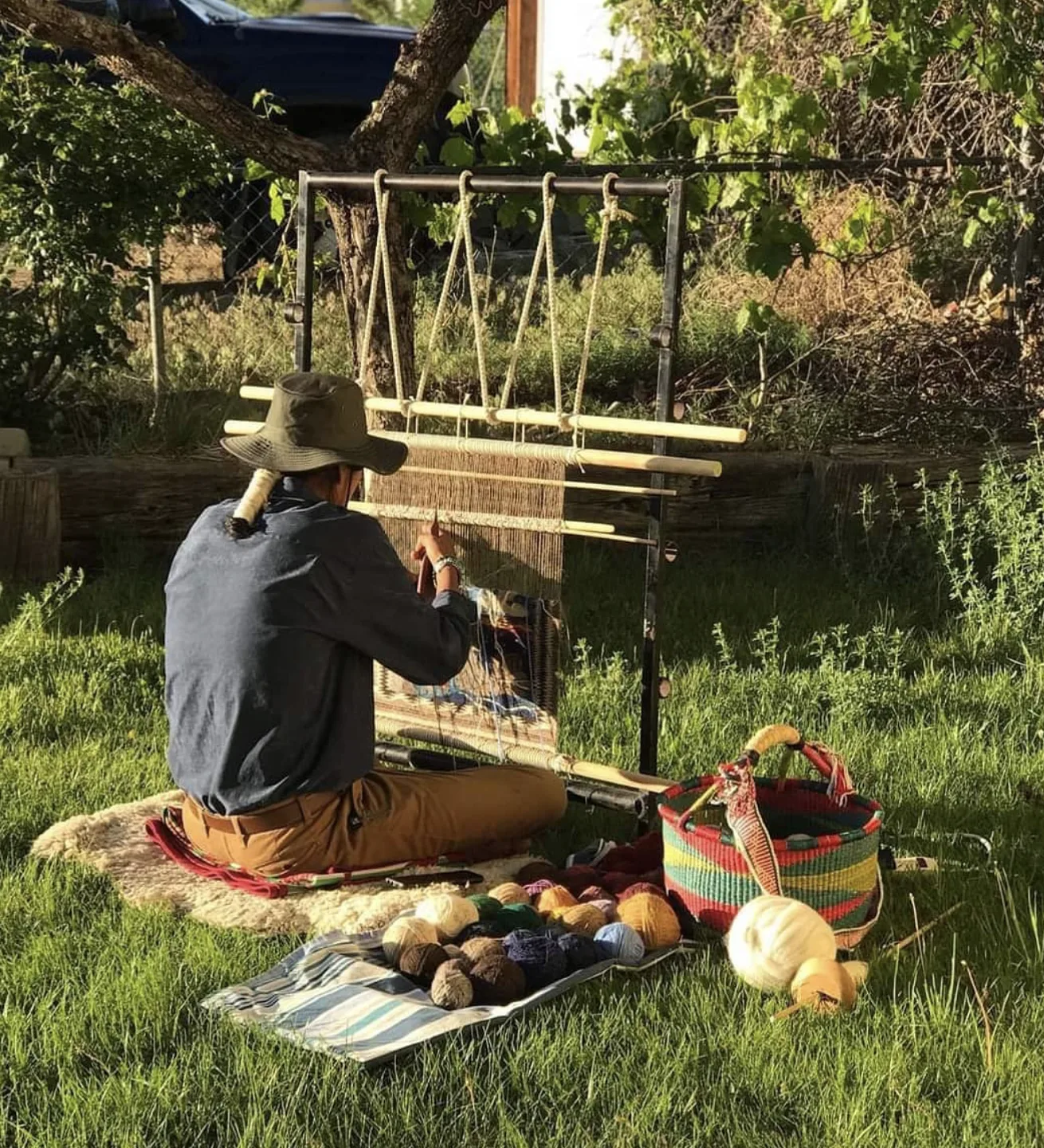
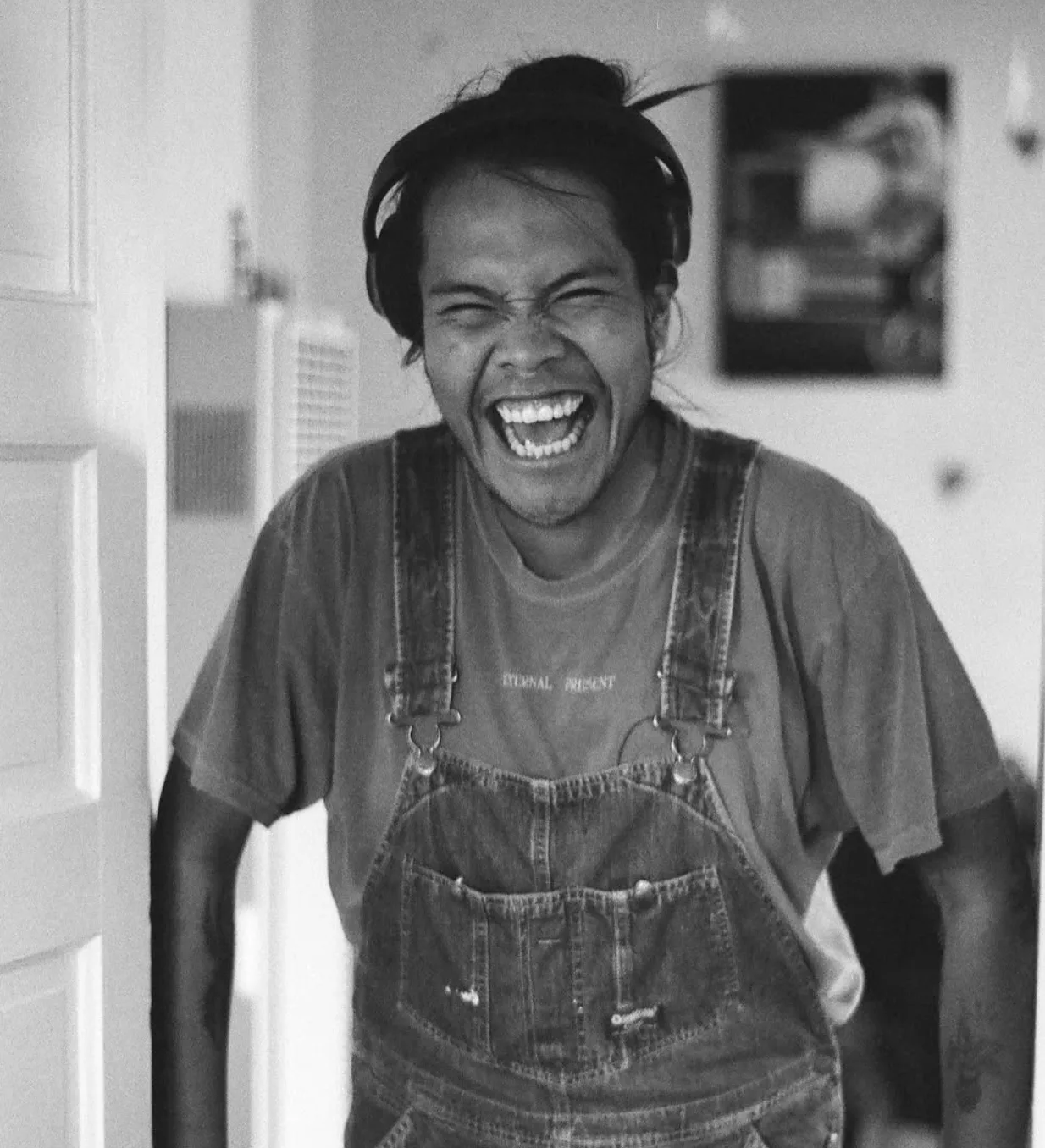
Tyrrell Tapaha began weaving at age seven. He was taught by his great-grandmother Mary Kady Clah and other family members on the Navajo Nation at Goat Springs, Arizona, located in the Four Corners region, where the borders of Arizona, Colorado, New Mexico, and Utah meet. Tyrrell spent his childhood in the Carrizo Mountains, tending the family’s Navajo-Churro sheep, learning to card and spin their wool. He is a sixth-generation Tapaha weaver, and the process hasn’t changed—it starts in the pasture and ends at the loom. Tapaha forages across the desert for plants to make natural dyes, and then weaves the wool into a textile. A large piece can take months; some days at the loom run to 16 hours, and in the winter, working with fine yarn, eight hours of weaving might yield an inch of fabric. The tapestries that emerge are anything but traditional in their imagery. Tapaha investigates and challenges colonialist frameworks and sheds light on the inequities of the trading-post system. “Despite my work being a little isolating and a little different,” Tapaha has said, “it is my practice and who I am as a person.”
Bob Kramer
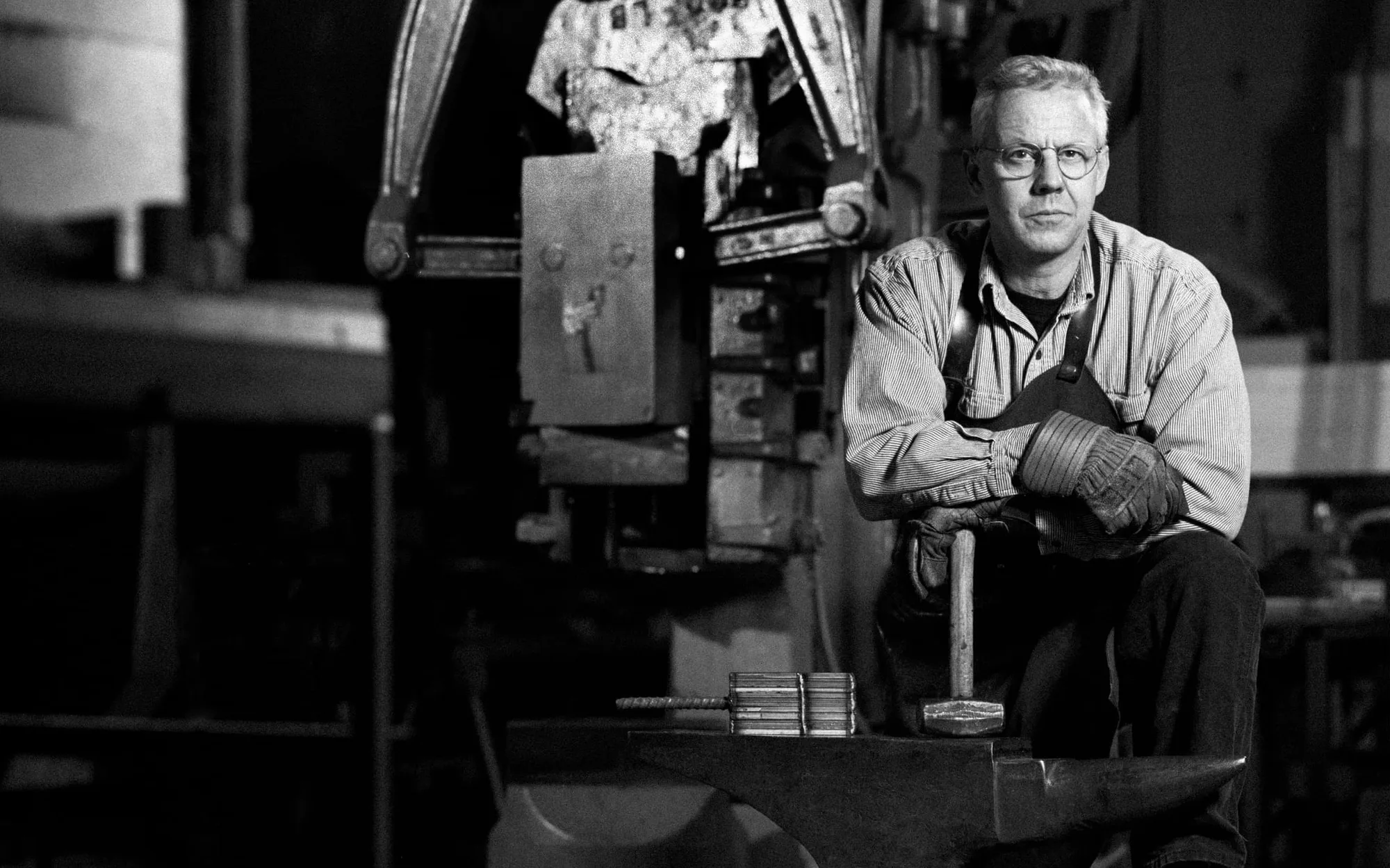
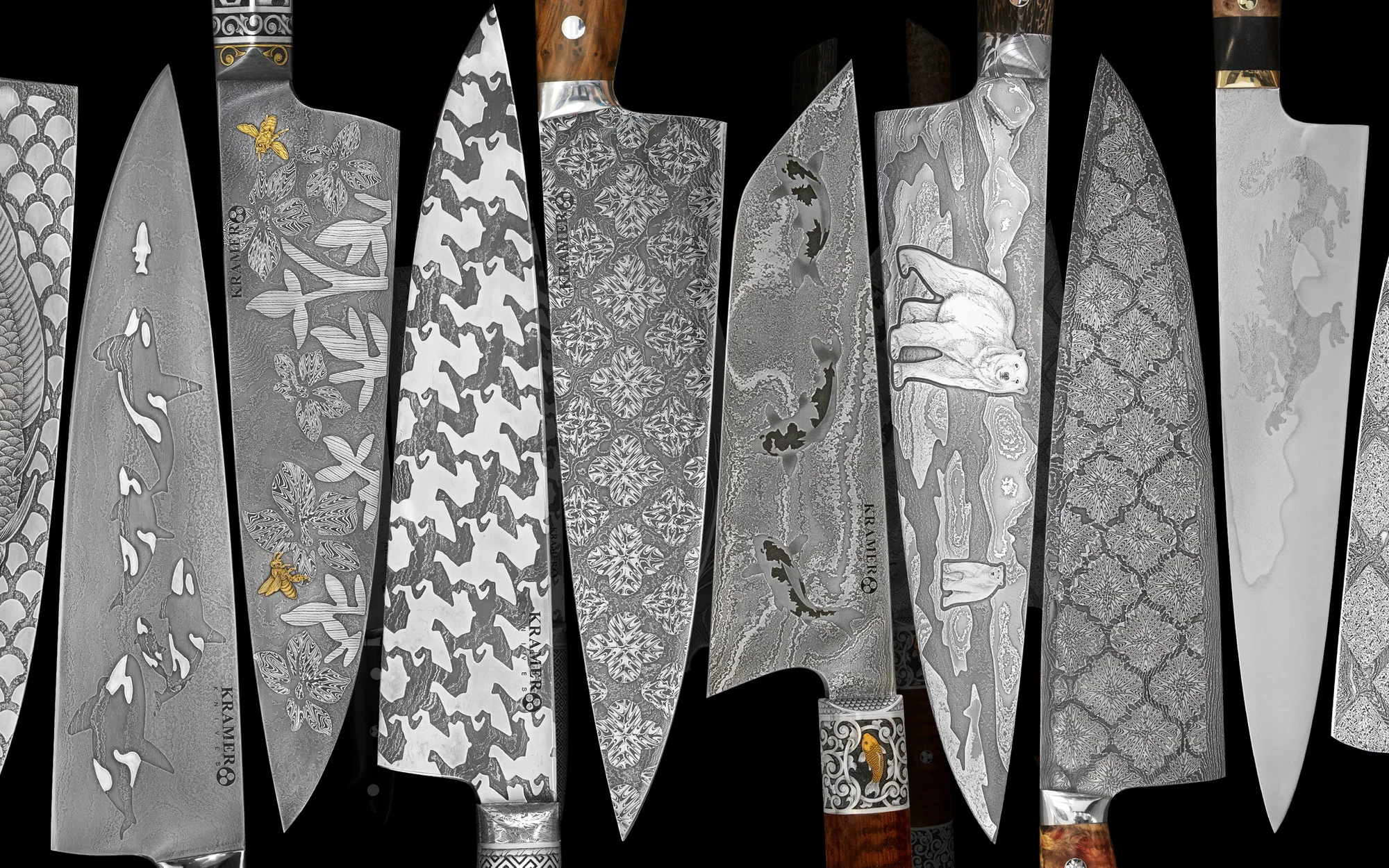
Before Bob Kramer became one of the finest bladesmiths in the world, he tried a slew of other jobs. Cooking. Improvisational theater. A year traveling the country by train as a Ringling Bros. clown. Knives came later. In 1986, Kramer started a sharpening business in a truck, which he drove around Seattle to fish markets, hotels, and restaurants. One day he saw a picture of a handcrafted blade in a magazine and made haste into a bladesmithing class in Hope, Arkansas. Back home in Seattle, Kramer, now an apprentice knife-maker, built a forge in his garage and nearly burned the house down. What he aspired to wasn’t a family tradition but a guild—one of the most demanding in American craft. To become one of just 120 master bladesmiths in the world, he had to pass the American Bladesmith Society’s grueling four-part certification test: 1) sever a free-hanging inch-thick rope in a single swipe; 2) chop through a two-by-four, twice in succession; 3) without resharpening, shave the hair on one arm; 4) with the blade secured in a vise, bend it to a 90-degree angle without it snapping. The knives that Kramer makes now—hand-forged carbon steel, each taking a full month to produce—are considered by many to be the best kitchen knives in the world. “You might think that ‘perfect’ is the operative word,” Kramer has said. “But for me it’s the pursuit.”

George Kalajian
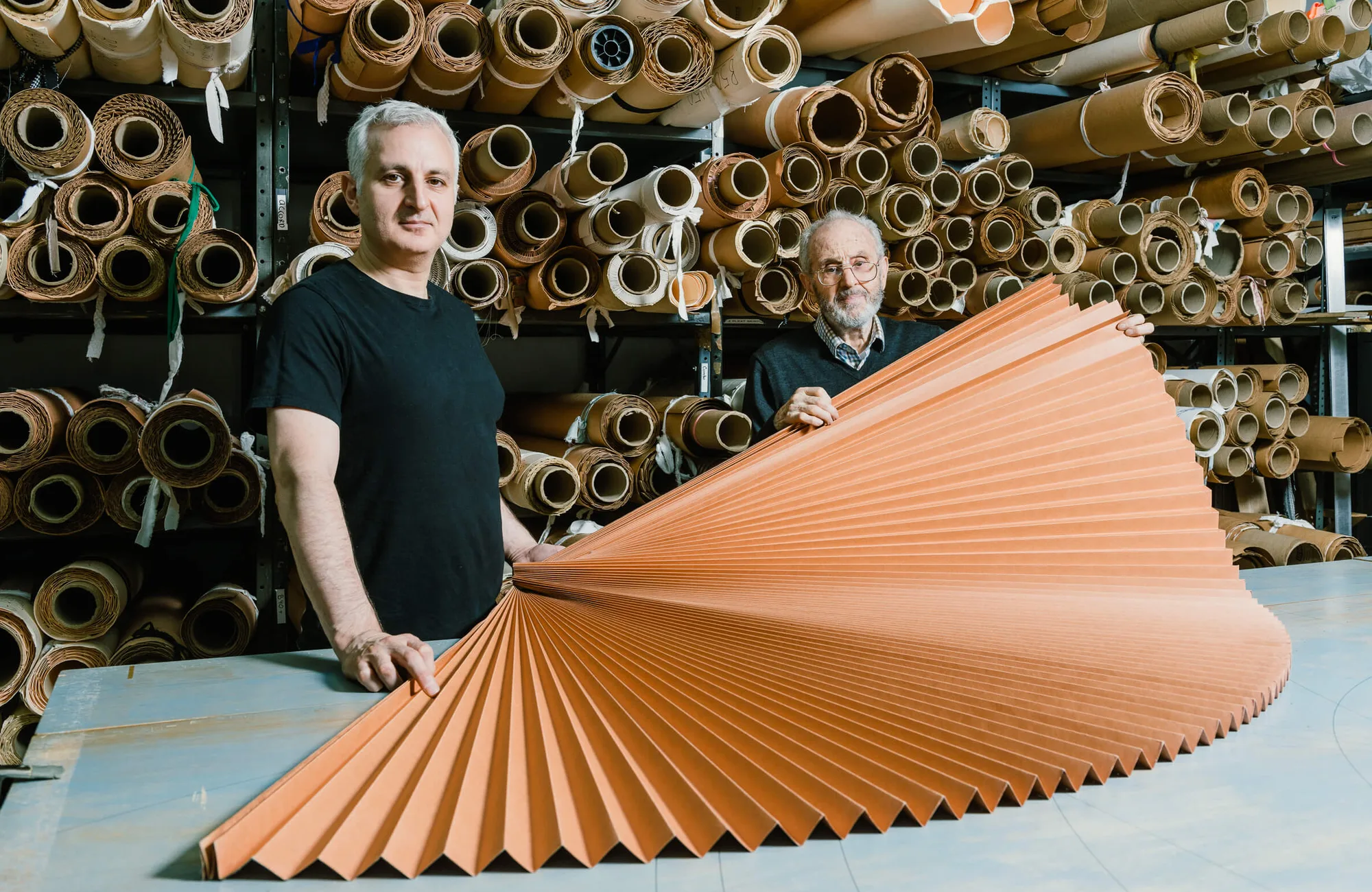
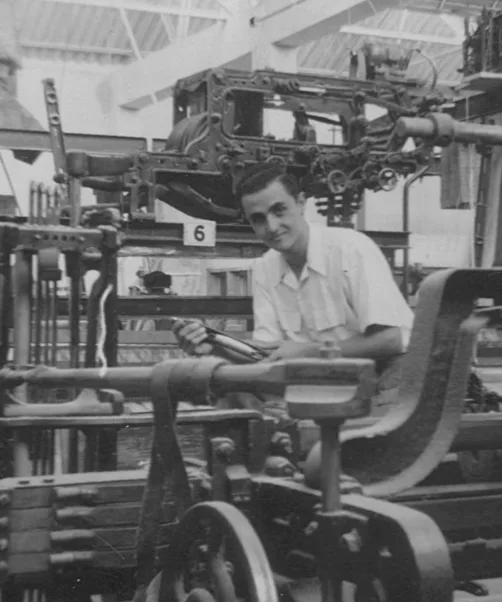
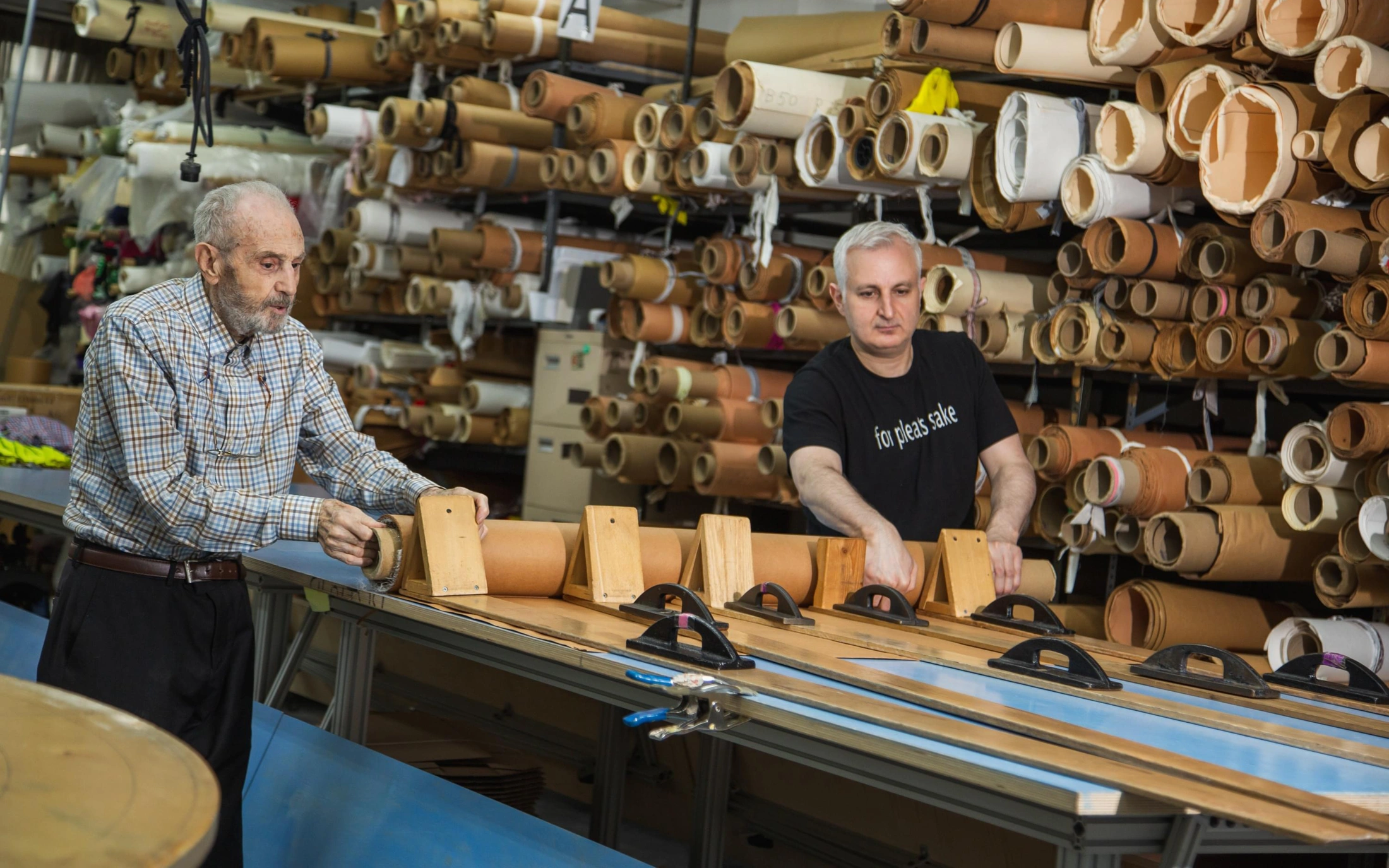
The story of Tom’s Sons International Pleating began 150 years ago in Diyarbakir, Turkey, where George Kalajian’s great-great-grandfather, Krikor Tutounjian, built a textile mill devoted to silk brocade. His son Hagop eventually moved to Lyon, France, where he opened his own mill and discovered pleating and the French art of Jacquard card punching (an automated system that allows for complex weaving patterns row by row). The secrets were so closely guarded that when Hagop’s daughter Rosa took up the craft, her own son Leon wasn’t allowed to peek into the room where she worked. The most he could do was heat the coals for her iron. When Leon became a teenager, he was finally trusted with the family heirloom. By then, they had moved to Lebanon, where Leon ran the biggest pleating factory in the Middle East, until the civil war drove him to New York in the 1970s. He set up in the Garment Center with his wife, Sera, and sister Rita, naming one of his businesses Tom’s Sons, after his father, Thomas. Leon’s children, daunted by a shrinking industry, looked elsewhere. But one day, while helping his mother, George felt the full weight of what would be lost. He joined the company in 2010, added “International Pleating” to the name, and has since worked with everyone from Calvin Klein to Proenza Schouler, Khaite, Thom Browne, and the Row.
George Kalajian on honoring his lineage
Jeff Gollehon
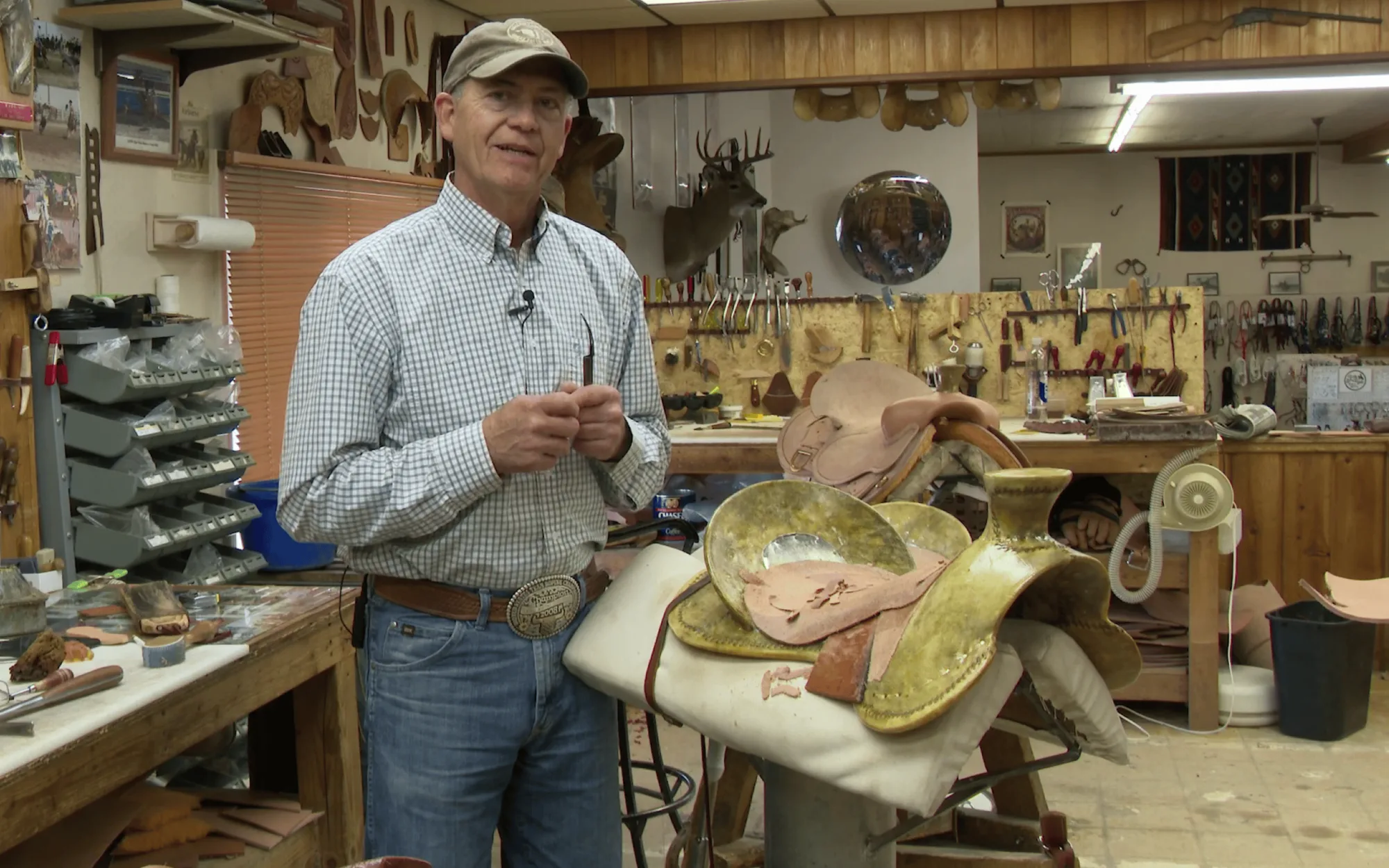
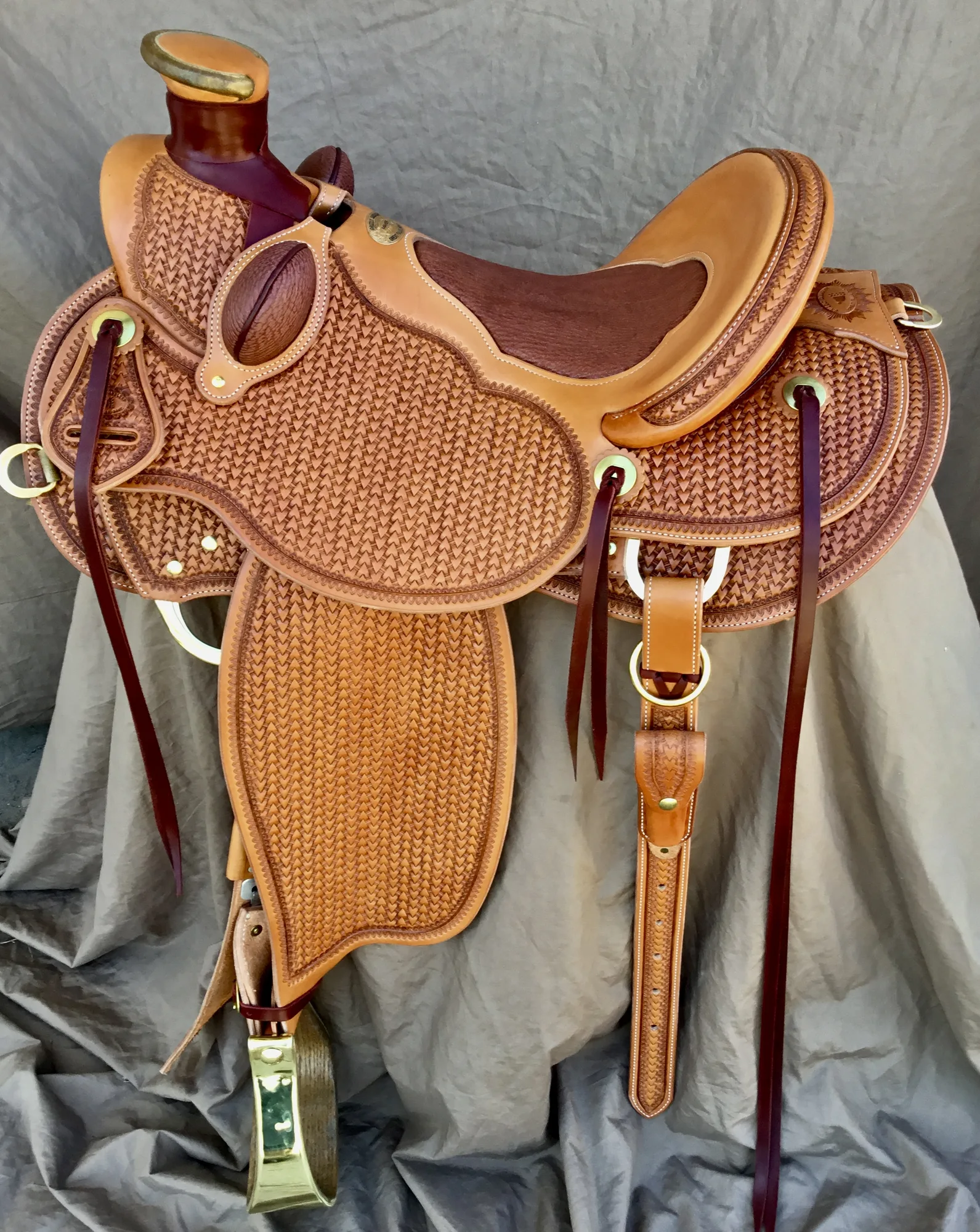
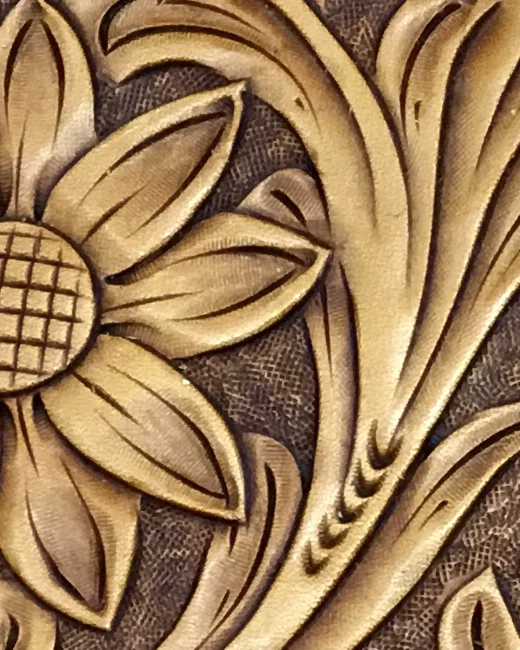
In the late 1800s, Victor Ario, a 19-year-old Austrian immigrant raised among the horsemen of the Hungarian plains, arrived in Great Falls, Montana. By the late 1980s, he’d founded Victor Ario Saddlery, which produced 500 saddles a year until Ario died, in 1959. The name eventually changed to Grizzly Saddlery, but the spirit of the place held. Jeff Gollehon’s story began closer to home. When he was 10, his father had a custom saddle made in Choteau, Montana, by a craftsman named Jess C. Bleeker. Gollehon witnessed the process, was entranced, and as a teen enrolled in saddlery classes in Spokane, before apprenticing under Bleeker himself. A year later, his story folded into Ario’s: he joined Grizzly, bought it in 1990, and has been there ever since.
Jeff Gollehon on
falling in love with saddlemaking
Frank Shattuck
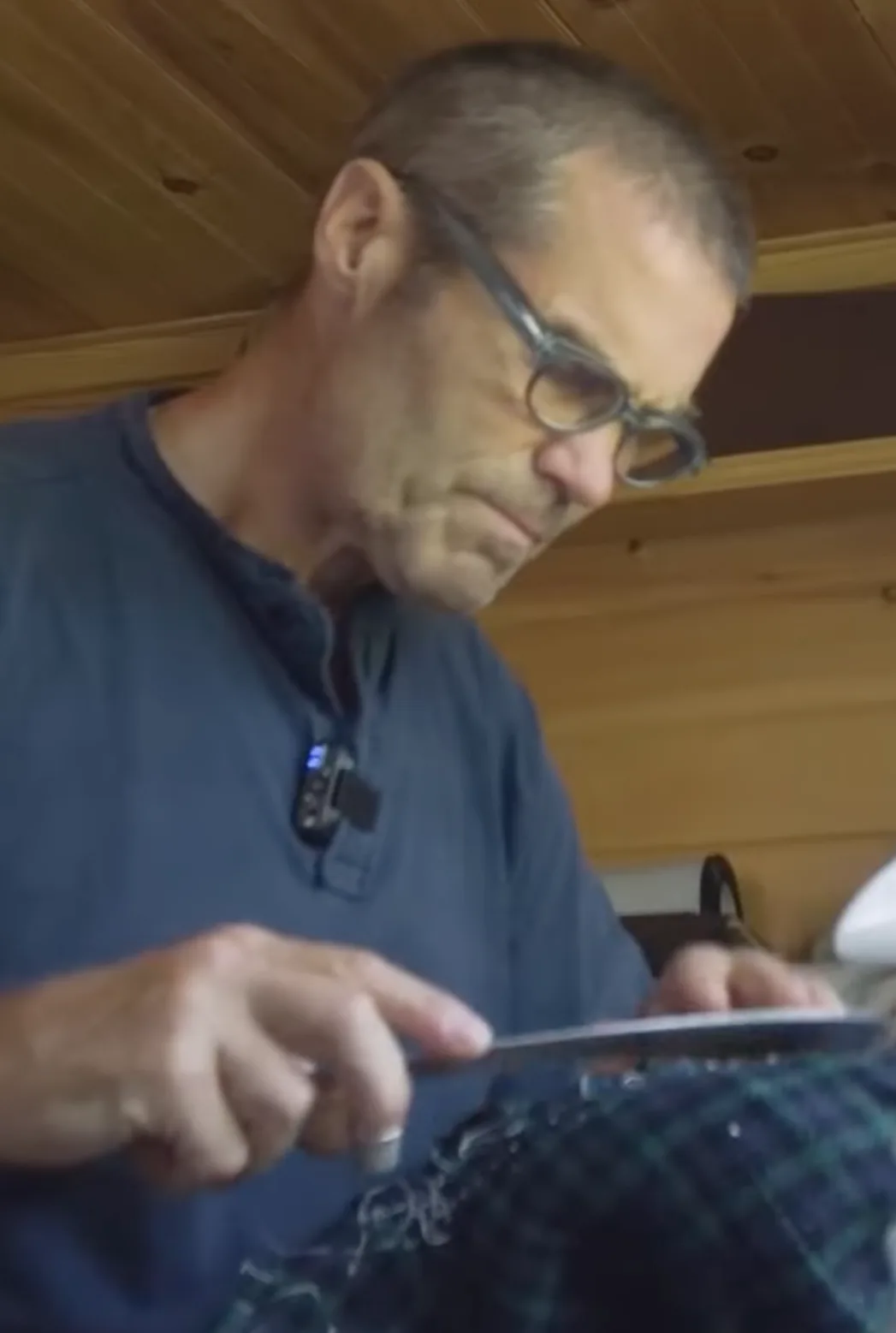
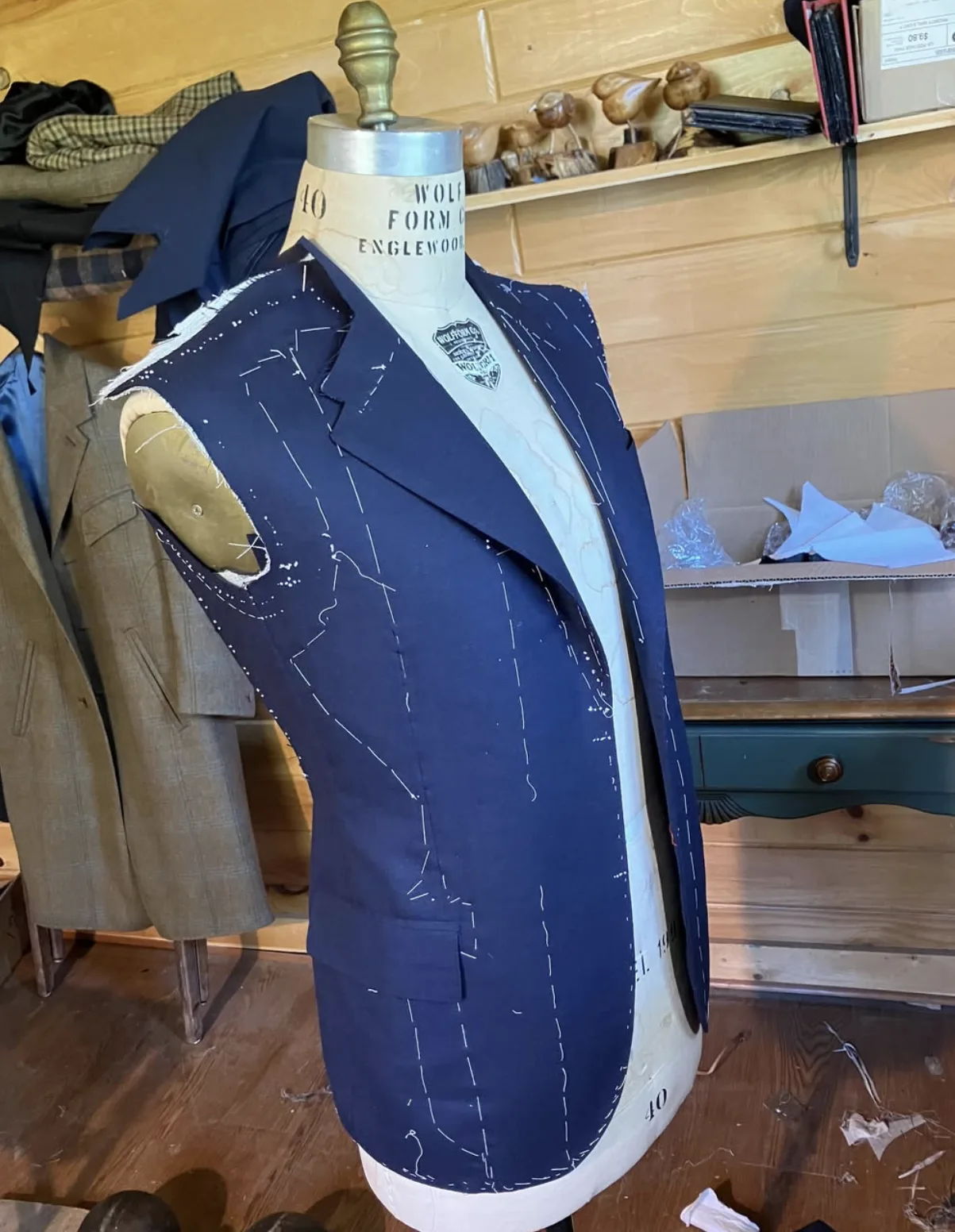
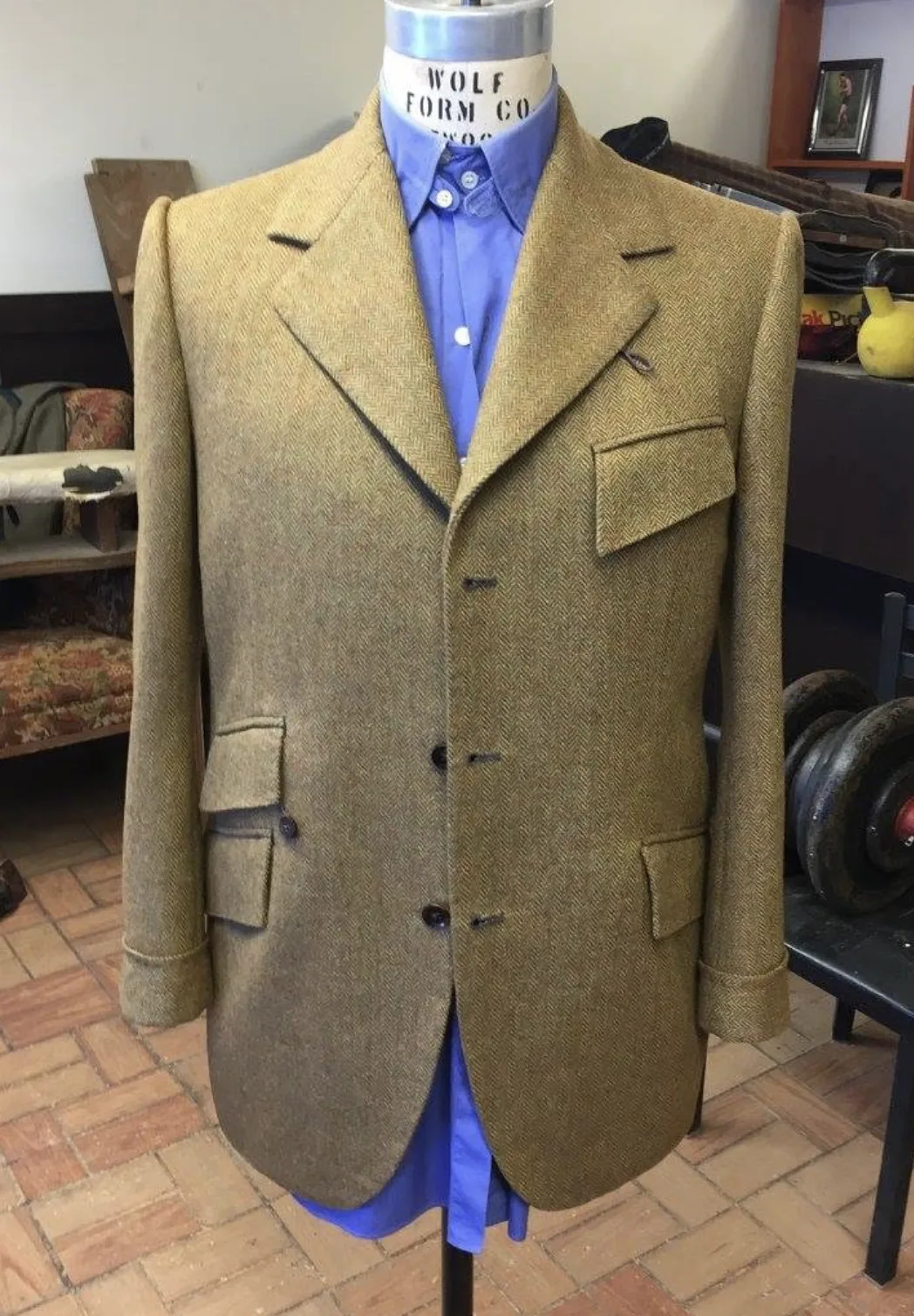
If someone walked past Frank Shattuck’s little shop in Sackets Harbor, New York, they’d never guess what was inside. “No one is making suits the way Frank does,” Anthony Bourdain said in 2015. Growing up in Syracuse, Shattuck watched his great-grandfather and both grandfathers getting their suits made at Frank and Carl Cesta’s shop. The Cesta brothers had arrived from Rome in 1920, where they’d begun training in the early years of their childhoods. One day, a family friend pointed out how often the young Shattuck came around. Carl offered him an apprenticeship, and Shattuck accepted without hesitation. He worked there eight years, until the Cesta brothers, who had entered their 90s, closed the shop. Knowing that New York City was where the masters worked, Shattuck moved there, took a job under Alan Flusser, and met Raphael Raffaelli, the Argentinean tailor who would become his maestro. It took more than 10 years before Shattuck felt ready to work alone, by which point most of the old guard had died. He learned to box, briefly appeared in Boardwalk Empire, and moved back upstate to open his own place, surrounded by grass and cows.
Frank Shattuck on tailoring’s old-guard
Travis Owens
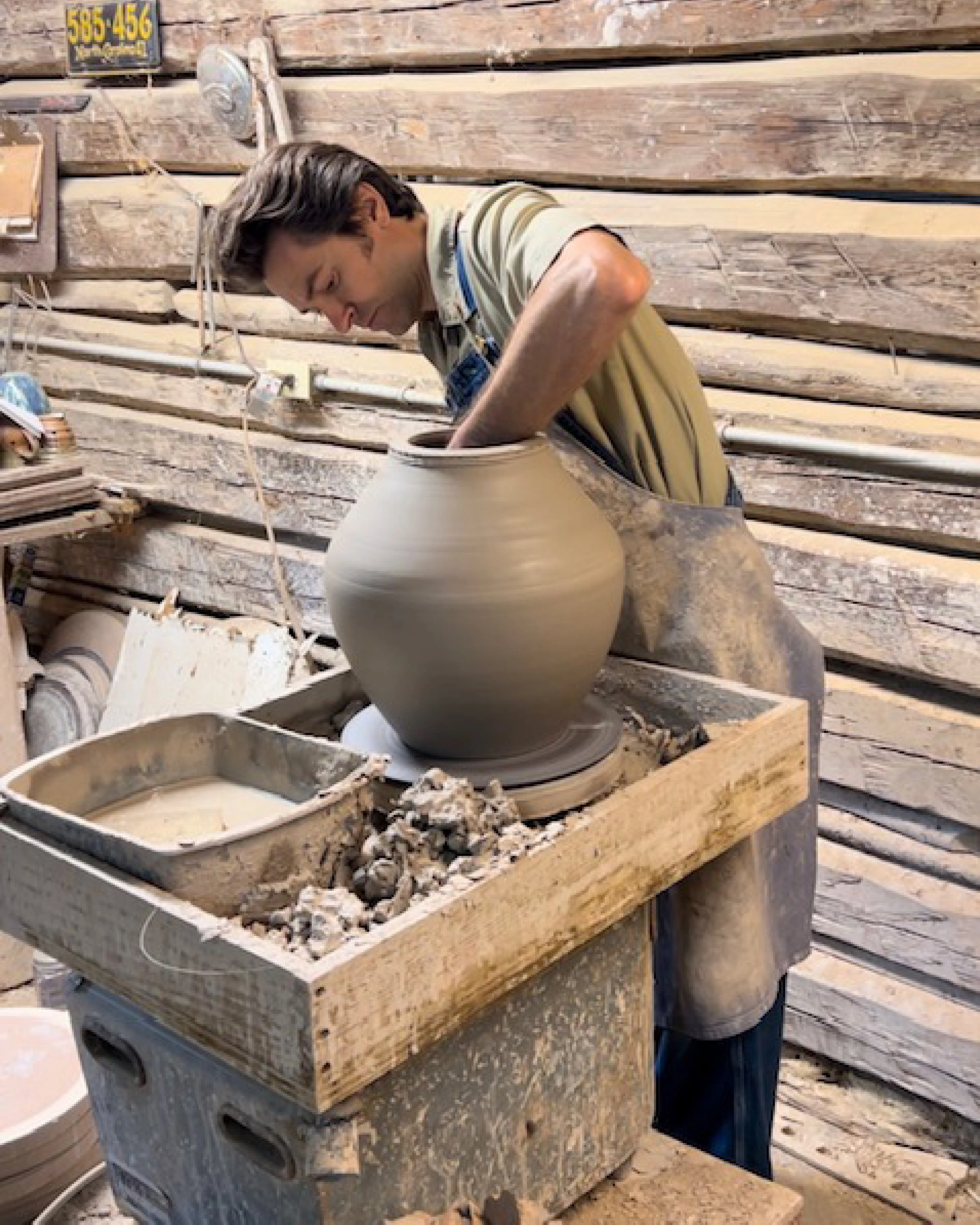
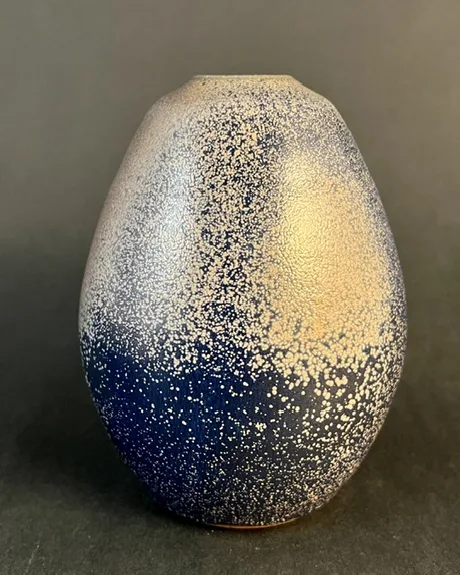
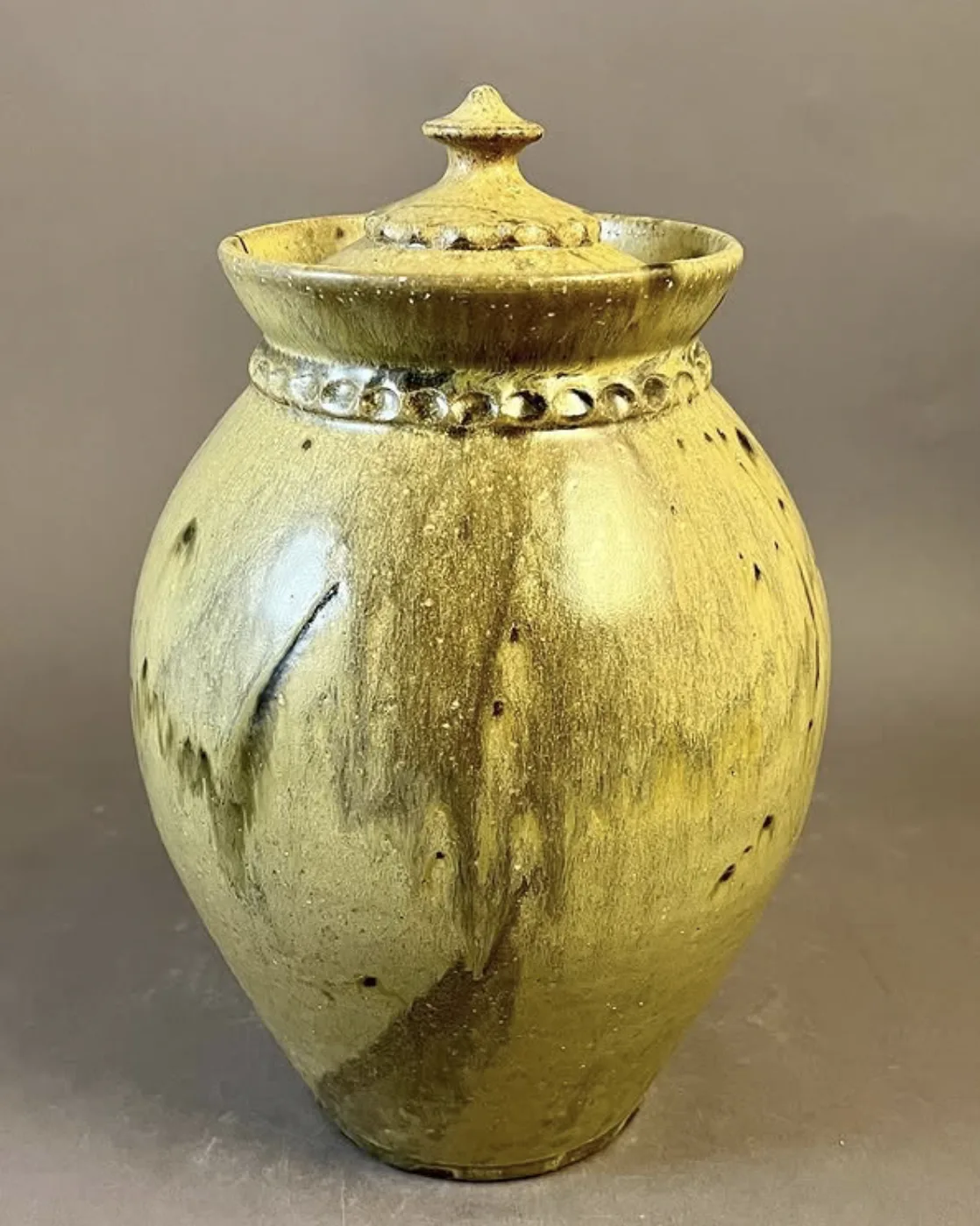
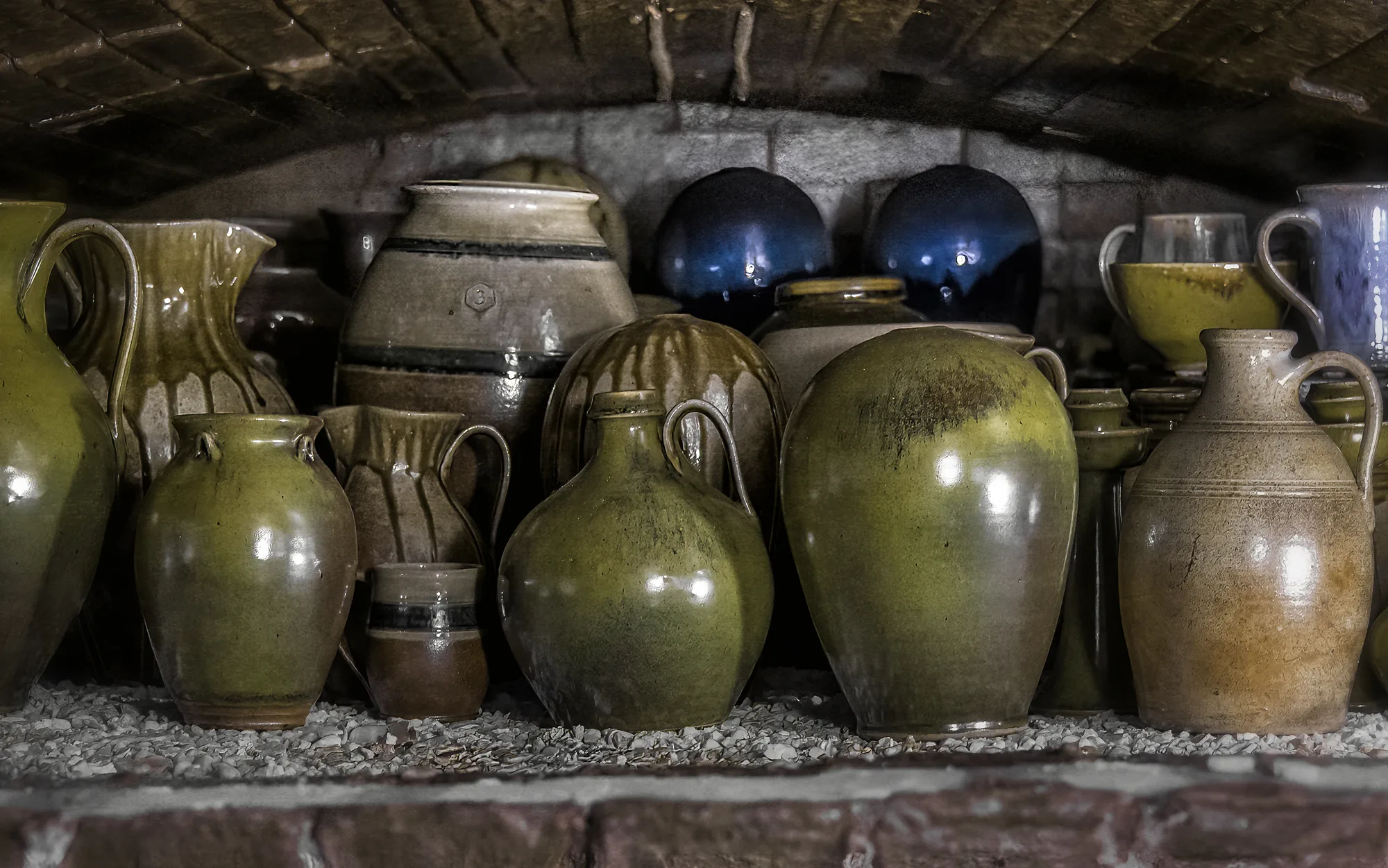
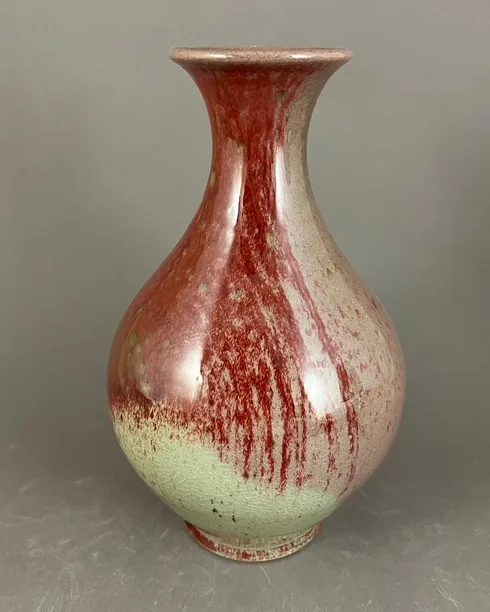
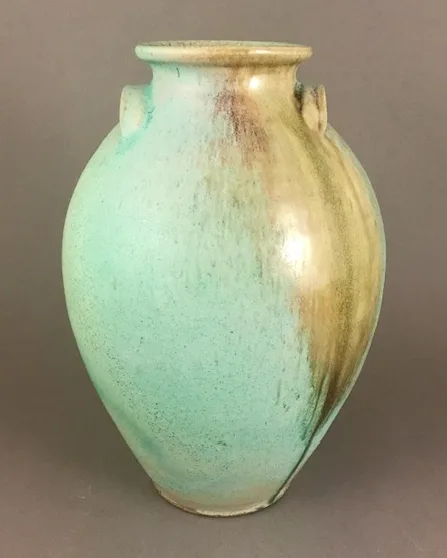
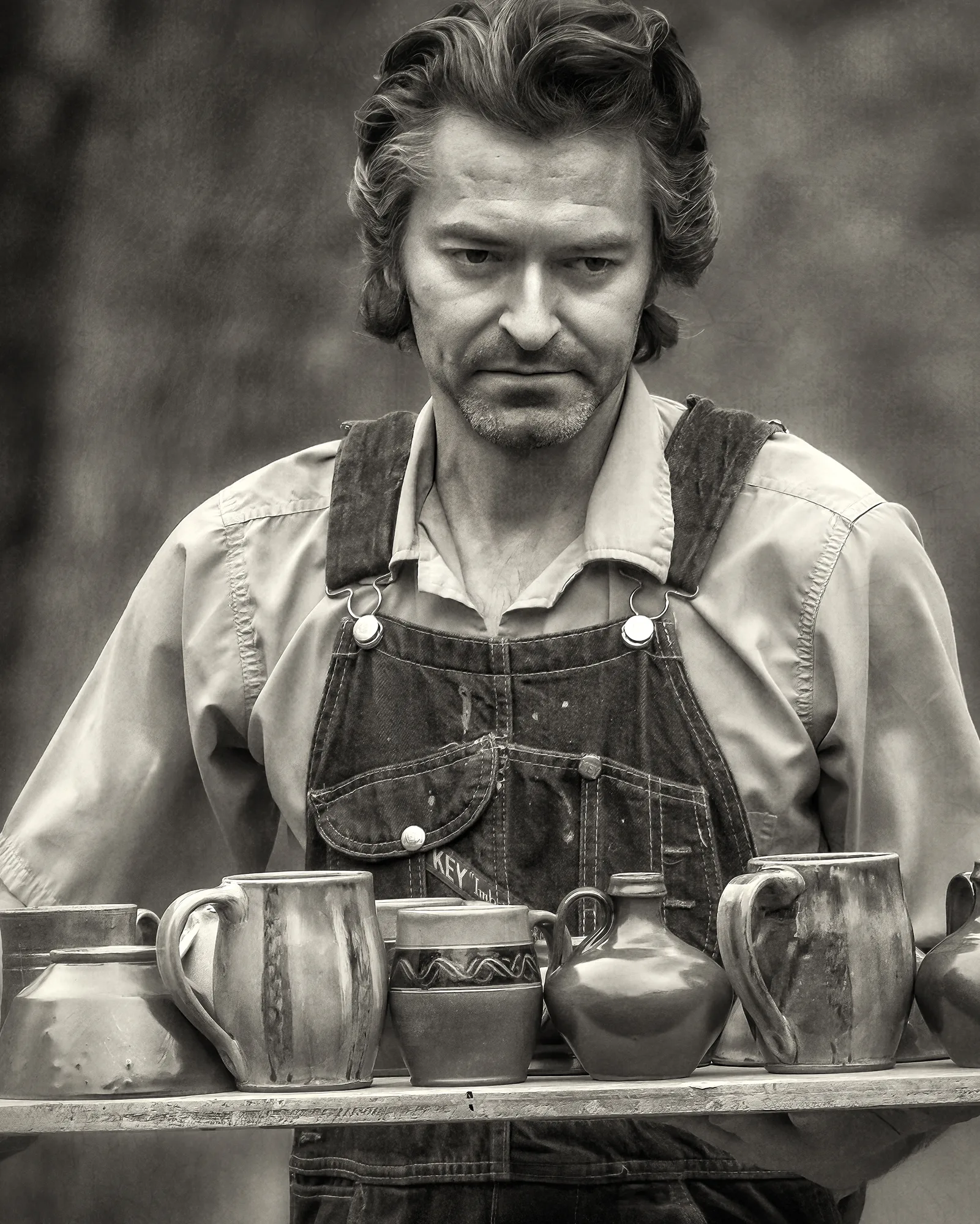
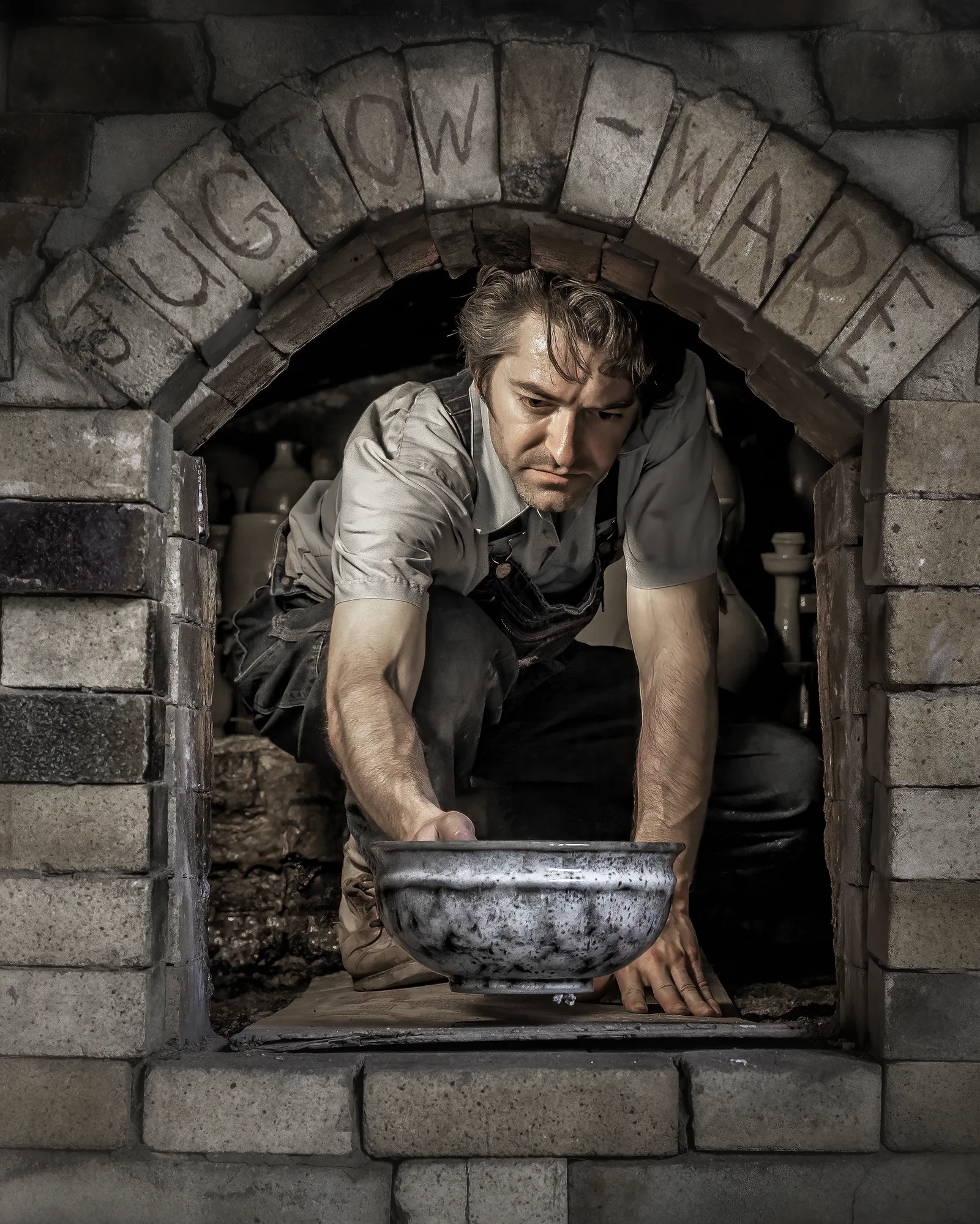
The clay in Seagrove, North Carolina, has been worked by an unbroken line of potters since the mid-1800s—seven generations in the making. Travis Owens is part of the latest cohort. In 1917, when the artists Jacques and Juliana Busbee arrived from Raleigh, looking to revive a fast-disappearing craft, they found Travis’s great-grandfather Charlie Owens at his wheel, making butter churns and jugs. The Busbees decided to fuse the local tradition with ancient forms from Korea and China—and Charlie became their potter. The collaboration produced Jugtown Pottery, and the Owens family has been at the helm since the beginning. Travis’s father, Vernon, started throwing pots at age seven. Travis began at two, growing up in the factory the way his father had, watching. “That’s how I learned,” he says. But he’s careful about not relying too much on inheritance. “Just because my family has made pottery doesn’t mean my pots are going to be spectacular. It’s something you need to work at.” They still dig their own clay, mix their own glazes, and build their own kilns. “We honor the past,” Travis says. “We’re not stuck in it.” The groundhog kiln on the property was built in 1920. It still fires away.
Travis Owens on his approach to pottery
Graham Thompson
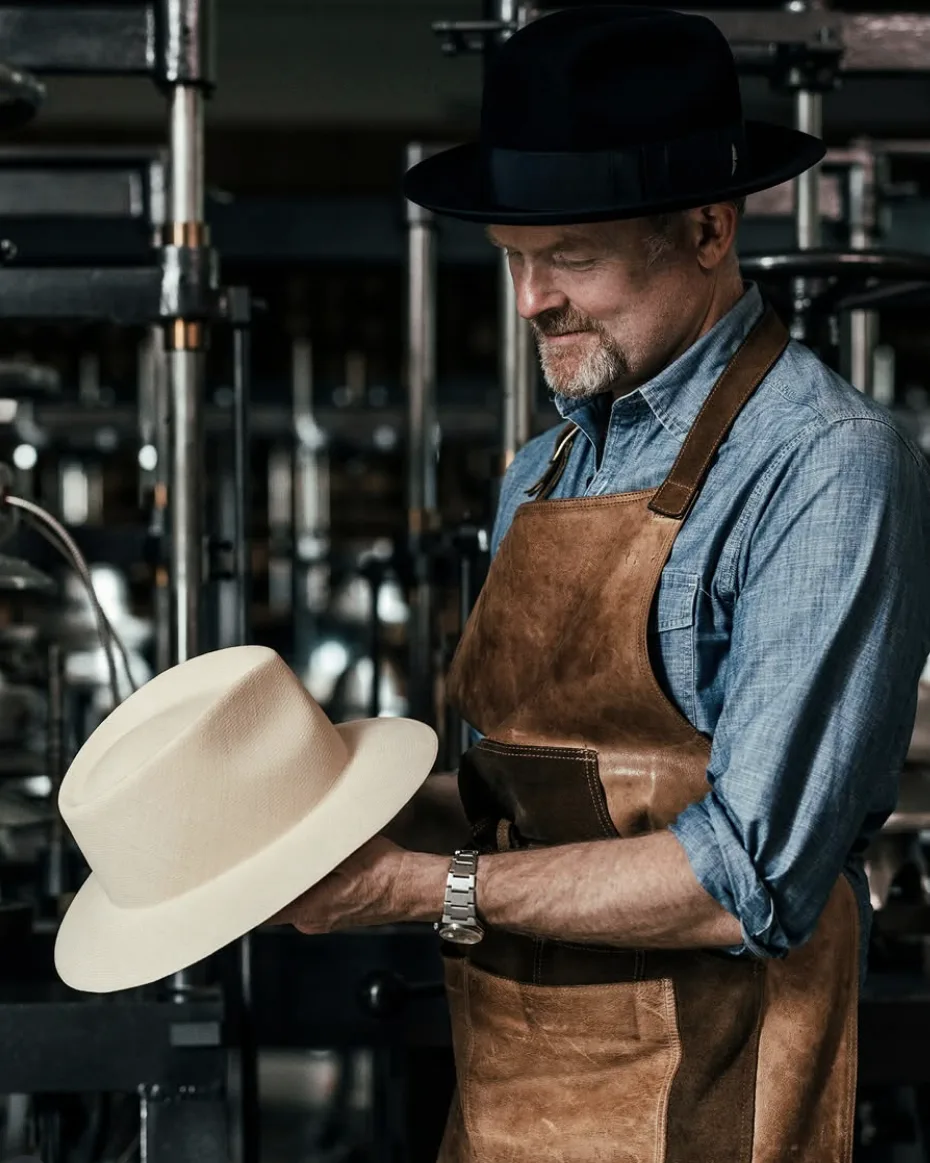
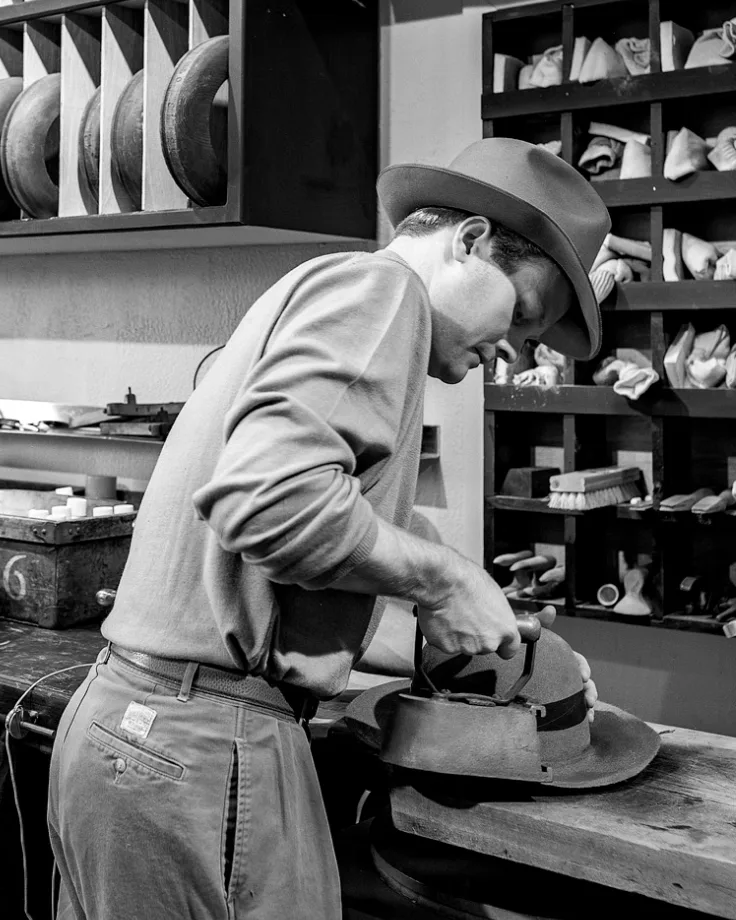
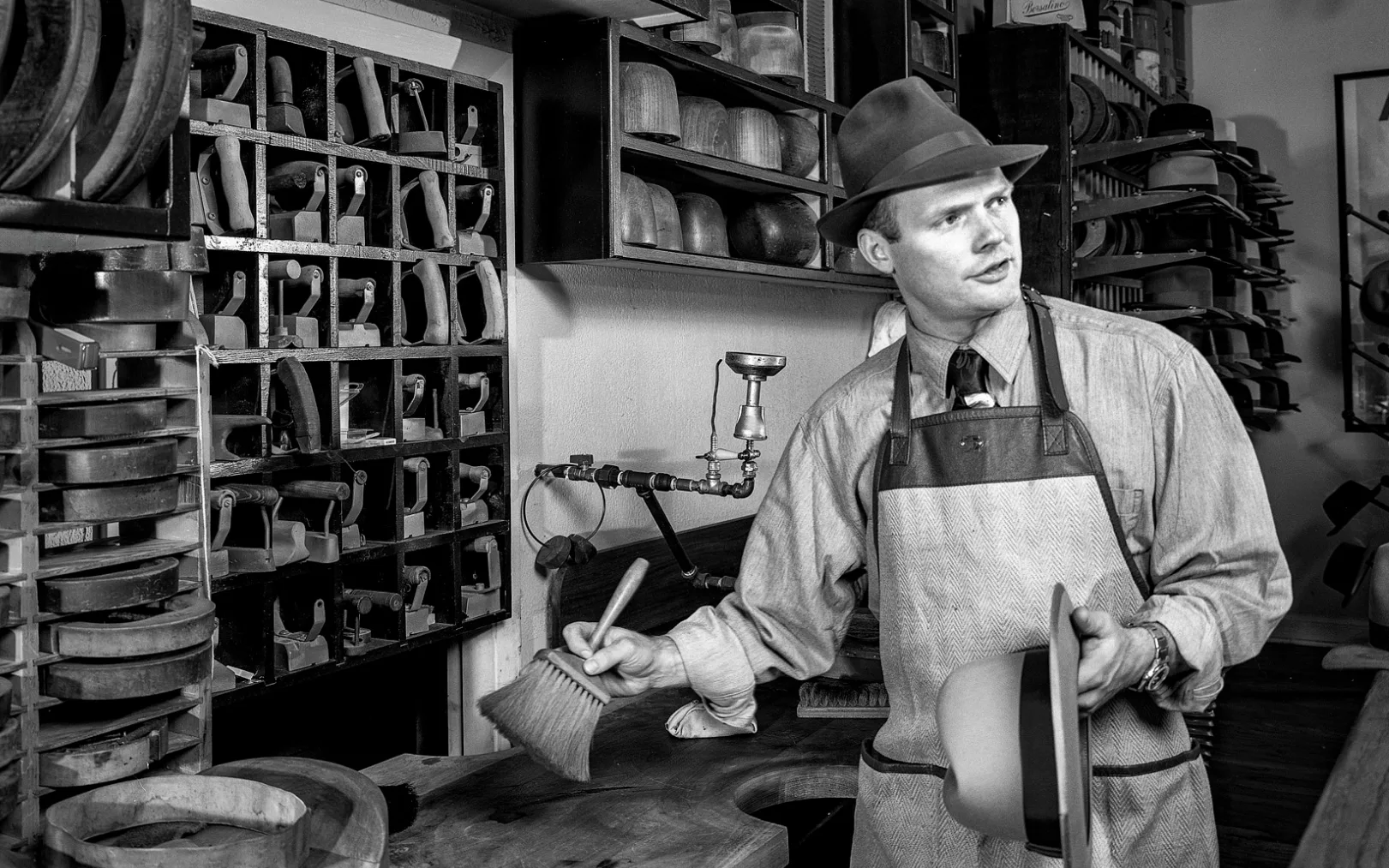
On the South Side of Chicago, where he has plied his trade for more than 30 years, Optimo Hats founder Graham Thomspon has devoted his entire life to the business of hatmaking. At 16, a fervid Thompson penetrated the province of impossibly cool older Black men, pleading with Johnny Tyus, an institution unto himself on the hat-wearing South Side, to school him in the ways of the chapeau. After college, he began an apprenticeship—for which he paid—that ended seven years later when Tyus retired. With Johnny’s Hat Shop shuttered, Thompson maxed out every credit card he could sign up for, bought the place in 1995, and called it Optimo Hats. When he wasn’t at the hatmaking bench, he was traveling the world, stumbling through Ecuadoran jungles and trawling derelict factories across Europe. Now 53, he’s currently in Hawaii to open a second shop, devoted entirely to straw hats. Get in line—his admirers include Andy Garcia, Jack White, John C. Reilly, Bill Murray, and Sean Penn.
Marlow Gates
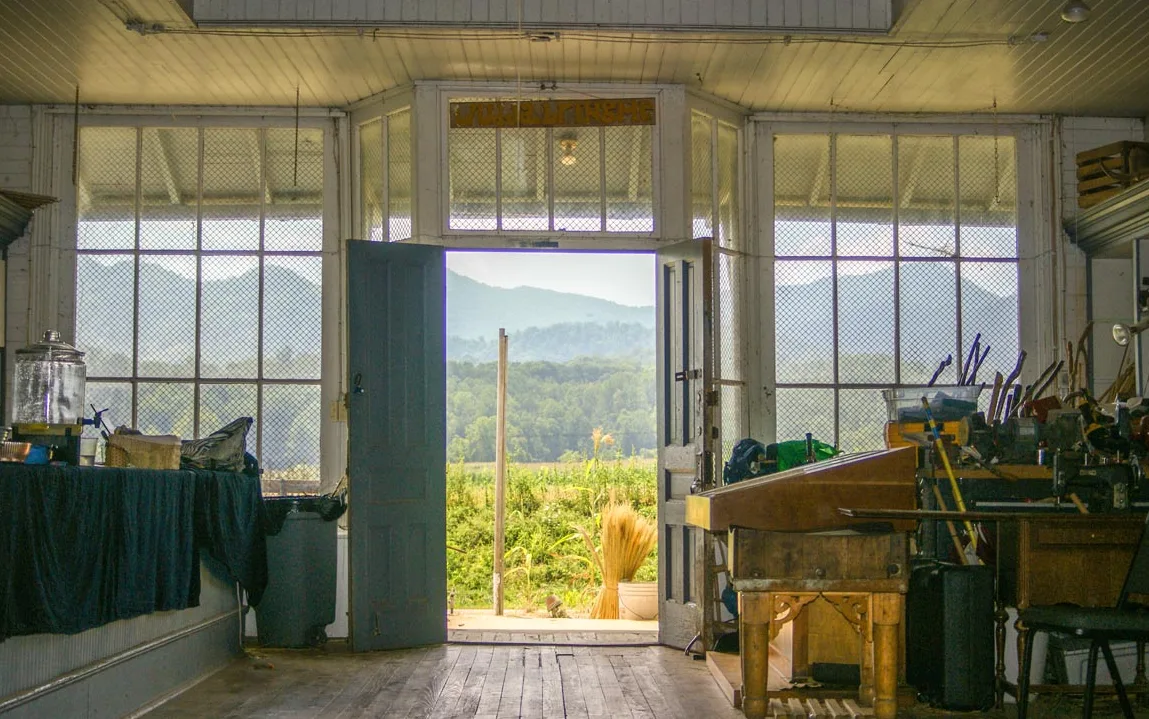
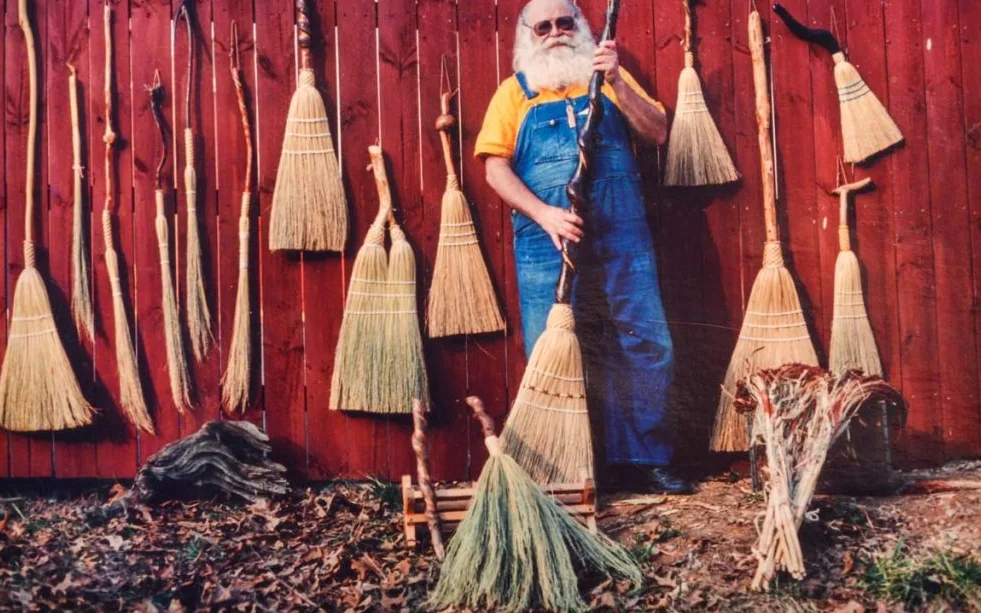
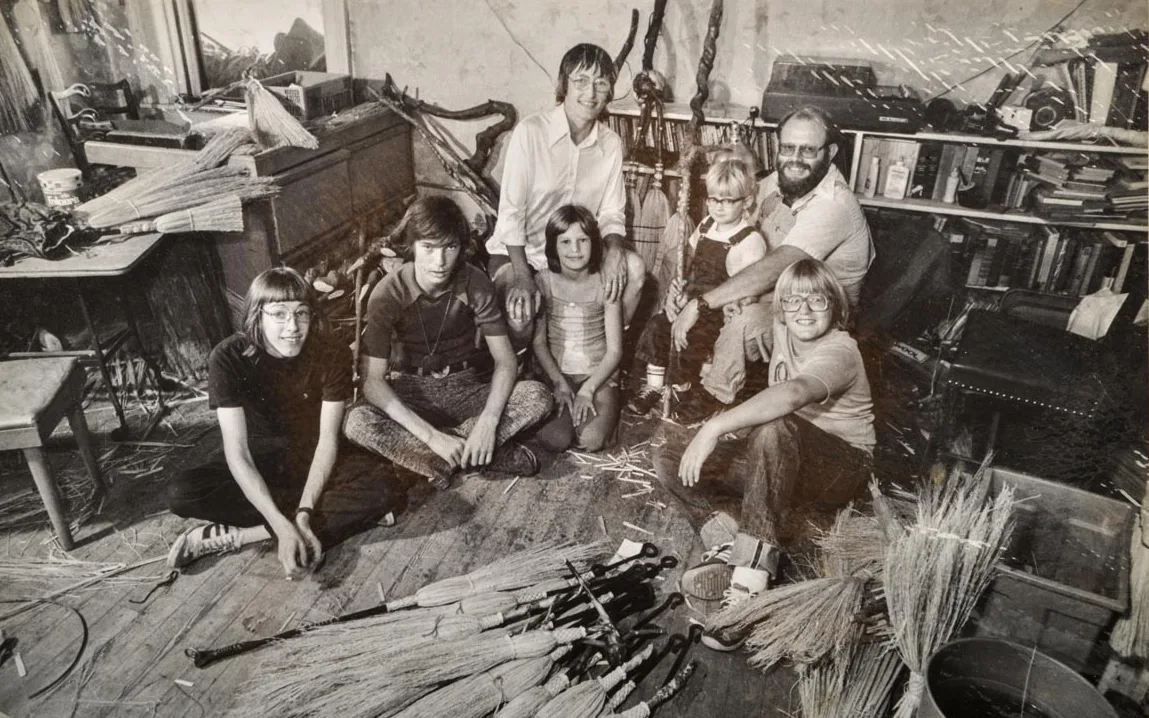
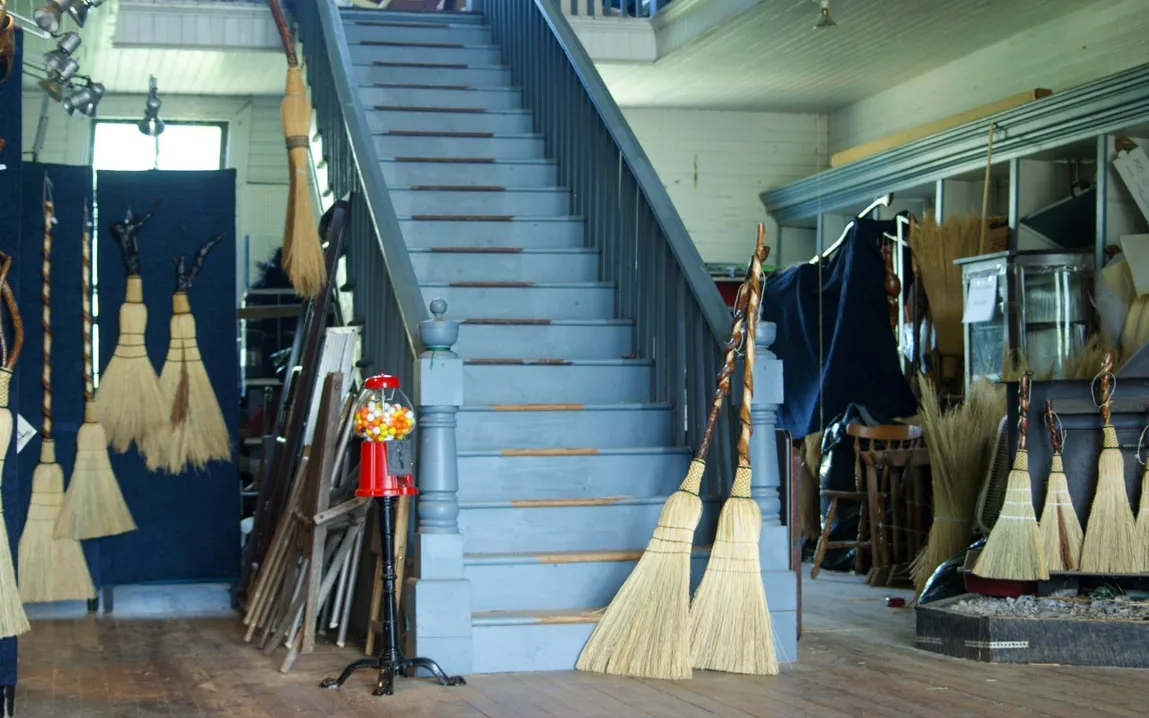
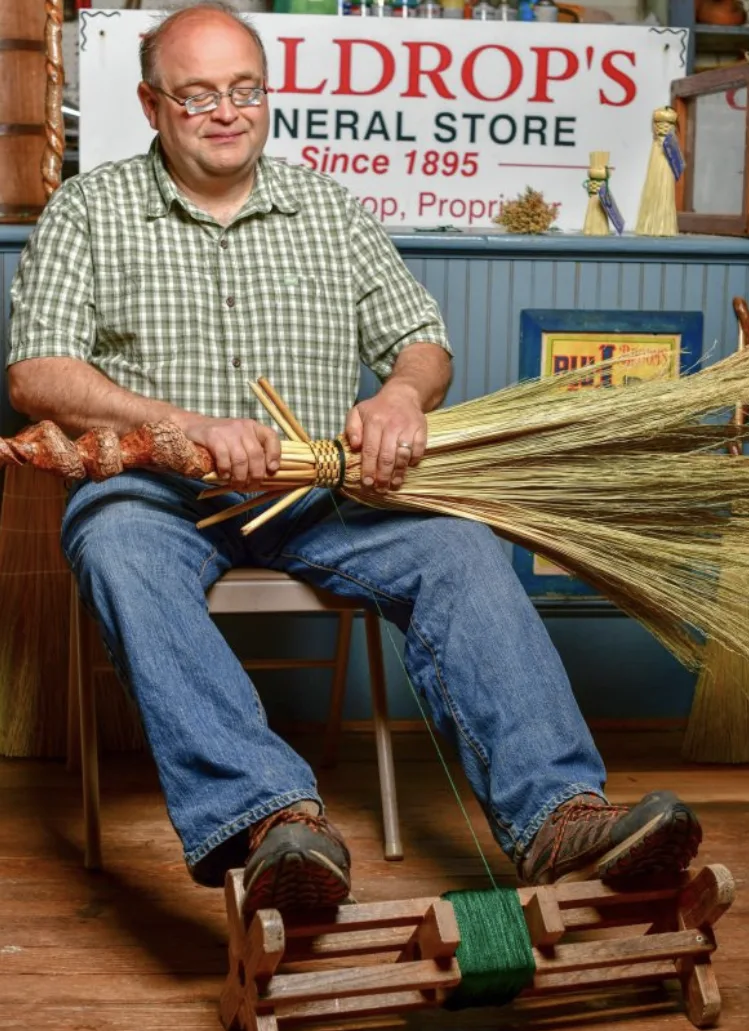
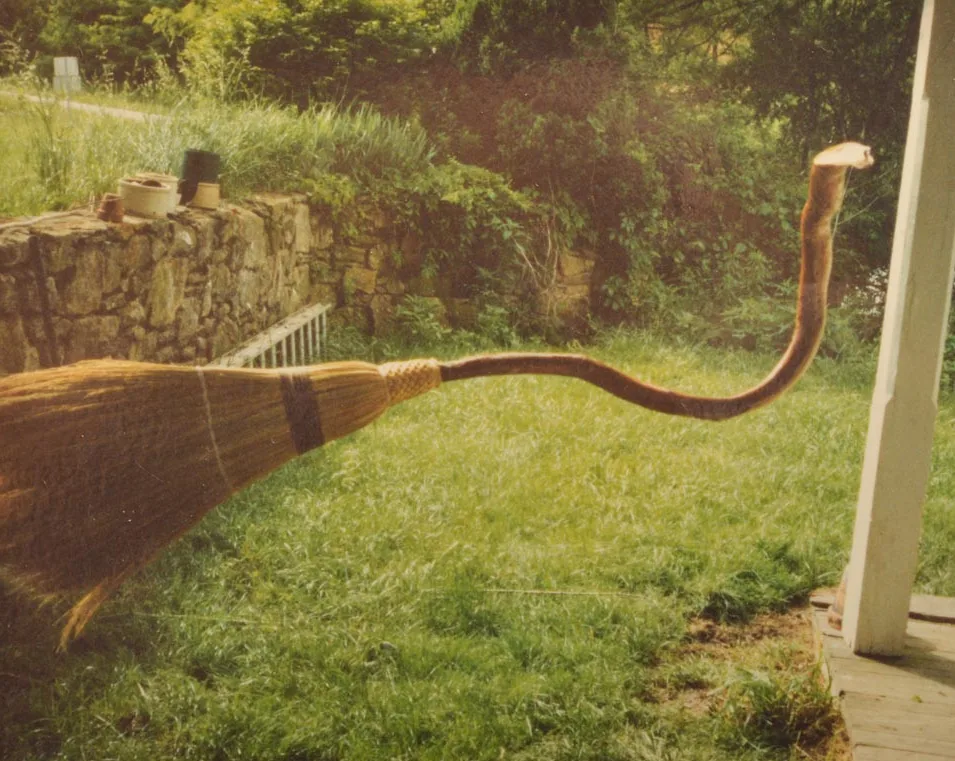
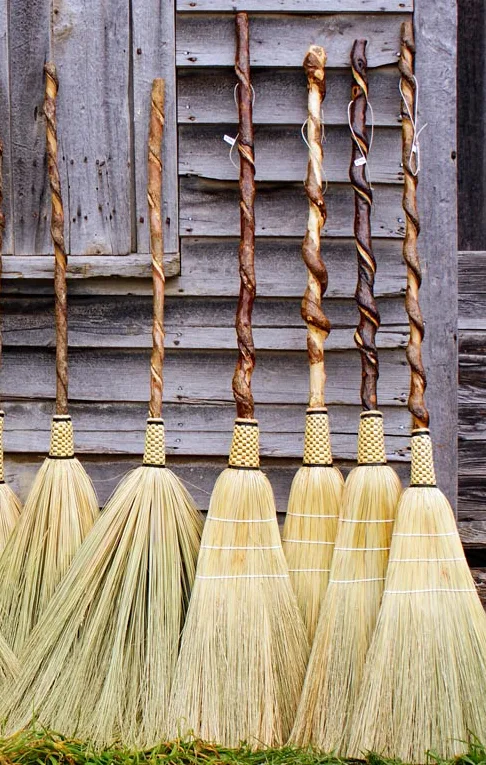
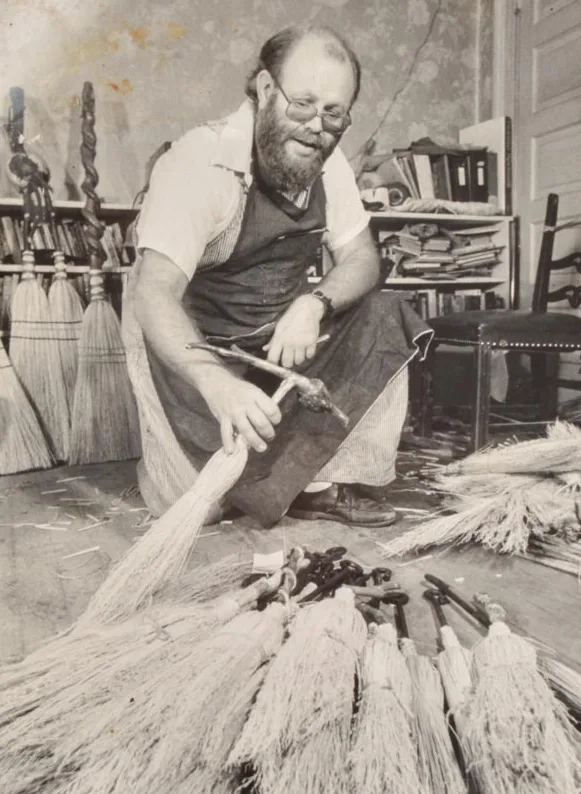
For centuries, broom-making was a craft. Then, in the 1850s, the broom machine arrived and what had been an art form became a wire-wrapped dowel, mass-produced and disposable. The tradition nearly died. But in 1973, Ralph Gates—a software engineer who helped put man on the moon—got a phone call that changed his life. A broom-maker in the Tennessee mountains had suffered a heart attack and needed someone to take over for the summer. Gates flew up to meet him, and weeks later moved his whole family to isolated Appalachia. Today, his son Marlow and daughter in law Diana carry on the process he pioneered, shaping each handle by hand, tying heads in an intricate Shaker weave technique from the 1790s, and working with broomcorn and natural wood. Diana carves and sands every handle individually; Marlow weaves the heads, each one slightly different. Folklore holds that a new home should receive three gifts: bread, so the house shall never know hunger; salt, so it shall always have flavor; and a broom, to sweep the troubles away.