
Leo McCarey’s Make Way for Tomorrow begins with a simple, devastating premise: an elderly couple living just outside New York City can no longer afford to keep their home and, unable to live with any one of their grown children, are forced to separate. Unsurprisingly, the film is often cited as one of the great tearjerkers of American cinema. And perhaps because of its less-than-peppy premise, it was a box-office disappointment upon its release in 1937, during the lingering effects of the Great Depression. (I imagine rather like how audiences recoiled from pandemic-related media during the coronavirus.) Nearly a century later, the film, which stars Victor Moore as Barkley Cooper and Beulah Bondi as his wife, Lucy, has become a bona fide sleeper hit and a favorite among cinephiles, thanks in no small part to this heart-wrenching line: “After all, Bark, being old together is not so bad, is it?” (apple.com) —Carolina de Armas

watch
Nashville
M*A*S*H might have brought Robert Altman to fame, but Nashville is his magnum opus. At two hours and 40 minutes, the film defies categorization, blending musical, comedic, dramatic, and satirical elements into a tumultuous examination of the American spirit. Released in 1975, it follows a 24-character ensemble cast—including Ronee Blakley, Shelley Duvall, Henry Gibson, Karen Black, Keith Carradine, and Jeff Goldblum—as their lives overlap and intertwine during a chaotic, emotional, and music-filled weekend in the Tennessee capital. Nominated for five Academy Awards and winner for best original song, Nashville uses music as the structural framework to examine interpersonal relationships between politicians, performers, press, and family members; detail the complexities of the country-music industry; and expose the duplicity of the administration in the immediate aftermath of Watergate. Released one year before the U.S. bicentennial, Altman’s film is an enduring portrait of America that deserves a revisit upon the country’s semiquincentennial. (apple.com) —Eve Eismann
watch
Boyz n the Hood
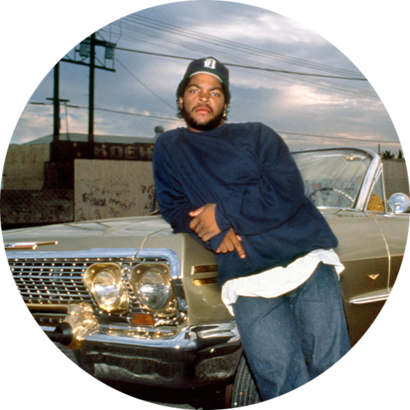
Fresh out of U.S.C. film school, John Singleton was only 22 when he walked into the offices of Quincy Jones’s Grio Entertainment Group with a bold pitch. “I wrote this script,” he said to an executive, “that will do for South Central what Do the Right Thing did for Brooklyn.” That script was Boyz n the Hood, the unforgiving yet searingly poignant coming-of-age film about growing up in Los Angeles’s over-policed inner-city neighborhoods still suffering the effects of the crack-cocaine epidemic. Singleton details three friends living in Crenshaw, all on vastly different trajectories: there’s Tre (Cuba Gooding Jr.), who, guided by his strict father, Furious (Laurence Fishburne), plans to escape the street violence and attend college; Ricky (Morris Chestnut), a star football player; and Doughboy (Ice Cube), a Crips member. Ultimately, the film illuminates the Black American experience, providing a resonant portrait of the trials of enduring a system meant to clip its future generation’s wings. “They either don’t know, don’t show, or don’t care about what’s goin’ on in the hood,” Doughboy says about the mainstream news. Singleton does the exact opposite. (apple.com) —Maggie Turner
watch
Lost in America
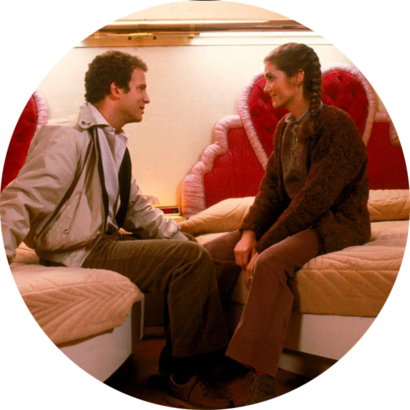
Lost in America, Albert Brooks’s devastatingly sharp commentary on the post-60s boomer experience, tells the story of David Howard (Brooks) and his wife, Linda (Julie Hagerty), a Los Angeles couple living the yuppie dream. He’s a rising star at a top advertising firm; she works in a fashionable department store. They’ve just made the down payment on a bigger house, and once his promotion comes through, as he knows it will, he’s going to treat himself to a Mercedes—maybe even the tan leather-interior option! But when he gets a surprise transfer instead, he has a spontaneous midlife crisis, gets himself fired, and convinces his wife to quit her job so they can find themselves on the open road, just like in Easy Rider. They “drop out of society,” only with the security of a six-figure “nest egg.” (This is the 1980s, after all.) Or at least that was the plan. When Linda gambles it all away at a roulette table in Las Vegas, they become reluctant bohemians overnight. The Howards discover, as the song goes, that “freedom’s just another word for nothing left to lose”—and decide they’ll keep their high-status jobs and tan leather interior, thank you very much. (apple.com) —Ash Carter

watch
Drop Dead Gorgeous
Kirsten Dunst, Brittany Murphy, Denise Richards, Allison Janney, Amy Adams, and a small-town beauty pageant for the crowning title of Dairy Queen—what more is there to say? The 1999 cult classic mockumentary Drop Dead Gorgeous takes place in the conservative town of Mount Rose, Minnesota, where contestants hope to qualify for the national Sarah Rose Cosmetics American Teen Princess Pageant. Rife with drama, guns (it wouldn’t be America without them!), glamour, and patriotism, the movie doesn’t miss a single beat for its 97-minute entirety. (youtube.com) —Gracie Wiener

watch
Office Space
Before there was The Office—British or American—there was Office Space, Mike Judge’s razor-sharp satire of middle-American corporate ennui. It’s part of the same canon as Fight Club, The Matrix, and American Beauty: 1999 films that named the soul-lessness creeping into everyday American life and the desperate urge to burn it all down (in this film’s case, quite literally). Starring Ron Livingston as Peter Gibbons—a computer programmer who despises his job and boss, Office Space is equal parts excruciating and relatable, from the mind-numbing T.P.S. reports to waitress Joanna’s (Jennifer Aniston) pieces-of-flair standoff. Among the movie’s endlessly quotable lines, none feels more quintessentially American than “Yeah, I’m gonna need you to go ahead and come in on Saturday.” (apple.com) —Victoria Herman