
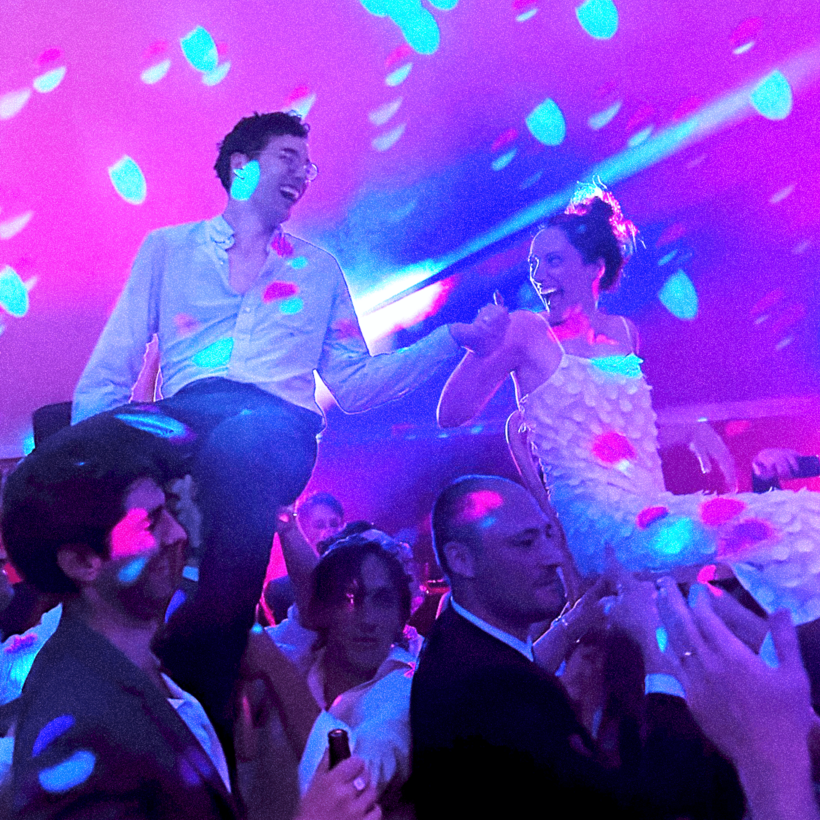

It’s midnight. Somewhere between their fifth and sixth gin-and-tonic, two young men whisper into a D.J.’s ear as the Isley Brothers’ “Shout” roars around them. Grinning like teenagers about to pull off a prank, they scurry to the long tables where, hours before, a bride and groom enjoyed their first moments as spouses. As they carry two chairs back toward the dance floor, the recognizable first few notes of the Hebrew folk song “Hava Nagila” begin to pour out of the speakers. While the rhythmic melody accelerates, the jubilant crowd hoists the helpless couple in the chairs, laughing as they grip their seats for dear life.
If you haven’t been graced with an invite this wedding season, ask anyone who has, and there’s a decent chance they’ve seen the hora performed—Jewish wedding or not. “I’m on the post-business-school wedding circuit,” Phil, a New Yorker who is half Jewish, tells me. “I’ve probably been to 20 weddings in the last year or two. From Orthodox Jewish to Catholic weddings, I’ve seen horas performed.” This includes Phil’s own wedding earlier this year, where he and his wife, who is not Jewish, were lifted in chairs by friends and relatives.