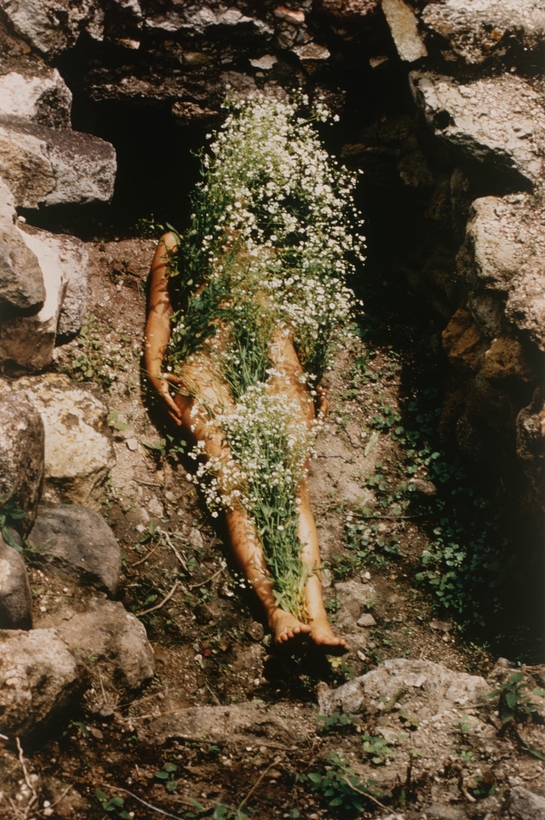

Ana Mendieta wanted to make an impression. Clever, engaging, and barely five feet tall, she was the artist as drama queen, photocopying her breasts on a Xerox machine, or setting off gunpowder around her silhouette. These actions were not exhibitionist. Her goal was profound. Mendieta was dissolving the boundaries between herself, nature, and the spirit world. She created her own myth while honoring the mythologies of primitive civilizations. Her tragic early death only embellished this legacy.
“Ana Mendieta,” a retrospective that opened last Wednesday at the Tate Modern Gallery, shows just how successful she was at leaving her mark. Born in 1948, in Havana, Cuba, Mendieta became a pioneer in projects that “anticipated the ecological turn,” according to the show’s curators, and which she documented through media transpositions that were fluid and enduring.