
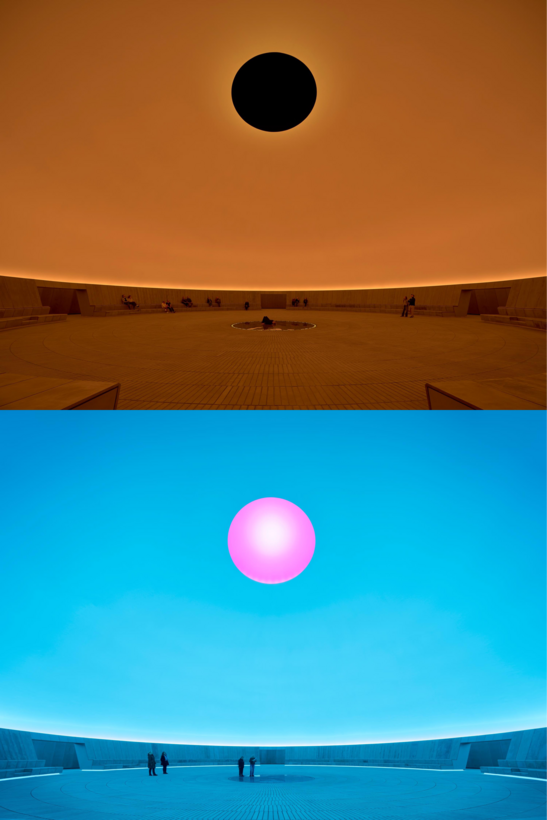

In 1974, shortly after he was awarded a Guggenheim Fellowship, James Turrell spent seven months crisscrossing the vast Arizona desert in a small plane, searching for a place to construct the most ambitious artwork of modern times.
Spotting an extinct volcano almost two miles wide, he landed at its red dirt base, climbed to the top of the cinder cone, and unfurled a sleeping bag. As day turned to night, Turrell thought back to his year in jail, in 1966. A Quaker and a conscientious objector during the Vietnam War, he’d been convicted for teaching others how to evade the draft. During solitary confinement, fixated on slivers of illumination, he had decided that his medium as an artist would not be paint or clay but light itself.