
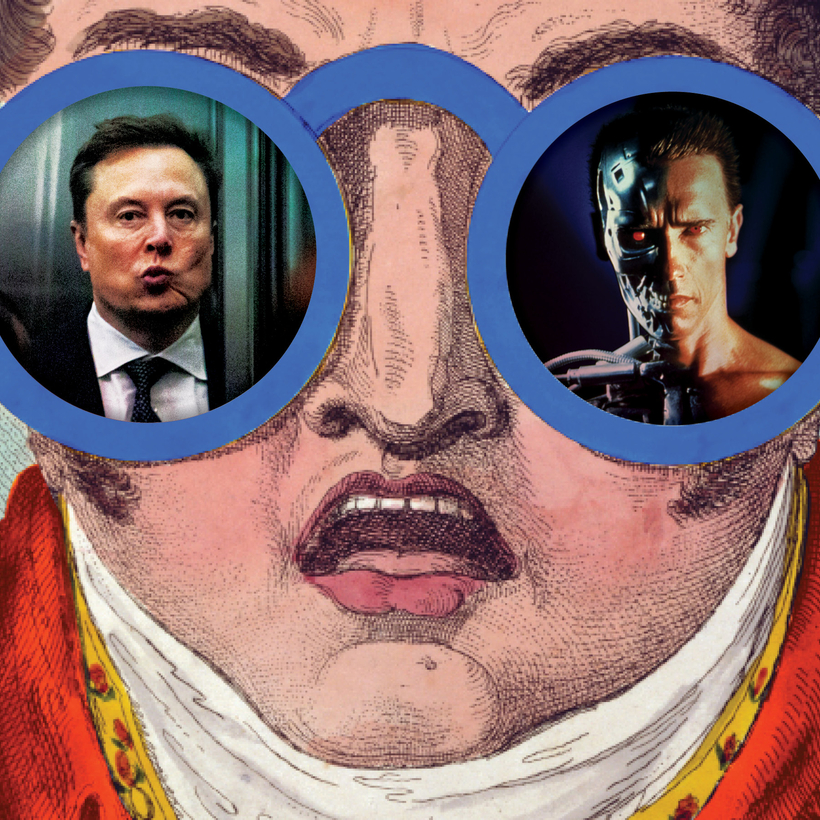
Few people are as bullish about the future of A.I. as Elon Musk. On Thursday, he took the stand for the third day in the opening of his bitter legal battle against OpenAI, a company he co-founded in 2015 with Sam Altman and others as a nonprofit committed to developing A.I. for the benefit of humanity. The Tesla and SpaceX C.E.O. contributed nearly $40 million but ultimately left the organization in 2018 after a power struggle with Altman. OpenAI’s subsequent evolution into a for-profit entity is the stated reason for the current lawsuit. Musk claims that OpenAI, now valued at $852 billion, has abandoned its founding mission and should be forced to unwind its for-profit structuring, remove Altman and president Greg Brockman from leadership roles, and provide $150 billion in damages to its charitable arm.
Musk has a dog in this fight: his own A.I. company, xAI, is hoping to make its Grok chatbot as popular as rival offerings such as OpenAI’s ChatGPT and Anthropic’s Claude. Musk’s lawsuit, if it succeeds, may do serious damage to a competitor, giving xAI an edge. Another source of momentum is the forthcoming I.P.O. of SpaceX, which acquired xAI earlier this year. Taking the company public will help Musk finance his expensive A.I. ambitions: as of mid-2025, xAI was burning a billion dollars a month. But this is a small price to pay for the chance to control the most transformative technology in history. At the World Economic Forum in Davos, Switzerland, in January, Musk predicted that A.I. could become smarter than any human being by the end of 2026. Within five years, he said, A.I. “will be smarter than all of humanity.”