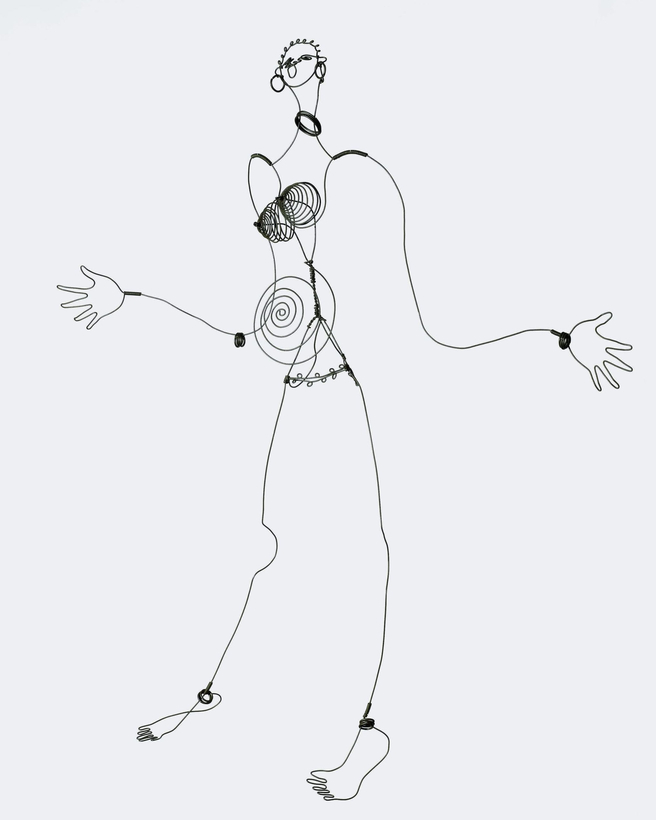

The 71-year-old Alexander Calder was standing just outside Perls Galleries on upper Madison Avenue, looking at the terrazzo sidewalk he’d designed—a euphoric interaction of curves and grids. The occasion was a soigné charity benefit celebrating the installation, that rare instance when the public and private sectors have worked together to add pulse and joy to city life. The women in the gallery were society types who resembled the early wire sculpture that Calder called “The Debutante’s Mother,” while the men were mainly bankers in pinstripe suits. The artist, meanwhile, wore a red-plaid flannel shirt and workman’s trousers.

Unlike the sophisticates in the room, I was a college kid. He looked me straight in the eye and asked what I cared about in life. His curiosity was genuine, and his kindness and warmth had the feeling of the mobiles suspended from the gallery ceiling. Calder’s handshake was that of a stevedore, which is to say the man had the grip of a sculptor who could work metal and wood with power and dexterity. With his large head and shock of white hair, he had the magnetic force of his art.