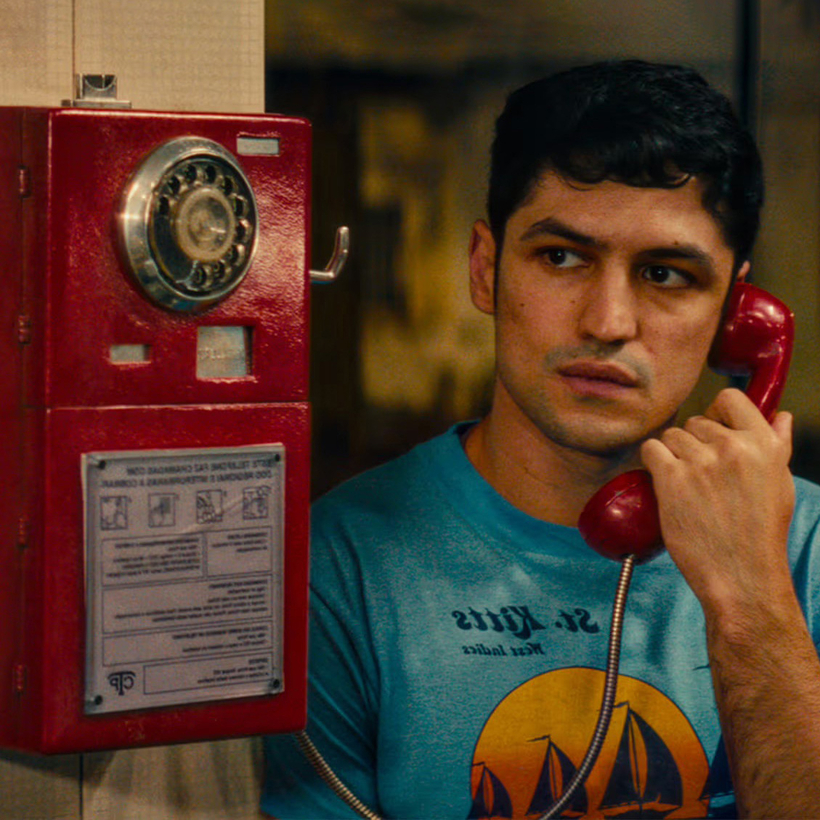

In the opening scene of The Secret Agent, a fugitive living under the alias “Marcelo” drives along a sunbaked road through Brazil’s backcountry before pulling up at a gas station. The camera lingers, luxuriously, on the dilapidated roadside. Opposite the pump lies a dead body, haphazardly covered with half a sheet of cardboard and encircled by black flies. When Marcelo asks about it, the gas-station attendant shrugs. A station employee shot a thief three days earlier, he explains, then disappeared. He had called the police, but no one came. “Now it’s starting to smell,” he says. Ironically, two officers arrive minutes later—not to remove the decaying body but to rip Marcelo off. They have spotted his shiny yellow Volkswagen Beetle. After searching the car and finding nothing incriminating, they leave with his cigarettes.
The cinematography screams Brazil: the characters are caked in sweat, and the frame is drenched in color—equal parts hellish and heavenly. The bribery is laced with humor, almost novelistic in tone. Set in 1977 during the Brazilian dictatorship, the film follows Marcelo (Wagner Moura), a university professor turned fugitive, as he arrives in the corrupt northern city of Recife during Carnival, hoping to re-unite with his young son while evading a death warrant issued by a vengeful industrialist.