
A man who was older and in a position of power once said to me, “I feel sad for you. You’ve already been the most beautiful you will ever be, and now you have to spend the rest of your life watching your beauty fade.” I was just 30. I found a dermatologist, got Botox. “At your age,” this doctor told me, “it’s preventative.” The message was clear: Render your face immovable—lifeless!—and avert the crisis of aging.

Next Thursday, a commanding meditation on that crisis, “Richard Avedon: Immortal,” opens at the Montreal Museum of Fine Arts. Subtitled “Portraits of Aging, 1951–2004,” it features nearly 100 photographs that dramatize our universal mortality. Considered scandalous when Avedon began taking them, in the early 50s, the portraits struck many critics as “attention-grabbing,” a photographic “revenge” against his celebrated subjects or an act of penance for his early work in fashion, where youth and beauty reign.

The writer Samuel Beckett, Paris, 1979.

“Avedon lived in contradiction,” says Mary-Dailey Desmarais, chief curator at the MMFA and the person responsible for this exhibition. (It was organized by Paul Roth, director of the Image Centre in Toronto, where the show goes next.) “For him, it was about breaking through to something unstudied, unpracticed, intimate, raw, true. It was not an act of betrayal or revenge.” The exhibition features artists, writers, politicians, performers—people such as Chet Baker, Samuel Beckett, Truman Capote, Duke Ellington, Jean Renoir, and many more. But it is the 22 photographs of women one can’t stop staring at.

The framework, in which we see and judge the faces of women, has been set by fashion photographers and the creative directors that hire them—fields still dominated by men. Expectations are reinforced by means of flattering poses, diffused light, lenses, and filters that soften and slim. Photoshop wipes out wrinkles, whittles away unwanted pounds. (When imagery veers from these rigorous standards, it’s dubbed “diversity” and “inclusivity.”) That Avedon once called fashion photography a “loveless, lying art” should come as no surprise. He immediately began to update the discipline.

The sculptor Louise Nevelson, New York, 1975.

Prior to Avedon, and owing to the tripod-mounted, large-format cameras of his predecessors, models in photographs were depicted as classical statues—emotionless, expressionless, aloof. Avedon, sprightly with his handheld Rolleiflex, animated women with spirit and verve: his subjects leapt in high heels over puddles, wore haute couture to cavort with elephants, ran breathless down the Champs-Élysées. They were young, yes, but they moved. They lived.

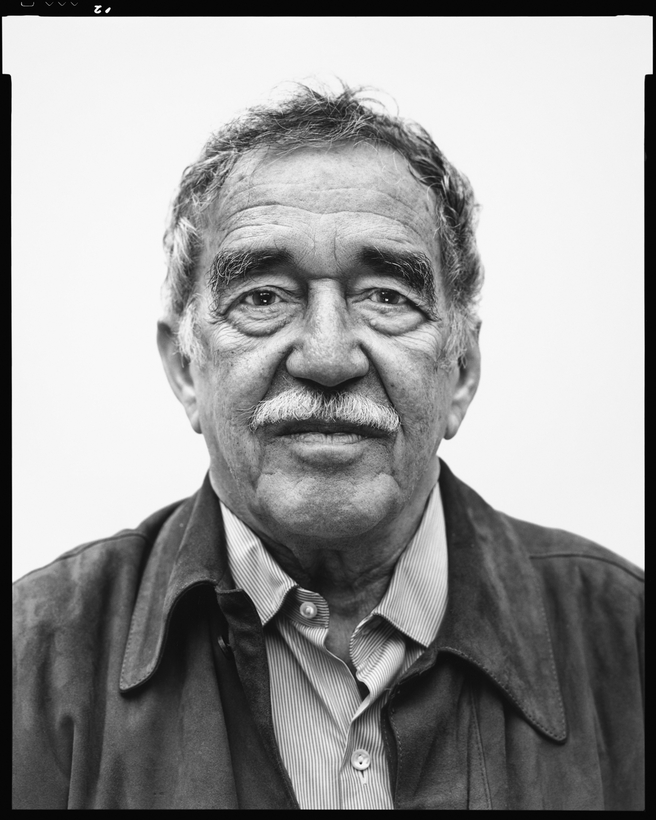
Avedon’s portraits of aging are all about living. He used 8-by-10-inch negatives to heighten detail. He shot with artificial light or in daylight—which expose every wrinkle, follicle, blemish—and used sterile-white or neutral-grey backgrounds. His subjects didn’t pose but presented themselves authentically. In the 1955 frame of Marian Anderson, the first Black woman to perform at the Metropolitan Opera, fine lines are etched beneath eyes closed in rapture as the 58-year-old contralto sings Verdi.

William Casby, one of the last living Americans born into slavery, New Orleans, 1963.

Appearing mid-tirade is the savant of style, Gabrielle Chanel, age 75, her time-weathered neck crêpey and puckered. And then there is the photograph of Dorothy Parker at 65. The caustic wit that peppered Parker’s prose is replaced with an expression of weary resolve. Her neck is fleshy; her teeth are smoke-stained; the bags under her eyes are heavy. “That image had a profound effect on me as it demanded something different,” recalls Desmarais. “My relationship to it evolved. It kept pulling me back. I think to evoke that gamut of emotions is the singular power of Avedon.”

I asked Desmarais what these pictures make her feel. “I don’t know what a 20-year-old would tell you, but as a 45-year-old woman I find them deeply refreshing. They are courageous in their unadornedness—the utter lack of fear in which sitters confront Avedon.” She then asked me, “And you? What do you feel?” I said, “Permission.”

“Richard Avedon: Immortal” will be on at the Montreal Museum of Fine Arts from February 12 to August 9

Tracy Doyle is a New York–based creative director who has worked with brands such as Tom Ford, Chanel, Gucci, Tiffany & Co., and Max Mara. Previously, she was a photo editor at Life and Interview magazines