
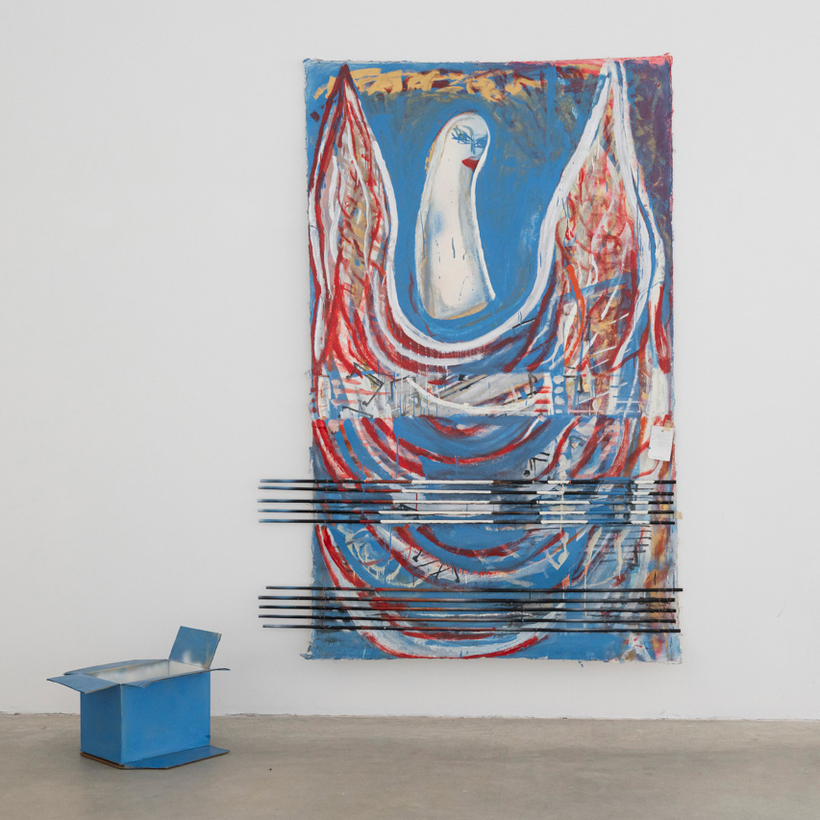

Beginning in the 1960s, the messy debate about whether artists’ lives could be separated from their work became particularly challenging. Art and personal narratives often came wrapped in the same skin. Marisa Merz, an Italian artist who ignored the boundaries of traditional art, was categorical. She said, “There’s never been a separation between my work and my life.”
Merz was the only woman allied with Arte Povera, a radical movement that privileged humble materials, non-commercial environments, and ephemeral installations. She was also the wife of one of the most important poveristi, Mario Merz. Though he supported her work as an artist, she was long in the background. Two days ago, a tri-part series of exhibitions celebrating her centennial, “Marisa Merz: The Dance of the Hours,” opened in Turin at the Gallery of Modern and Contemporary Art (GAM), the Castello di Rivoli, and the Fondazione Merz. In her hometown, where Merz was born and died (1926–2019), it’s a particularly poignant moment.