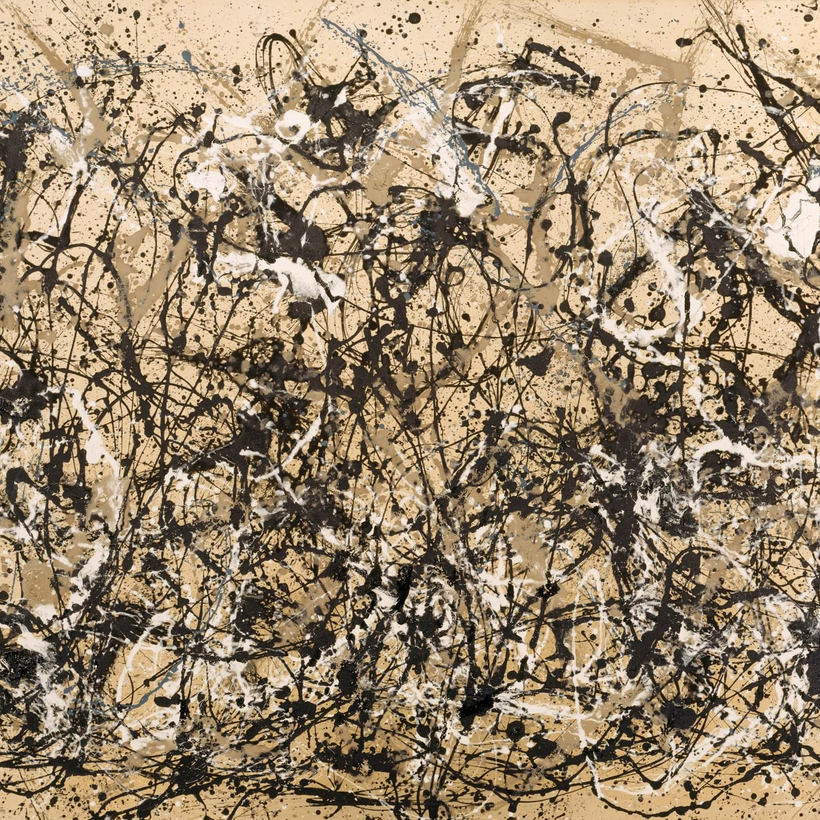

Lee Krasner once said her art was autobiographical, should anyone care to decipher it. After her husband, Jackson Pollock, died in a car accident in 1956, many people came to her paintings to do just that—to read them. It wasn’t necessarily the art that drew them; it was a voyeuristic hunger to see how the widow of such an outsize character was coping, to catch a glimpse of her pain.
But those who crowded into Krasner’s 1958 show at Martha Jackson’s New York gallery, her first since Pollock’s death, encountered her Earth Green series—paintings that exploded in vibrant color and exuded life, sensuality, fecundity, and freedom. They suggested something more complicated than mourning: the possibility of relief from the burden of caring for Pollock. Still, critics who expected darkness found it. Many described the works as “somber” and “death-haunted.”