
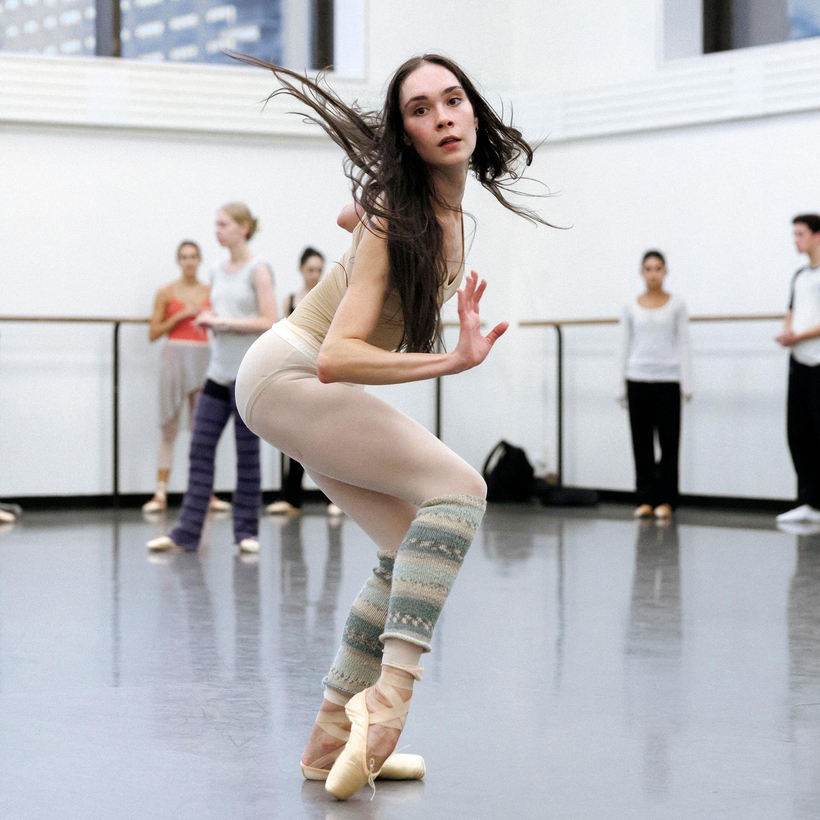
The neoclassicist George Balanchine choreographed 465 works over a long life. The company he founded, New York City Ballet, holds the largest cache of his ballets, maintaining around 70 in its active repertory. Next Thursday, one few have seen is returning to the fold after a 57-year absence. And of all the lost Balanchine ballets, it is the most notorious. The score was composed using mathematics instead of melody, and the central ballerina thrashes in a gold-fringed bikini.
Ballet has never been a field on the technological forefront, and forgotten choreography—by any choreographer—must be resurrected through something like Homeric tradition: the passing of musico-kinetic knowledge from one keen-memoried body to others. How appropriate that the work in question, Pithoprakta, is Greek-themed.