

Laura McPhee is one of our finest landscape photographers, her work collected by the best museums. In her latest book, she focuses on the Great Basin region, which makes up so much of the West. The photographs, taken with a large-format Deardorff camera (a challenge of its own), show rivers, canyons, skies, and what geologists call “angular unconformities,” along with the imprint man has made on these lands, from petroglyphs to 19th-century stone ovens, to today’s copper mines and auto-salvage lots. Pick up the astonishing Silence So Deep It Rings and prepare to be both awed and saddened by the mythical West and what was once called “progress” but now can be seen as despoilment. McPhee, who lives in Idaho with her family, is hopeful that these photographs will make us think with more urgency about the future we are creating for our children. In a fascinating discussion at the end of the book conducted by Ian Frazier with the photographer and her father, John McPhee, who wrote about the region for The New Yorker decades ago, the verdict is blunter about what the cost of our indifference to climate change means to the universe. “It’s a minor planet,” says the elder McPhee. “Who the hell cares about it if there’s nothing, no people, no Mozart, and so forth.” I cannot imagine a stronger call to action than those words and this wondrous and heartfelt book. ($49.95, princeton.edu) —Jim Kelly
watch
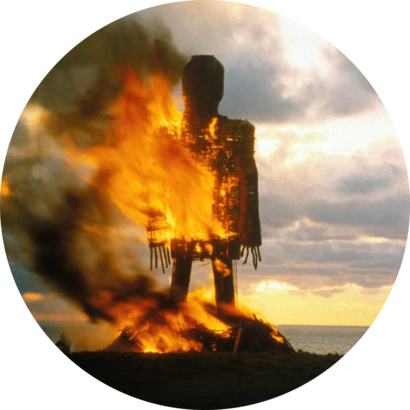
The Wicker Man
Robin Hardy’s 1973 film is a cult classic that pioneered and defined folk horror and inspired later movies in the subgenre, including Ari Aster’s Midsommar. When a Scottish police sergeant with a guilty conscience, played by Edward Woodward, embarks to the fictitious Summerisle after having received an anonymous letter about a missing girl, he discovers an isolated island community led by Lord Summerisle (Christopher Lee) that revolves around ancient pagan traditions and joyfully embraced superstitions. After days of being obstructed by lies, dead ends, and absurd interactions that horrify the pious sergeant, he comes to the unsettling realization that he has been made the fool. Eerie and disquieting, The Wicker Man is a definitive example of invoking isolation, natural landscapes, and rural communities to establish a mood of inescapable anxiety. The film’s final scene lingers long after the credits roll, raising questions about logic, faith, and the fallibility and fanaticism of the devoutly religious. (apple.com) —Eve Eismann
listen
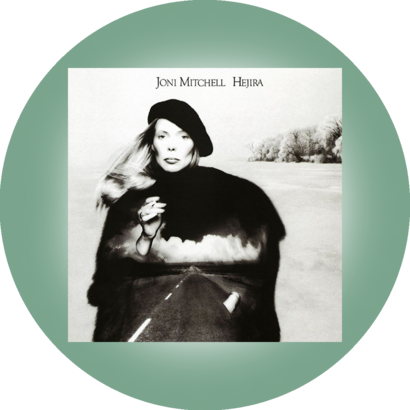
Hejira
This November will mark the 50th anniversary of Hejira, Joni Mitchell’s eighth studio album, a classic that effortlessly fused jazz and folk. The 51-minute (and 58-second) record, which was first released in 1976, follows Mitchell’s travels from coast to coast, with nine songs detailing her life on the road. Each track takes you somewhere different: from Beale Street in Memphis, Tennessee, to a blue motel room in Savannah, Georgia, to a highway service station along the Gulf of Mexico. Through car, train, plane, and ferry, Mitchell observes the people and places she encounters—and takes us with her. She also introduces noteworthy musical collaborations: Neil Young on the harmonica, Larry Carlton on the electric guitar, and, most notably, Jaco Pastorius on the bass. Mitchell seems to be “in search of love and music,” as she sings in “Black Crow.” Listen in, if you are, too. (spotify.com) —Gabriella Maestri

visit
Le Monde Béryl
The London-based, Italian-made shoe brand founded by Lily Atherton Hanbury and Katya Shyfrin is in New York City and here to stay—veramente!—with its first permanent flagship on Madison Avenue (23 East 67th Street, to be exact). In the 10 years since its inception, the label, which made its debut with a single Venetian-slipper silhouette, has come a long way, both figuratively (croc-embossed leather pumps or Dolomite hiking boots, anyone?) and literally, crossing the pond to one of N.Y.C.’s finest shopping stretches. “It felt right to open our flagship store somewhere with such energy, creativity, and individuality,” Hanbury tells me. “When we found this particular space with its gallery-like feeling, we just knew it was instinctively the right decision,” Shyfrin echoes. Designed by art adviser Silka Rittson-Thomas in collaboration with architects Tutto Bene, the new space—with mirrored walls, mohair-velvet upholstery, and Murano sconces—takes its cues from Renaissance architecture and David Lynch’s Mulholland Drive. (Sold!) (lemondeberyl.com) —Carolina de Armas
read
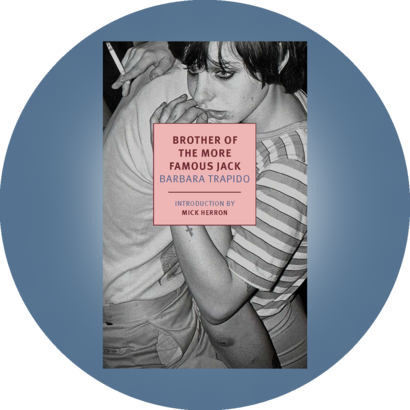
Brother of the More Famous Jack
In his introduction to the new New York Review of Books edition, Mick Herron (Slow Horses) argues that Barbara Trapido’s slim novel should be placed alongside the works of her contemporaries Julian Barnes and Ian McEwan. Indeed, Brother of the More Famous Jack’s small but fierce circle of defenders speaks for itself: Rachel Cusk, Lily King, and Maggie O’Farrell are all devotees. The book’s protagonist is a young woman named Katherine Brown, who, much like the narrator in Nancy Lemann’s Lives of the Saints—another cult novel from the 80s reissued by NYRB earlier this year—is lifted from her own colorless domestic life into the vibrant, chaotic, erudite world of another family. In this case, it’s the Goldmans: Jacob, a Jewish philosophy professor; his well-bred, earthy wife, Jane; and a large brood of children—including their devilishly anarchic eldest sons. Like Katherine, it didn’t take long for me to be utterly seduced. ($17.95, nyrb.com) —Paulina Prosnitz
dine
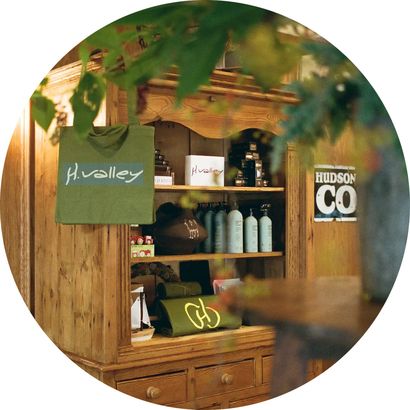
H Valley
You didn’t hear it from me, but: the West Village is unbearable. Those willing to wait hours in line for frozen yogurt or Swedish candy or, worse, a jambon-beurre on a flaccid baguette are partly to blame, but I’m most offended by the soul-less joints that have popped up on Bleecker Street in recent years. (Looking at you, Do Not Feed Alligators!) There is, however, one glimmer of hope. Enter Austin Johnson, the chef behind the Tribeca café Rigor Hill and restaurant One White Street. He, along with his wife, Amanda Johnson, and their business partner, Eytan Sugarman, recently opened a shop on Hudson Street serving coffee, sandwiches, produce, and a rotating assortment of prepared dishes. As its name implies, the ingredients are sourced from farmers in the Hudson Valley. The $4 soft-boiled eggs may be a bit much, but the freshness and variety of the rest of the food make that easy to overlook. (hvalleynyc.com) —Jeanne Malle