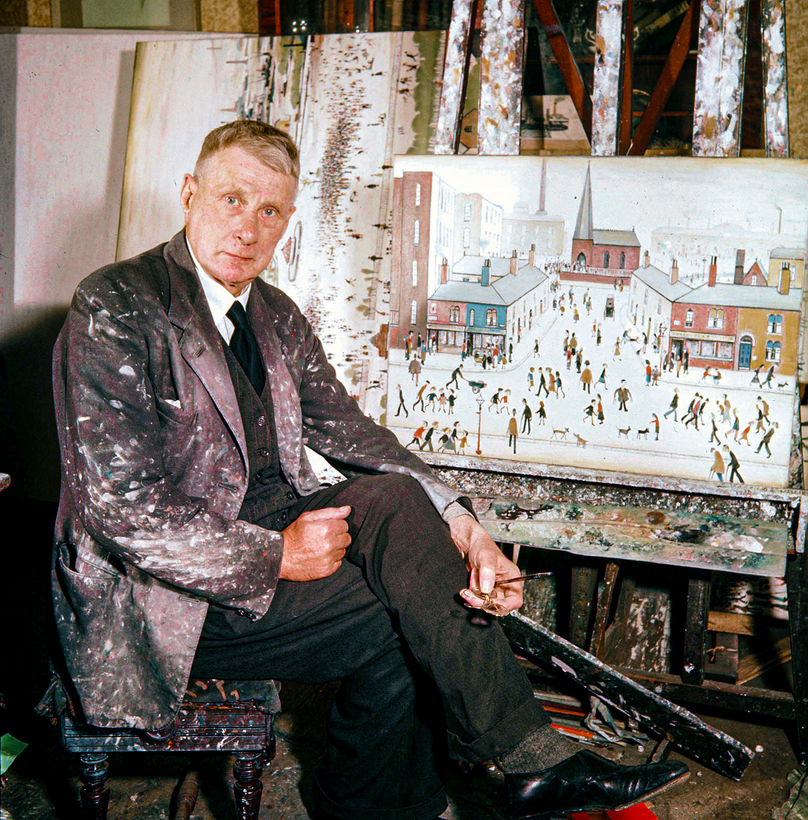
It is appropriate that a new exhibition of works by L. S. Lowry (1887–1976), opening today at the MK Gallery, should be staged in Milton Keynes. Established after the Second World War, it is the largest of the “new towns” that were built to accommodate the huge numbers of British working people displaced by enemy bombing, slum clearance, and industrial decline. Lowry’s most notable paintings are both a celebration of and a tribute to the working-class culture of the interwar period—and they passed into mainstream ubiquity in the 1940s and 1950s just as that culture was collapsing. Fifty-four miles north of London, and 160 miles south of Lowry’s base of operations in Manchester, Milton Keynes is arguably the most consequential monument to England’s postwar upheaval.
Lowry’s best-known images depict crowds of ordinary people going about their everyday business: trudging to and from factories and football matches, watching puppet shows, messing about in recreation grounds. The title of the MK show, “The Theatre of Life,” nods to the actor Sir Ian McKellen, a Lowry fan, who has said that the artist’s compositions often resemble “a set from a stage show.”