
Founded in 2020, London-headquartered Nothing is one of the only tech companies I find to be doing exciting things in the dismal space of contemporary consumer electronics. After being blown away by their Headphone (1), I decided to finally ditch my iPhone and try out their Phone (4a) Pro. While it’s a shame that the smartphone duopoly means you can’t leave behind Apple and Google entirely, at least the latter’s Android operating system, unlike iOS, allows for diversity of hardware. And in the case of Nothing, what incredibly beautiful hardware it is. While the (4a) Pro doesn’t make transparency as much of a design feature as their previous models did, it has a Glyph Matrix on the back, a micro-L.E.D. display for all sorts of screenless visual notifications. (You can assign custom icons to specific contacts, use it as a nifty clock while your phone is face down, and so forth.) I can’t recommend making the switchover to Nothing enough, and word on the street is they’ll be opening stores Stateside in the near future. ($499, nothing.tech) — Spike Carter

wear
Cara Cara
Cara Cara has made a very good business of cheerful prints and crisp poplin, so suede, shearling, and tailored wool are something of a departure. Though not, as it turns out, a departure from co-founder Julia Brown’s own life. A longtime rider, Brown has always had a foot in the equestrian world, and the collection was photographed by Claiborne Swanson Frank at the farm near her upstate home. The clothes have a quieter register than Cara Cara’s usual fare: structured outerwear, heritage details, and a certain old-fashioned polish, without quite veering into costume. The launch was celebrated over dinner at Mashomack in Millbrook, which made for a fitting setting. Equestrian dressing is everywhere this fall, as it tends to be whenever fashion develops a sudden interest in the countryside. Brown, at least, didn’t have to do any research. (caracaranyc.com) —Jennifer Noyes
read
Jolt
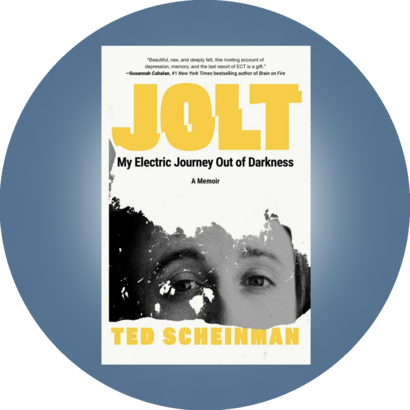
What a shiny and privileged life Ted Scheiman seemed to lead: a graduate of Hotchkiss and Yale, he seemed destined to be another hardworking, well-educated member of the Ivied elite. But the frantic gloom he had first experienced at age eight, coupled with his parents’ divorce, began to derail him in college, and so began a frightening journey through medicine that began with Paxil and, at age 35, led him to undergo electroconvulsive therapy (ECT). Therapists come and go, and a ”hyperverbal depressive,” as Scheiman describes himself, can prove impervious to talk therapy; even dosing on ketamine does not give him the “ego death” that he sought. How he manages to show a sense of humor in his diary entries is astounding (“The food here is dreadful, my doctors can’t seem to agree on anything, and the only Austen on the bookshelf is Mansfield Park”), and his history of ECT and its controversies is illuminating. The account of his ECT treatments in Jolt is finely wrought, almost poetic in its desperation as he observes what is happening to himself and to those around him. And how happy the reader is to come upon the words “Shit, I think it’s really working.” His love of playing music returns, he is cleared to drive, he reconnects with Tara, an old girlfriend, and marries her. Memory loss still dogs him, but if that means he has forgotten his depressive moments at their worst, the trade-off is worth it. Jolt is a wonder, harrowing, hopeful, and ultimately a cri de coeur that turns joyous. ($30, simonandschuster.com) —Jim Kelly

watch
The Night of the Hunter
Spelled out on his left knuckles is H-A-T-E, and on his right, L-O-V-E. Although a commercial and critical flop at the time of its release, in 1955, The Night of the Hunter—the only film Charles Laughton ever directed—has since solidified itself as a classic portrait of good versus evil in American cinema. The preacher with the tattooed knuckles, Harry (Robert Mitchum) arrives in a rural town to con a recently widowed Willa (Shelley Winters) into revealing the location of the money her husband stole. Her son John (Billy Chapin) uncovers Harry’s true motive and flees with his younger sister Pearl (Sally Jane Bruce) on a runaway chase downriver into the discerning arms of Miss Cooper (Lillian Gish). Set against moonlit towns and eerie stretches of rural America, The Night of the Hunter combines Stanley Cortez’s shadowy cinematography and Laughton’s fabulist storytelling to create a genre-resistant film that’s equal parts Grimm fairy tale and film noir. (apple.com) —Eve Eismann

set
Laboratorio Paravicini x The Ark Elements
Hosting season is upon us—but that doesn’t mean we should revert to the oh so tired beige tablescape. To revamp your next Sunday roast, try this muted blue opal dinner set, a collaboration between the Ark Elements and Laboratorio Paravicini. Each piece is handmade, -turned, and -painted—in other words, Italian artisanship at its finest. The collection was inspired by an 18th-century floral wallpaper, which just serves as a reminder that, when in doubt, go for vintage. ($500, thearkelements.com) —Jimena Elmufdi
listen
Partita Playlist
Barbara Kingsolver needs no introduction. Neither does her latest novel, Partita, which follows a classical-piano prodigy (or, rather, a former one—well, now I’ve said too much!) and her less than prodigious upbringing in rural Tennessee. Kingsolver’s lyrical prose makes the book read like a concerto, but it’s her listening list—made up of 14 songs, complete with page numbers marking where each appears in the book—that actually makes it one. She admits in her foreword that she never used to listen to music while writing, finding it too distracting. (Makes one of us, Barbara! I’m currently blasting Bad Bunny—and perhaps that’s why you have a Pulitzer and I don’t.) Now Kingsolver invites us to listen along. (spotify.com) —Carolina de Armas