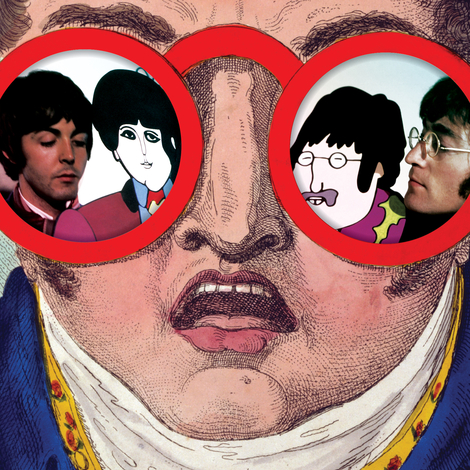

Alfred Hitchcock wanted to buy the rights to Boileau-Narcejac’s 1952 French noir crime novel, Celle Qui N’Était Plus (The Woman Who Was No More), but Henri-Georges Clouzot beat him to it. Clouzot adapted the book into the 1955 film Diabolique, a nail-biting thriller set at an all-boys boarding school on the outskirts of Paris. The story follows Christina (Véra Clouzot, wife of Henri-Georges), the fainthearted wife of sadistic school principal Michel (Paul Meurisse), as she plots to murder him with the help of his brazen mistress, Nicole (Simone Signoret). Cinematographer Armand Thirard’s subtle and shadowy lighting intensifies Diabolique’s haunting suspense and sense of claustrophobia, which later inspired Hitchcock’s Psycho. Full of eerie coincidences, noir elements, and chilling imagery, Diabolique still makes for a good fright. (tv.apple.com) —Eve Eismann

cook
H Mart: The Cookbook
As beloved supermarkets go, H Mart is pretty much at the top of the list for many of us. From its start in 1982, when a Korean immigrant opened a small shop in Queens, New York, to supply Napa cabbage for kimchi lovers, to its 135 outlets (and counting) across North America and London today, the chain comprises bountiful emporia selling every kind of ingredient needed to make authentic Asian cuisine. So it is natural for Stacey Kwon, the company’s president and a daughter of the founder, to offer dozens of recipes as well as text that demystifies ingredients that might otherwise puzzle shoppers. From midnight snacks to elaborate feasts, this cookbook has you covered, with an occasional American twist, like pizza-stuffed waffles shaped like fish. The H is a bow to the store’s original Korean name, Han Ah Reum, which means “an armful,” as in “an armful of groceries.” Here is an armful of recipes, presented in a beautifully designed and amply illustrated volume. ($50, hachettebookgroup.com) —Jim Kelly
dine
Barbour x Dean’s
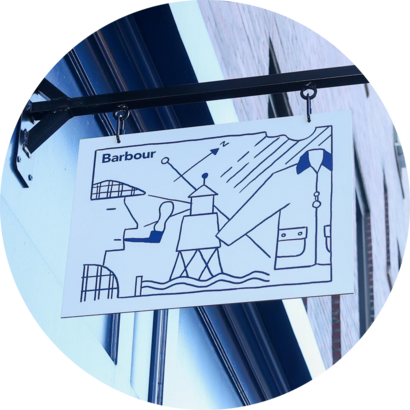
Barbour has taken over Dean’s, the new British joint on Sixth Avenue and West Houston, from October 10 through 14, giving the place a shadow-tartan makeover. The exterior, interior, and menu are all in on it. Dean’s is also selling a limited-edition co-branded T-shirt, while supplies last. The tartan takes its cue from Ayrshire, a nod to founder John Barbour’s Scottish roots. This is Barbour’s second West Village occupation of the year, following April’s stint at Tea & Sympathy. Founded in 1894 to outfit sailors with oilskins, Barbour remains family-owned. After 132 years, it has apparently figured out that there’s no better way to mark your territory than at a pub. (barbour.com) —Jennifer Noyes

read
The Couple With The Pitchfork
Surely Grant Wood had no idea in 1930, when he painted a man holding a pitchfork standing next to a woman that viewers assumed was his wife, that this image would not only become his most famous but that it would be re-interpreted hundreds of times, from Pop art to cartoons to ads. Entitled American Gothic, a bow to the Gothic-styled window in the house behind the couple, Wood dressed his daughter and his dentist as old-fashioned country folk and submitted the finished product to an art competition in Chicago. It was an immediate sensation, and for $300 the Art Institute of Chicago acquired it and is where it remains on display. In her splendid history of the painting and its legacy, Wanda Corn details how the work came to be, the lives of the artist and his subject, the initial and decidedly mixed reactions of Midwesterners (Wood painted it in his hometown of Cedar Rapids, Iowa), and American Gothic’s enduring legacy as re-purposed art. Wood died in 1942, so he never lived to see how, starting in the 1960s, the picture became so amply reimagined, including as an Italian-magazine cover with Donald Trump as the woman and Bernie Sanders as the farmer. The Couple with the Pitchfork is art history at its best—smart, accessible, and utterly captivating. ($49, princeton.edu) —Jim Kelly

buy
Welcome to Fun City
As the streamers get more consolidated and their film selections get worse—last year, 1973’s The Sting was the oldest available movie on Netflix—it’s never been more important to re-invest in physical media by buying a Blu-ray player and building back up a home-video library. Of the labels restoring and re-releasing criminally under-seen older flicks, Fun City Editions remains quite possibly my favorite. The sequence of deep-cut titles that founder Jonathan Hertzberg puts out feels like a cinematic mixtape in the best possible way. Last year’s Welcome to Fun City is an absolutely essential Blu-ray set, comprising around 200 theatrical trailers and TV spots of New York City films from the 1960s through the 1980s, sourced from brand-new scans of original materials. Also recommended from Fun City’s recently released lineup is the first Blu-ray of Larry Peerce’s 1969 adaptation of Philip Roth’s Goodbye, Columbus—notable for featuring the debuts of Richard Benjamin and Ali MacGraw. ($33, funcityeditions.com) —Spike Carter

listen
Awesome Etiquette
Is there a proper way to deal with a peel when serving fruit at dinner? According to Emily Post’s great-great-grandchildren: yes, but it’s quite Victorian. What about wearing jewelry with gloves? For women, rings and watches should always be under, while a bracelet can be worn over. On the Awesome Etiquette podcast, Lizzie Post and Daniel Post Senning answer your questions on, well, pressing manners. Some of the advice may feel frivolous and traditional for our more casual times, but most is quite pertinent, such as their approach to tipping culture and R.S.V.P.-ing to weddings. Whether you are etiquette-curious or searching for escapist media with no mention of Sam Altman or Donald Trump, the Posts’ podcast is humorous and nostalgic with more than 10 years’ worth of episodes to dive into. And, hey, you might learn some new tricks to whip out as the end-of-year party circuit gets going. (spotify.com) —Gracie Wiener