
You might arrive at London’s Beaverbrook Town House and assume you’re checking into a one-of-a-kind boutique hotel. Each of the 14 plushly appointed rooms is named after a local landmark. In the Haymarket, one of Beaverbrook’s first-floor suites, vintage Oscar Wilde posters coexist with a hardbound edition of the defunct British quarterly The Yellow Book.
But, as John Donne noted, “no man is an island.” Neither, as it turns out, is Beaverbrook. It’s one of 2,400 properties in the portfolio of Mr & Mrs Smith, a hotel-booking service that represents some of the best independent boutique hotels in the world.
Founded in 2003 by James and Tamara Lohan, a London-based husband-and-wife team, Mr & Mrs Smith began as a pseudonym for booking “diamonds in the rough” on romantic weekends away. Two decades later, Mr & Mrs Smith has evolved into a hospitality platform that offers perks—a free round of cocktails when you book through them—and editorial reviews.
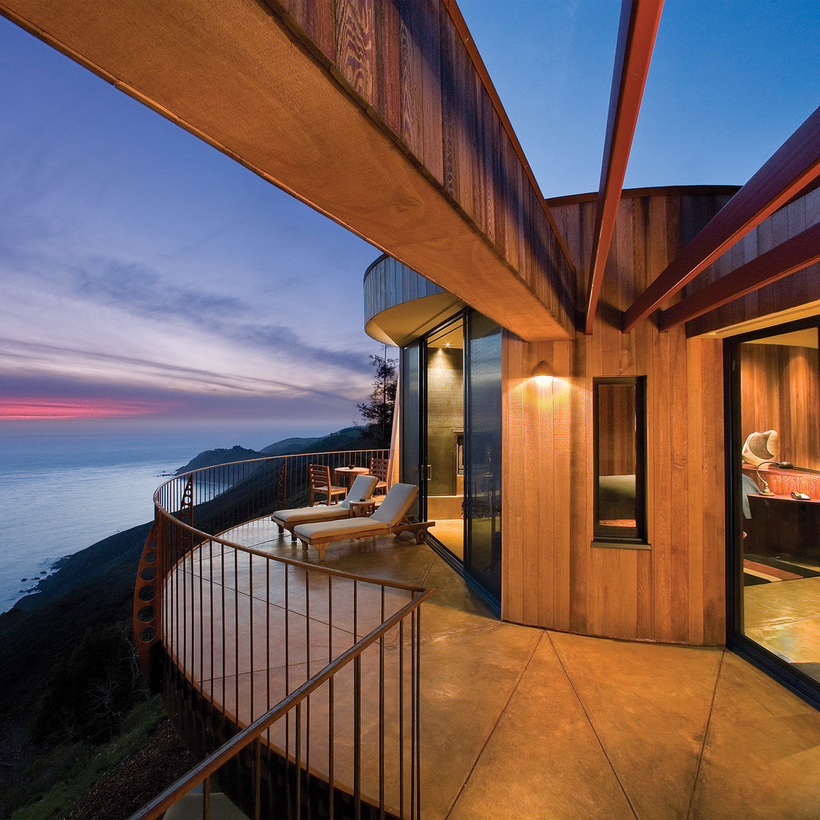
Heckfield Place, a Georgian manor on a 400-acre Hampshire estate; the Post Ranch Inn, in Big Sur; and the Newt, in Somerset, are all part of the Smith portfolio. “We don’t represent hotels based on stars and rosettes,” says Natasha Shafi, Mr & Mrs Smith’s C.E.O. “We represent what you feel when you’re in our properties—intimacy, individuality, charm, the notion of your senses being alive.”
But “feeling” is the new front line in a corporate land grab. For decades, giant hotel chains built their empires on consistency—the promise that a room in Des Moines would look exactly like a room in Dubai. Now they are pivoting to the opposite.
“There is a big demand for unique, high-end properties,” Scott Mayerowitz, a travel-industry consultant, says. McKinsey & Company predicts that global spending on luxury hospitality will exceed $391 billion by 2028, up from $239 billion in 2023. But to access that money you need visibility. “The biggest challenge for a truly independent hotel,” Mayerowitz adds, “is getting people to know about them.”
The irony is that to remain a “hidden gem,” an independent hotel must now be plugged into a global switchboard, or benefit from big money. In recent years, private-equity firms and hotel conglomerates have developed a quiet but unmistakable crush on luxury boutique hotels—drawn to their high profit margins, flexible branding, and the rare opportunity to make real estate feel editorial. In 2018 alone, private equity was behind 37 percent of all U.S. hotel acquisitions, totaling more than $11 billion. Today, when taste is seen as a kind of currency, a stylish hotel with a strong point of view offers something even safer than a bond: cultural relevance, with room service.
That paradox was formalized in 2023, when Hyatt acquired Mr & Mrs Smith for approximately $66 million. The deal was a calculated bid to infuse the multi-national hotel corporation with sex appeal—allowing World of Hyatt members to earn and redeem points at these independent outposts—and to attract affluent travelers who usually avoid hotel chains.
Smith is not the only game in town. Design Hotels, a collective of 300 design-forward properties, came under Marriott’s control in 2016 when the hotel giant acquired Starwood Hotels & Resorts (then a majority stakeholder). In 2024, Small Luxury Hotels (SLH), a 35-year-old collective of roughly 700 properties, inked a partnership with Hilton that allows Hilton Honors members to redeem points on SLH hotel stays.
On paper, it’s a win-win. That’s why Hotel Casa Palmela, a 17th-century property in the vineyards of southern Portugal, signed on with SLH. “Being part of their portfolio helps us reach guests,” says Palmela’s owner, Salvador Holstein.
But there are risks. Chief among them: homogenization and the sacrifice of soul to please a corporate overlord. In 2018, after Marriott acquired the Starwood hotel group—and with it, the Design Hotels collective—several Design Hotels, including Paris’s Les Bains and the AthensWas Hotel, chose to walk away. At the time, the online travel blog the Points Guy reported that many hoteliers were frustrated by the messy Marriott–Starwood merger and the rollout of Bonvoy, Marriott’s centralized (and strict) loyalty program.
Mayerowitz points to the case of Kimpton, a boutique-hotel brand that once had a “massive” following. “Now they’re part of IHG [InterContinental Hotels Group], and some of that magic has been diluted,” he says.
Today, as these big players compete to lure the most desirable boutique properties, a war of philosophies is emerging among their platforms. Mr & Mrs Smith prioritizes guest joie de vivre; SLH, hotelier revenue. But, as Sinatra sang, you can’t have one without the other.
You could argue that Mr & Mrs Smith has an edge based on the distinctiveness of its name alone. Amid the endless scrolling of #TravelTok, their Web site feels like a guidebook from another era—with ads shot by photographers like Tina Barney, voicey reviews that reference Sophia Loren, and property descriptions so thorough they’ll even tell you which hiking shoes to pack. “With A.I., our editorial lens is more important than ever,” Shafi says. “It’s human beings—designers, editors, chefs, writers—that make Mr & Mrs Smith come to life.”
Hyatt has simply given Mr & Mrs Smith a broader customer base—Smith properties appear in Hyatt’s search-engine results—and more recognition in the American market, where they’re expanding. “We won’t be a business that has 10,000 hotels next year,” Shafi says. “That would completely break trust.”
SLH, by contrast, is a membership association without an editorial sheen. “From an operational standpoint, you have a small, independent hotel with limited sales and marketing budgets that, all of a sudden, gets plugged into this massive network,” Kenan Simmons, who oversees the Americas for SLH, says. “We have travel-agent sales, group sales, corporate sales,” he adds. “Mr & Mrs Smith is really just a publication and a Web site.”
And yet, whether wrapped in Mr & Mrs Smith’s editorial charm or SLH’s talk of “distribution,” booking a room through a conglomerate-owned platform puts money in the pocket of the conglomerate, while also, admittedly, helping a small business within it survive. In our globalized, points-ified era, that may be the reality of a rare gem trying to stand the test of time.
Take Passalacqua, the Lake Como sanctum ranked third on the World’s 50 Best Hotels list. A quick search reveals it, too, is part of a network—Mr & Mrs Smith. And if you book with them, you get “a cocktail and a treat in your room on arrival.” Indeed, no man is an island, and no hotel really stands alone. Might as well take the free martini and call it a night.
Sheila Yasmin Marikar is a Los Angeles–based writer