
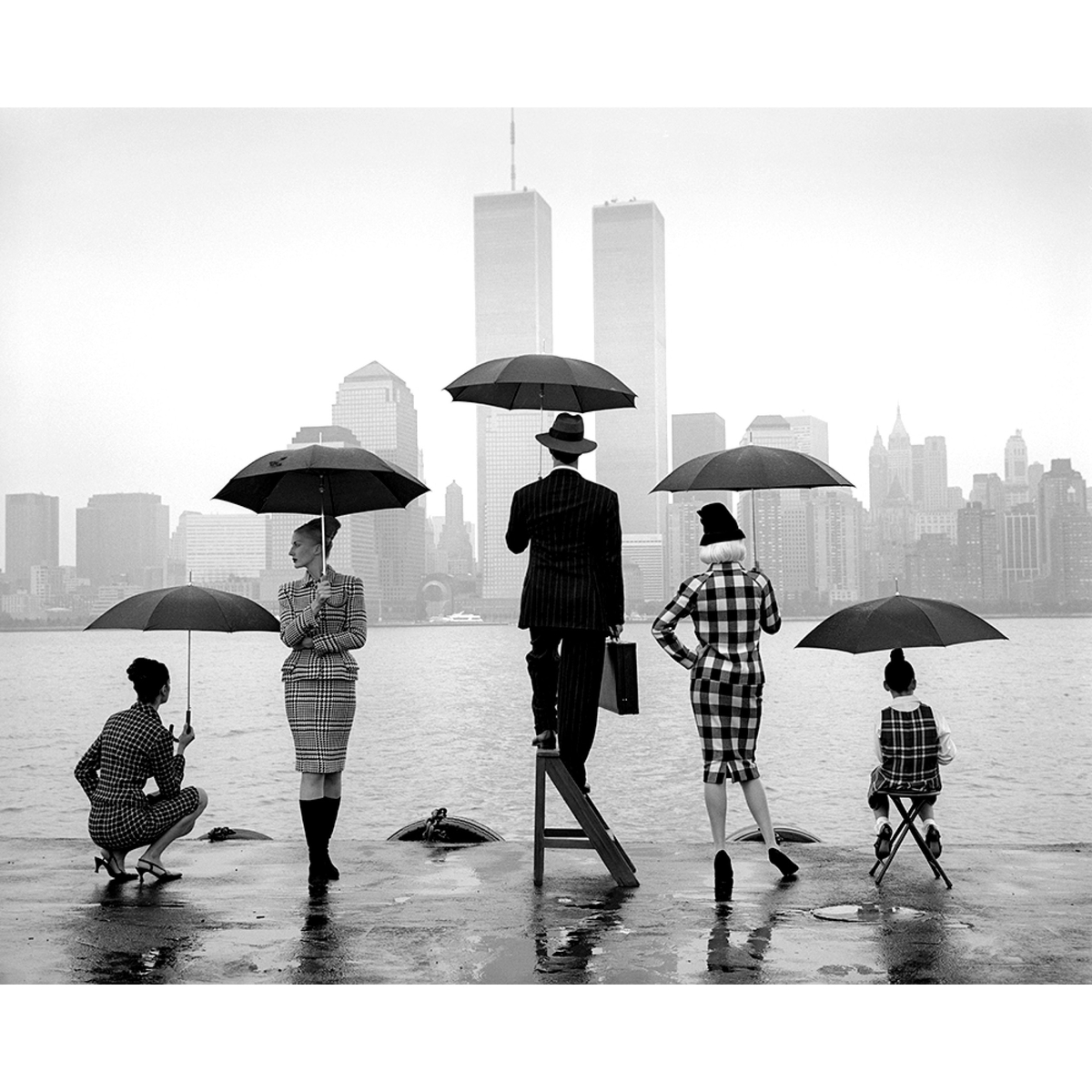
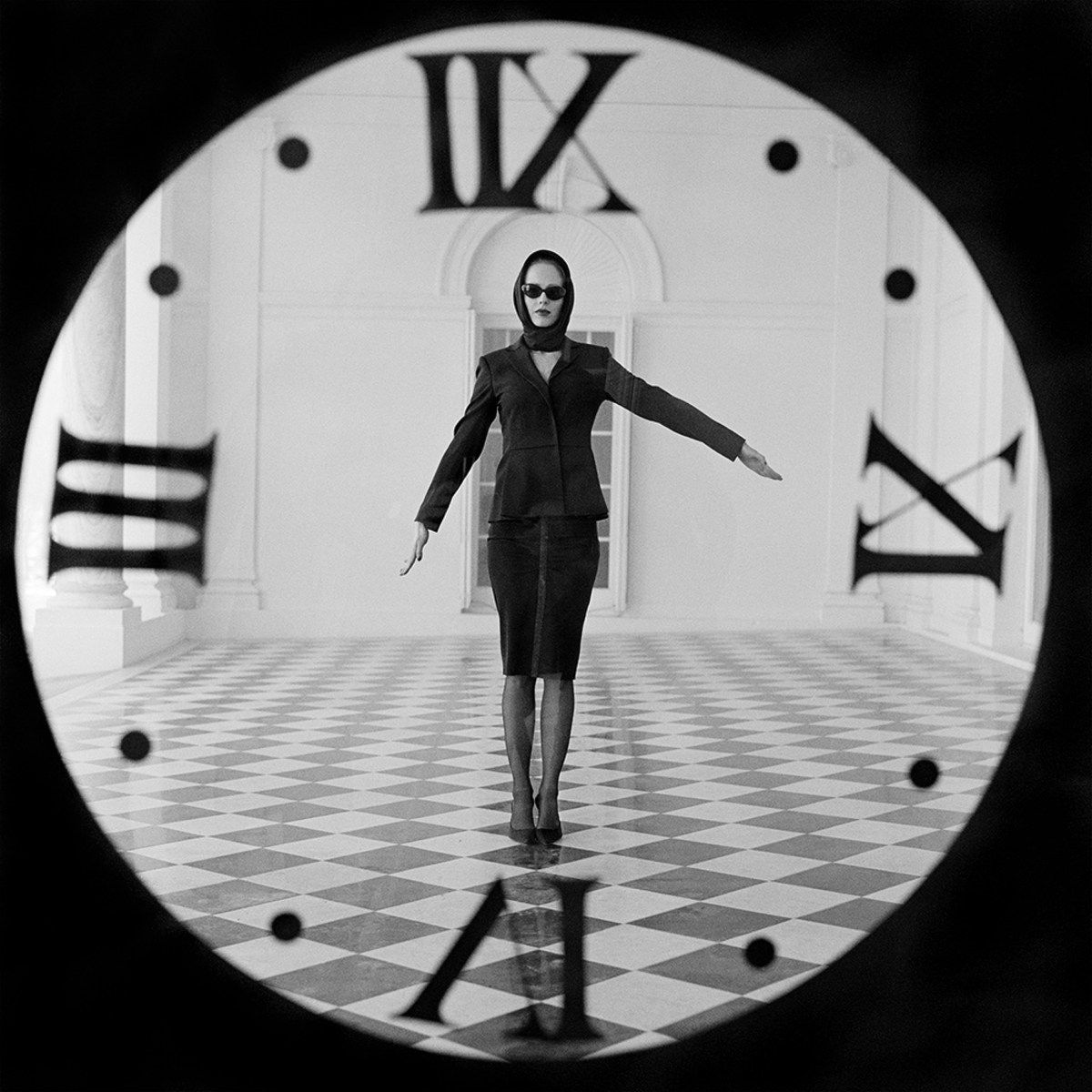
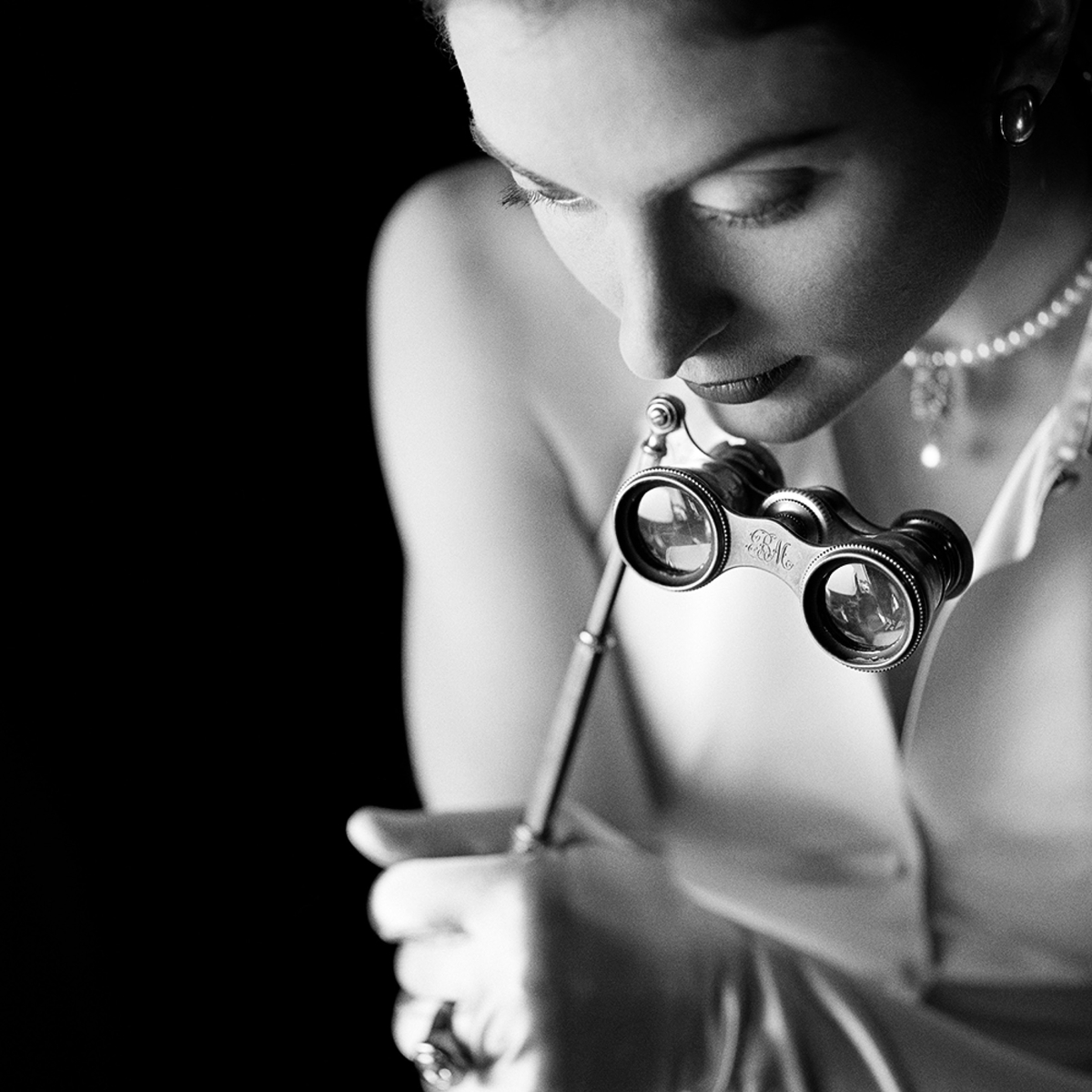
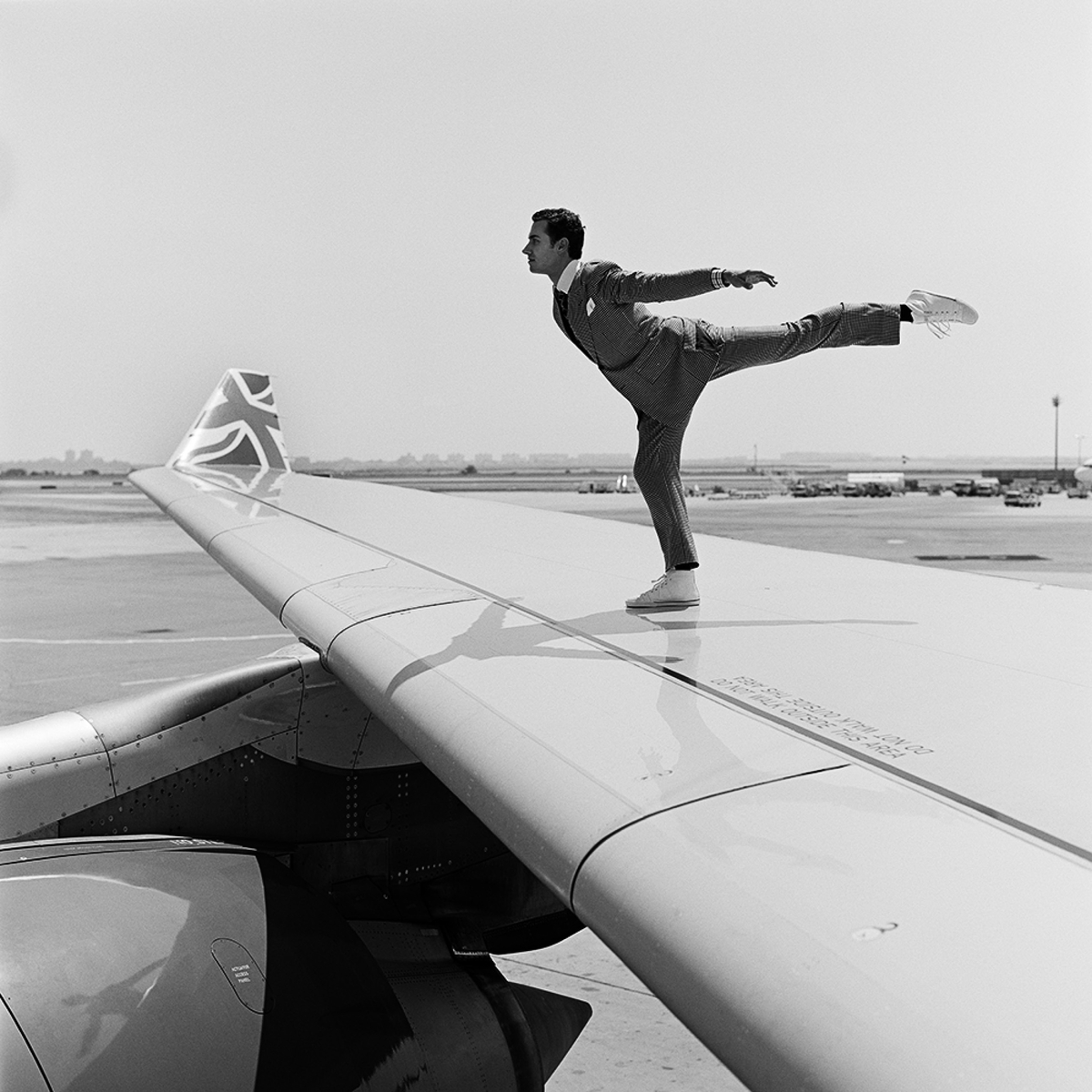
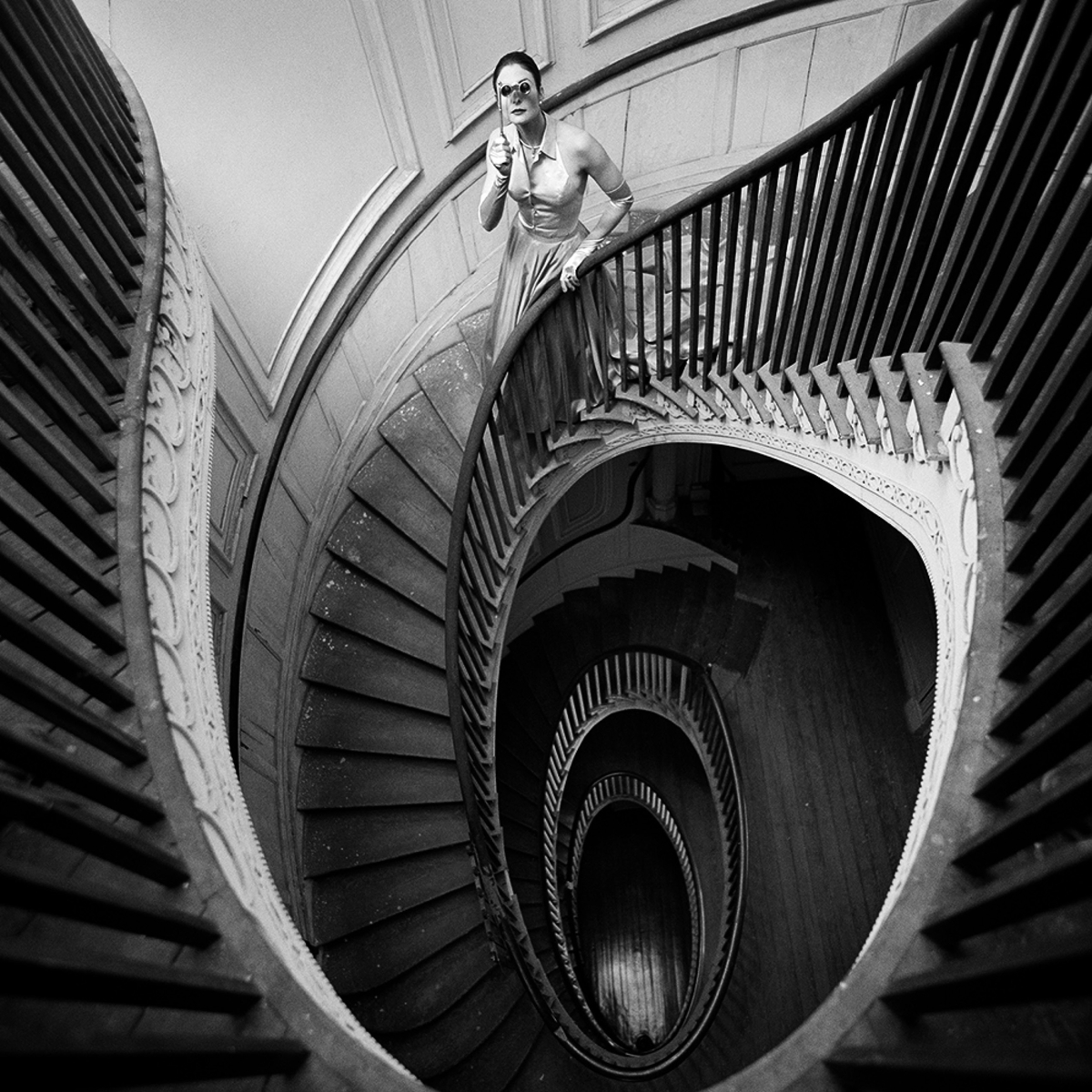
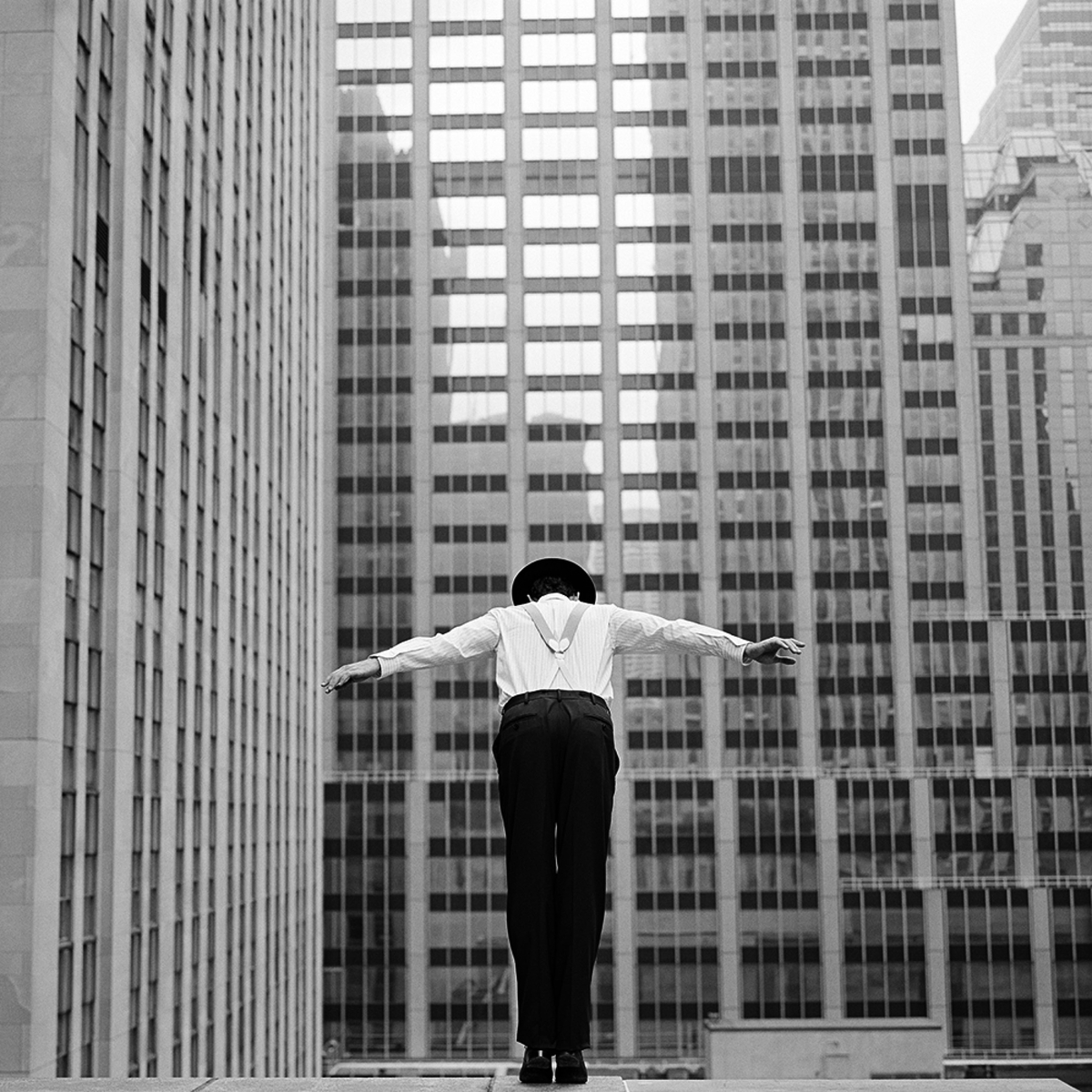
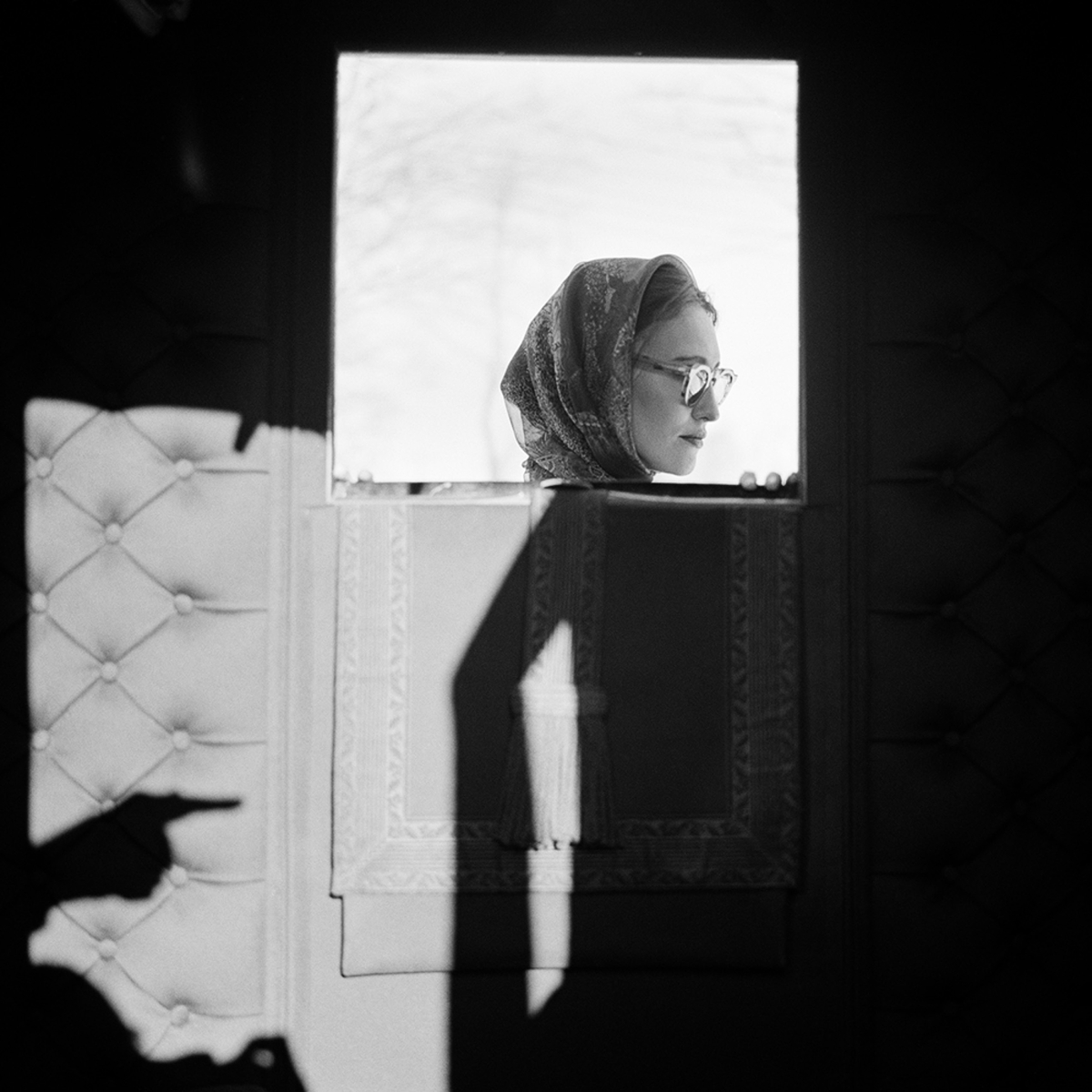
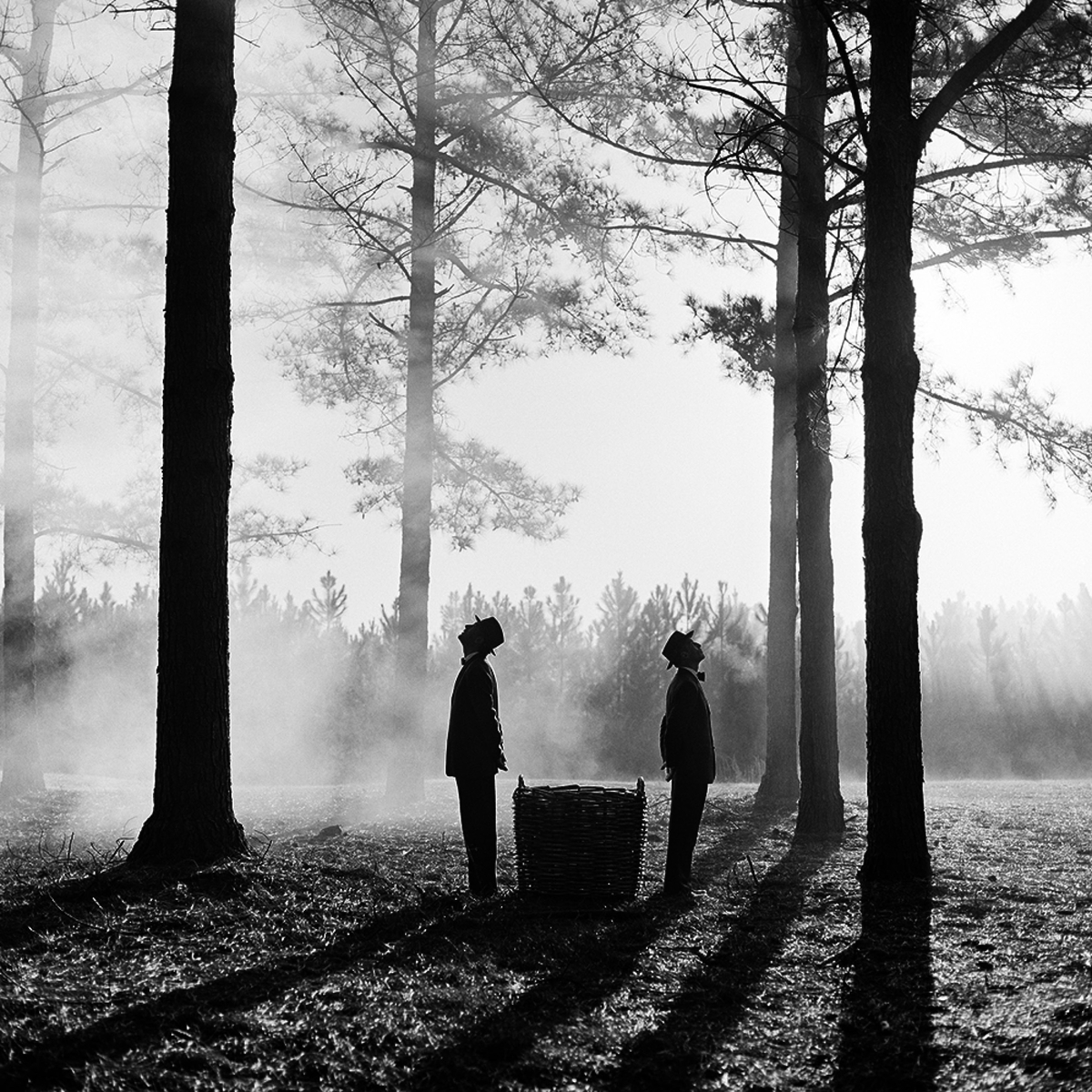
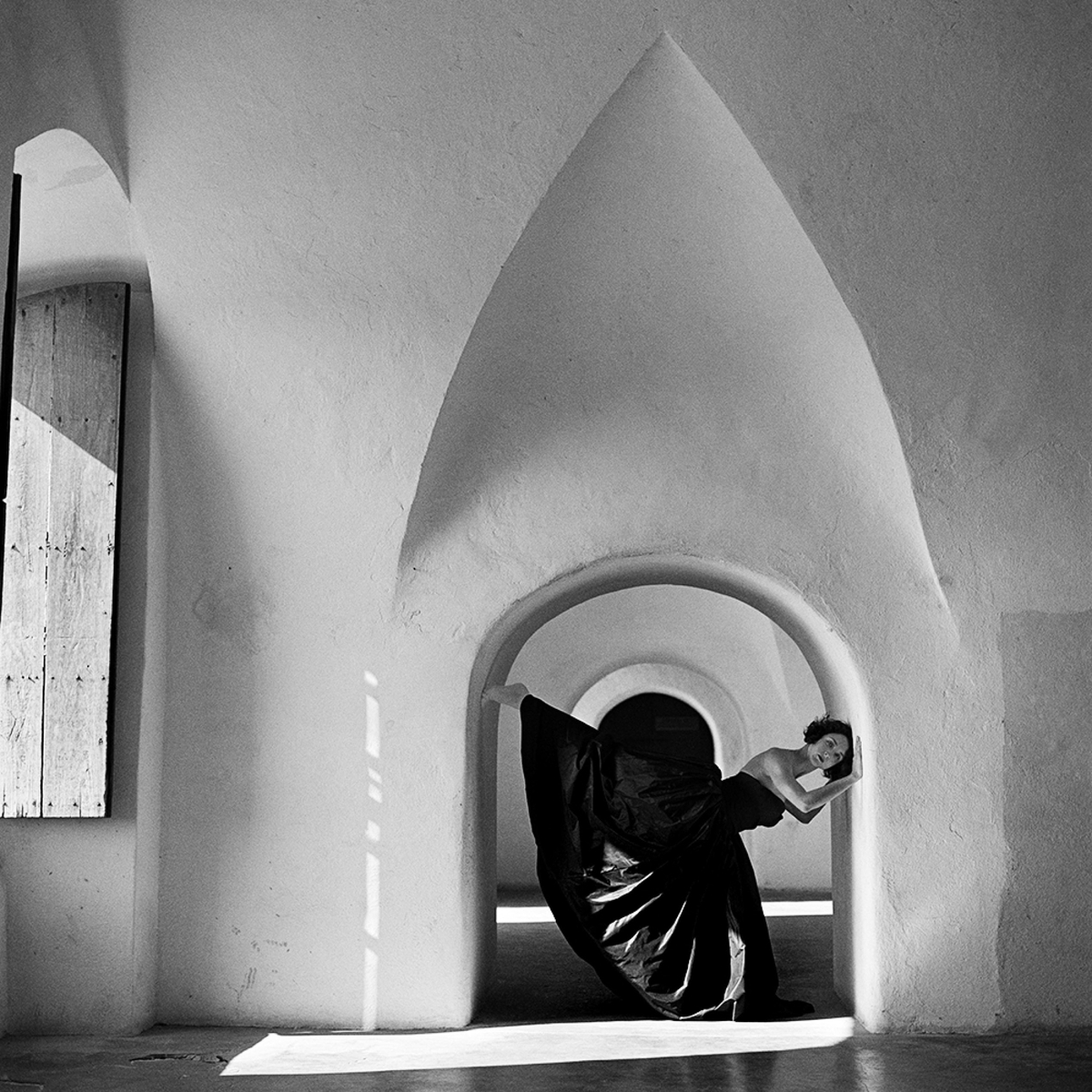
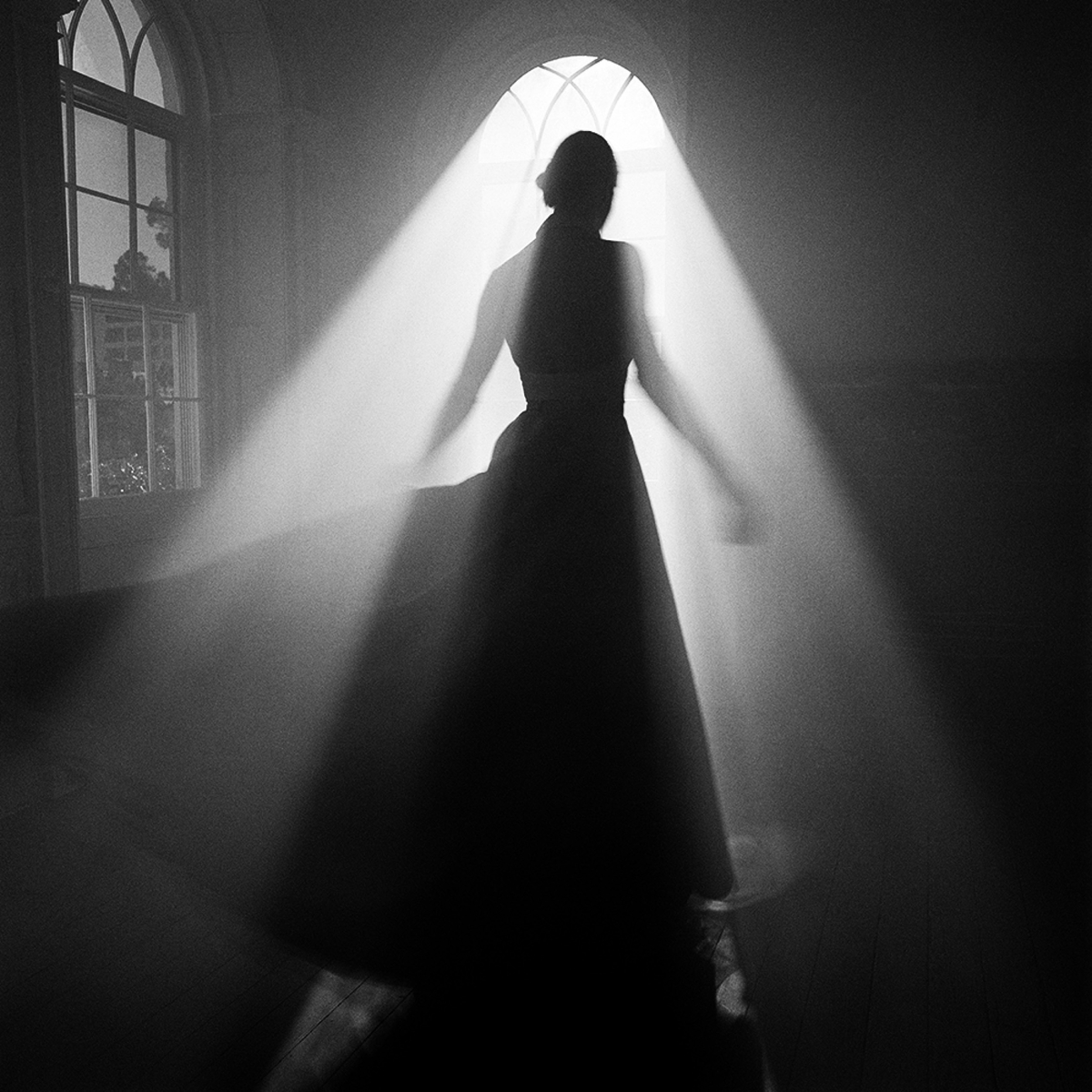
Should you ever need to identify a work by the New York photographer Rodney Smith, who lived from 1947 to 2016, look for these clues. First, his images of dreamlike whimsy are usually contained within a pleasing symmetry—they’re very Wes Anderson but in black and white. Next, his subjects resemble Charlie Chaplin or characters out of a Frank Capra film—they’re often wearing hats—yet they are placed in Hitchcockian situations: chased by airplanes (very North by Northwest) and inhabiting Magritte-like spaces.

A double self-portrait by Smith, taken outside the Schoenbrunn Palace, in Vienna, 1998.

All this is to say that Smith—who primarily photographed with a 35-mm. Leica M4 before transitioning to a 120/6x6 medium-format Hasselblad with an 80-mm. lens—was both cinematic and architectural. Or so say the writer Susan Bright and the visual artist Anne Morin in a major new monograph, Rodney Smith: Photography Between Real and Surreal.

Much of Smith’s work was produced in the 1990s and 2000s, even though it looks as if it belongs in the 1930s and 1960s. “It is fascinating to contemplate time in relation to Rodney Smith’s work, as there is a sense of suspension in his images, so much so that one does a double take upon seeing the dates the photographs were taken,” says Bright. “What we experience is imagined time, a homage to the style, elegance, and grace of an idealized era. There is an element of fantasy involved.”

Woman with Hat Between Hedges, Parc de Sceaux, France, 2004.

Paging through the book, other works come to mind. The movie Singin’ in the Rain is evoked by Smith’s well-known Leap of Faith, and John Singer Sargent’s Madame X is suggested by Smith’s portrait Bernadette No. 2. And then there’s our favorite photograph: two men sit in a forest on wooden chairs, their heads covered in cardboard boxes adorned with Groucho glasses. As with certain dreams, you come away from Smith’s world with more questions than answers. Which suits him just fine. “If a picture answers every question,” Smith said, “it isn’t worth looking at more than once.” —Carolina de Armas

Carolina de Armas is an Associate Editor at AIR MAIL