After the Vietnam debacle, it was only natural for Americans to look back nostalgically on the triumph of World War II. Journalist Tom Brokaw memorably dubbed the men and women who saved the world from Nazi tyranny and Japanese imperialism, launching a golden age for American society, as “the Greatest Generation.”
David Nasaw doesn’t buy into this accepted wisdom. In The Wounded Generation: Coming Home After World War II, the acclaimed social historian takes a scalpel to our collective wistfulness and finds something much more nuanced, messier, and sadder underneath. Trauma, disorientation, and societal neglect marked the return home of the warriors, leaving wounds—both visible and invisible—that would shape their lives for decades.
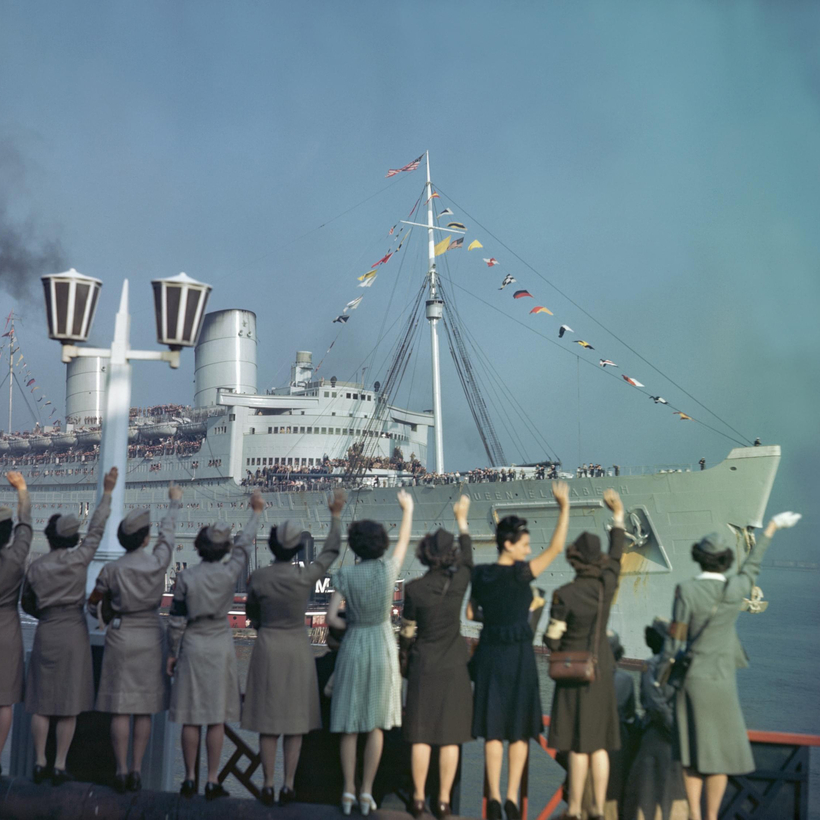
Nasaw shows that coming home was rarely the triumphant return we collectively imagine. Take the famed kiss in Times Square of a returning sailor kissing a nurse in a white uniform. The Life-magazine photograph that was reprinted in posters and memorialized on book covers for decades mythologized a shared national happiness at the end of the war. In fact, the kiss was unwanted and nonconsensual, an assault that Nasaw suggests could have resulted in an arrest had the sailor been Black.
Minority veterans encountered a special sting upon their return: they’d been told they were fighting for freedom abroad only to come home to segregated schools, buses, and lunch counters. Gratitude was uneven; opportunity, even more so.
This is a book about the demons, afflictions, and inequality caused or amplified by a war that resulted in the caricaturing of World War II veterans by a public hungry for heroes. Nasaw employed a variety of primary and secondary sources, and his scope in subject matter is wide: the marriage that couldn’t survive dalliances on one side of the ocean or the other; the soldier who returned with a fuse so short his family barely recognized him; the wife who discovered her own wartime independence and had no interest in returning to the laundry.
Divorce rates jumped in the immediate postwar years. Men weren’t just older when they returned; they were profoundly changed by four years of fear, menace, and proximity to death.
The most haunting chapters tally the damage we couldn’t see. Of the 16 million Americans who served, more than 670,000 came home with visible wounds. Hundreds of thousands more carried what we now call PTSD—before the medical establishment had a neat acronym for it. By mid-1947, nearly half a million veterans had documented “neuropsychiatric” disabilities. And that’s just the official count. Add the quiet alcoholics, the self-isolators, and the insomniacs, and the number swells.
Nasaw sharply strips away the heroic caricature. “We do them a disservice by reducing them to stick-figure avatars of progress, confining the effects of their war service to a character-building, maturing experience and overlooking the difficulties they encountered,” he writes.
At times, Nasaw may overcorrect for the nostalgia factor. After all, plenty of veterans did parlay the G.I. Bill into degrees, houses, and upward mobility; plenty found work, built families, and made peace with what they’d seen and done. Nasaw acknowledges all of that, but he’s after the conveniently forgotten shadows our triumphal narrative throws. In terms of balance, then, perhaps the correction is overdue.
The book earns its title in another way—by tracing how American institutions normalized harmful activities. During the war, the military looked the other way when it came to heavy drinking, actively encouraged smoking, and tolerated prostitution, all of which were seen as pressure valves for combat soldiers. Those habits didn’t vanish at discharge. Add in chronic pain, untreated psychological trauma, and a culture that demanded stoicism, and you get a public-health crisis hiding in plain sight.
The kind of suffering World War II veterans endured has been repeated more recently in the wars in Vietnam, Iraq, and Afghanistan. But Nasaw’s narrative remains tightly gripped to World War II, pointedly shattering the myth of the golden postwar period. Even in victory, that generation was left as profoundly scarred as the sons and grandsons who have fought since.
Nasaw has a knack for writing about the human experience in the aftermath of war. His previous book, The Last Million: Europe’s Displaced Persons from World War to Cold War, describes the pain, desperation, and mistreatment of Jewish Holocaust survivors who were largely abandoned by the world before the State of Israel was founded as a refuge.
The Wounded Generation looks at how the same war shaped American society into the 1950s and certainly well beyond. F.D.R.’s New Deal of the Depression years morphed into “a veterans welfare state” in the 1940s, allowing the returning soldiers—or at least some of them—to receive ample health and financial benefits.
But the veteran programs also sustained and codified racial inequalities, reflecting the larger problem of institutional bias. Black veterans were frequently denied G.I. Bill benefits, which were largely controlled by local authorities. Between 1950 and 1960, White homeownership increased twice as fast as Black homeownership.
The future civil-rights leaders who served during the war—and were often treated better abroad than at home—“learned overseas that segregation was not ordained by some superior being but was a man-made and enforced social system,” Nasaw writes. Such incongruities fanned the civil-rights movement of the 1950s and 1960s—a rare silver lining in a book dominated by tragedy.
Clifford Krauss was a longtime correspondent for The Wall Street Journal and The New York Times, and is the son of a World War II veteran