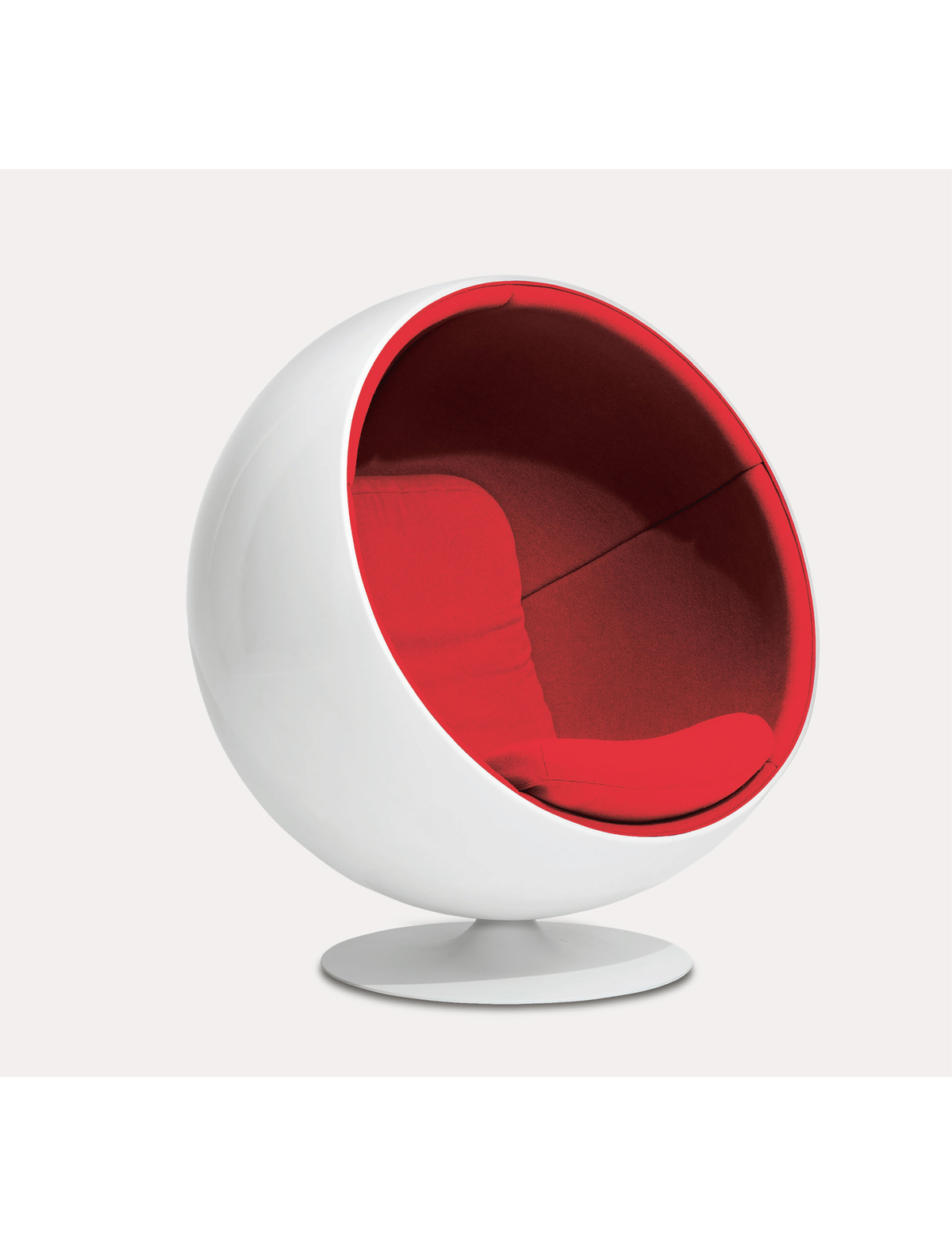
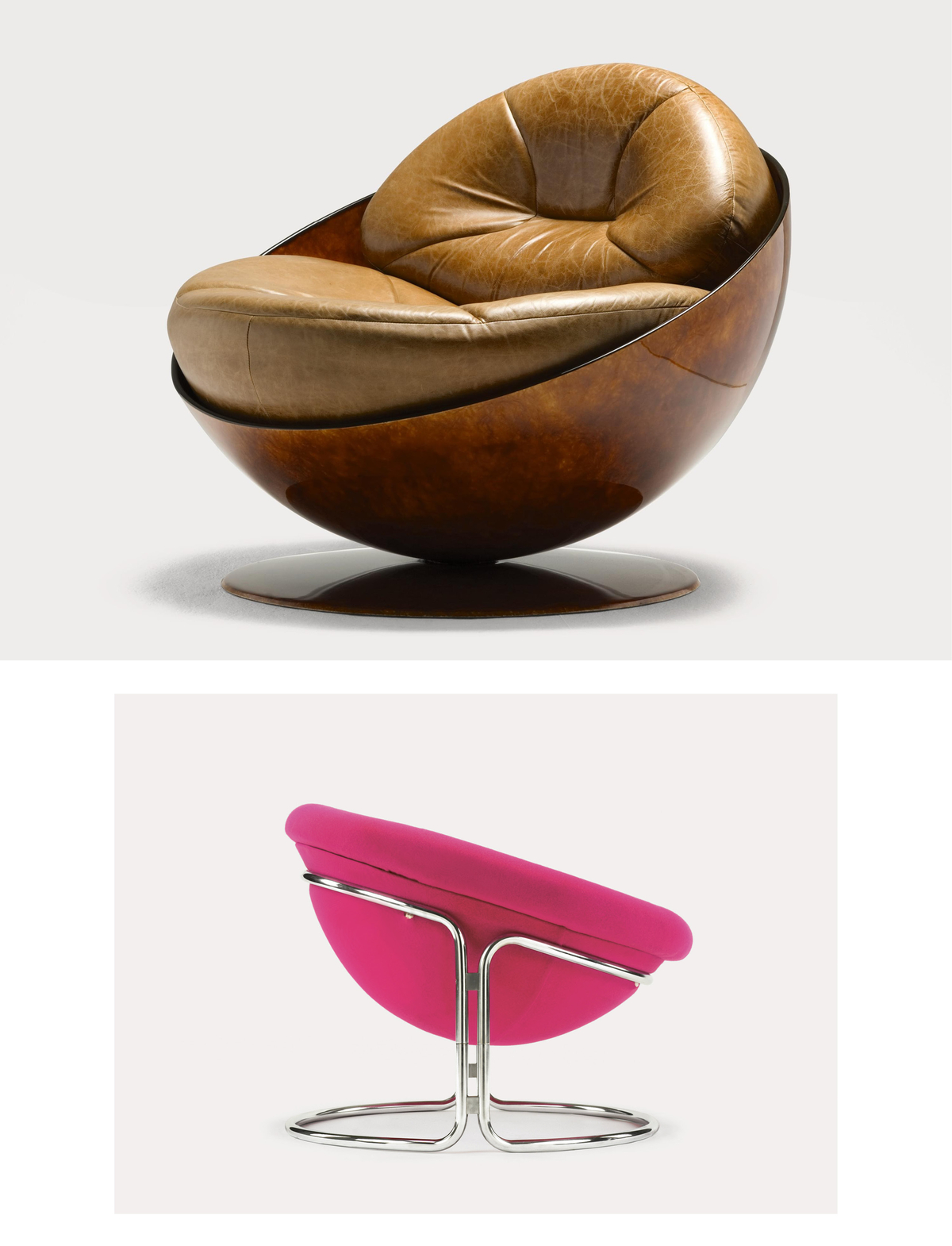
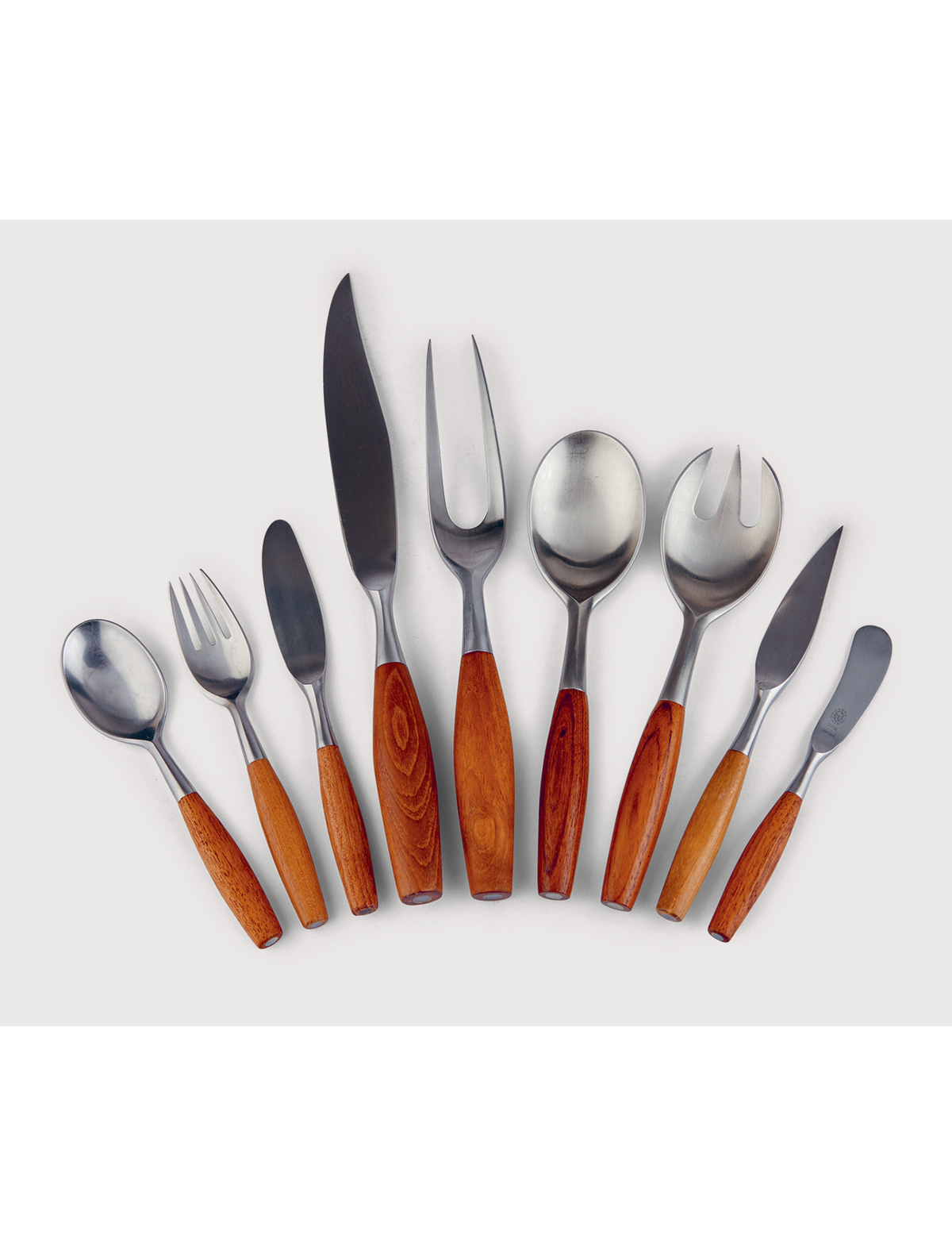
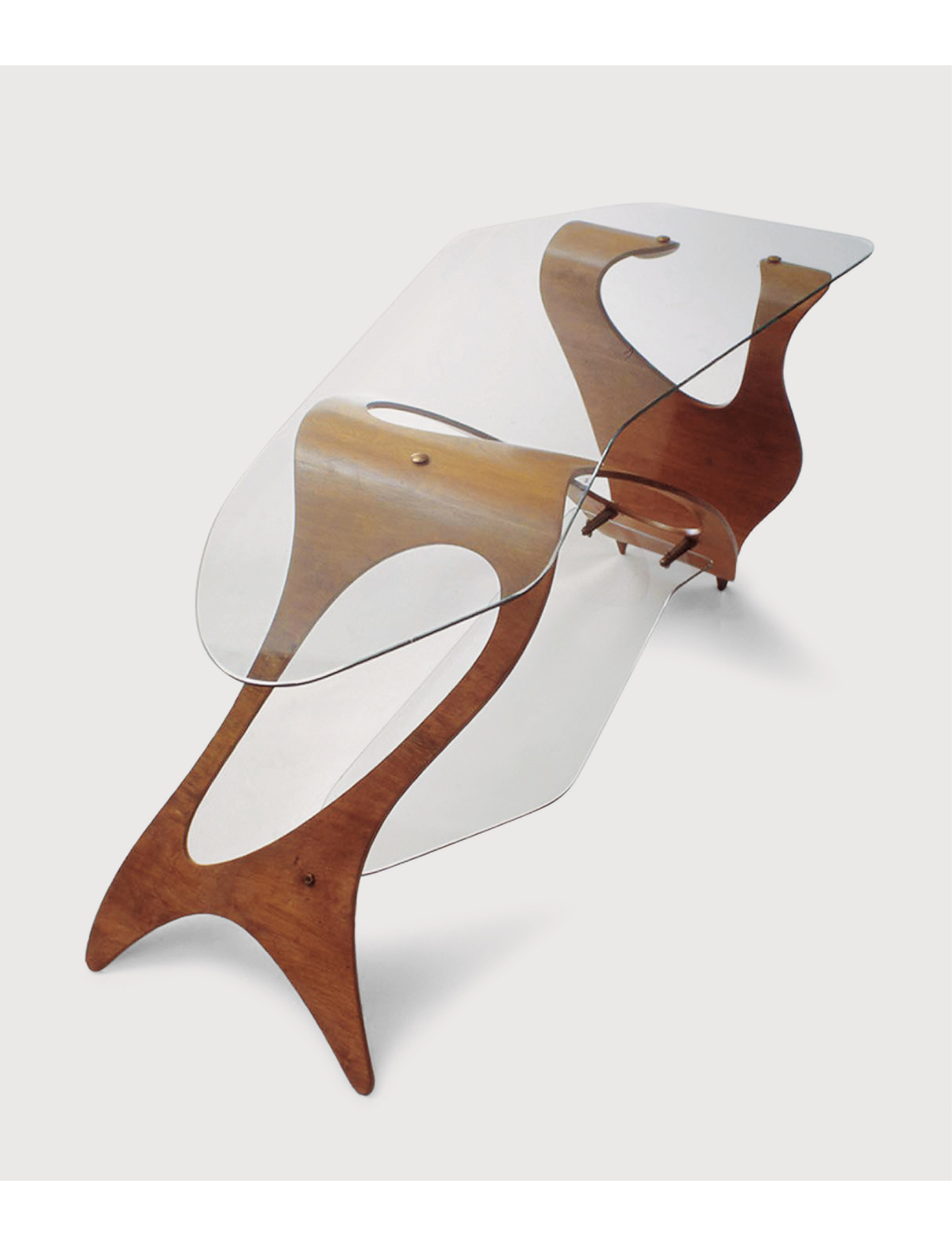
In the mid–20th century, designers began their escape from the straight-backed furniture of their predecessors. In came rounded forms with ergonomic character—soft, sleek, and easy on the body.

Before the war, during the economic austerity of hyperinflation, Walter Gropius and Marcel Breuer—two leading lights at the Bauhaus, in Germany—argued for “democratic design.” They paired industrial materials with mass-production techniques.

The revolution, however, came after the end of World War II. Members of the Bauhaus were moving or had moved to America, which was now enjoying the prosperity of the 1950s. The baby boom was on, and citizens were re-doing their homes for a modern world. They wanted what was new.

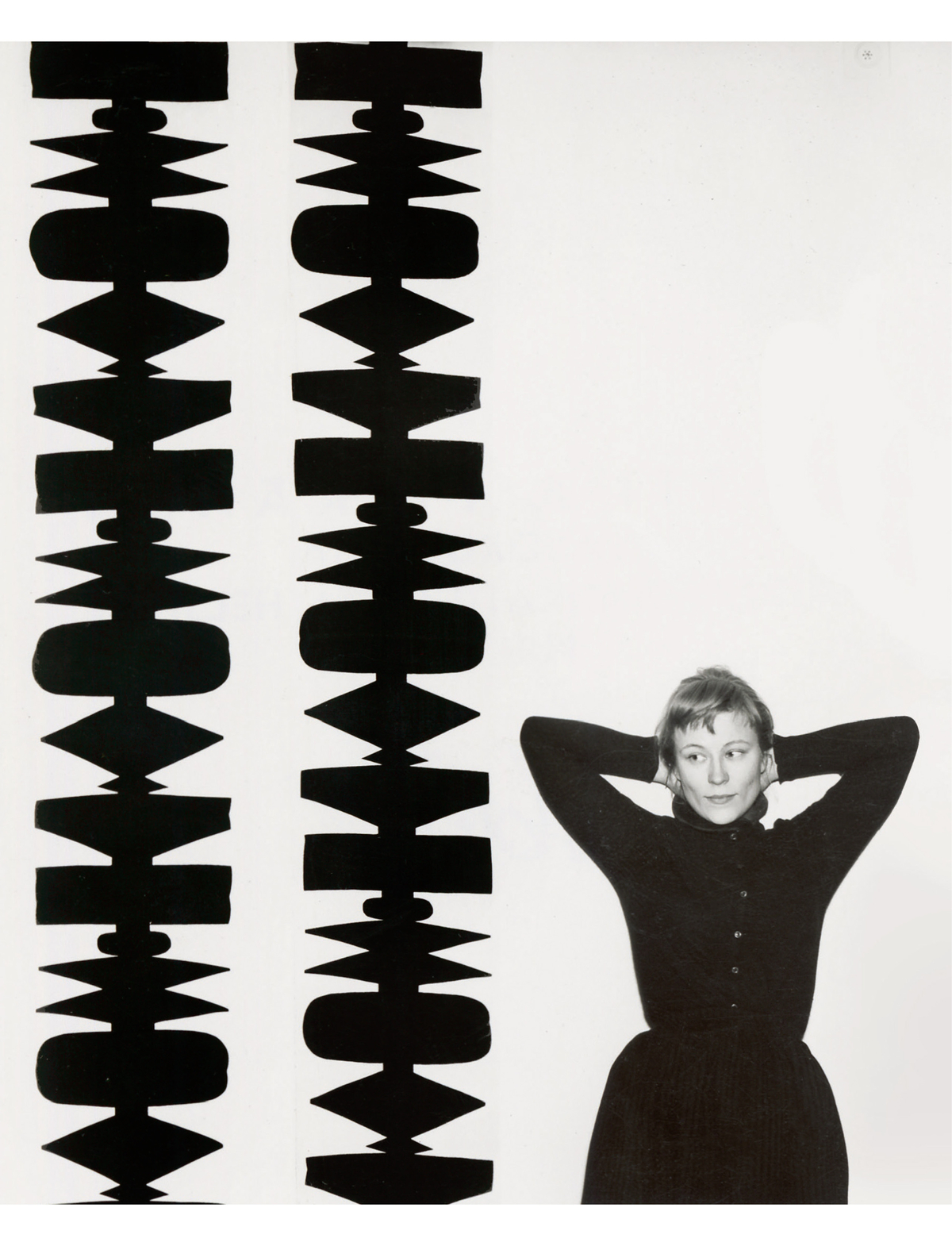
Breuer’s avant-garde Wassily chair—inspired by bicycle handlebars and made from tubular steel—was put back into production by Gavina and Knoll. Anni Albers, who had relocated with her husband, Josef Albers, to Black Mountain College, in North Carolina, flew to South America to study weaving techniques. Her wall hanging Red Meander (1954) drew directly from the Indigenous traditions she studied there.

Around the same time, south of the equator, the Italian designer Lina Bo Bardi completed her Glass House in the rainforest surrounding São Paulo. Perched on stilts, it was designed with a center courtyard—a space for huge trees. In Italy, designers were realizing their own quirky projects: Anna Castelli Ferrieri pioneered modular plastics with Kartell’s Componibili, and Franco Albini engineered the Veliero bookcase.

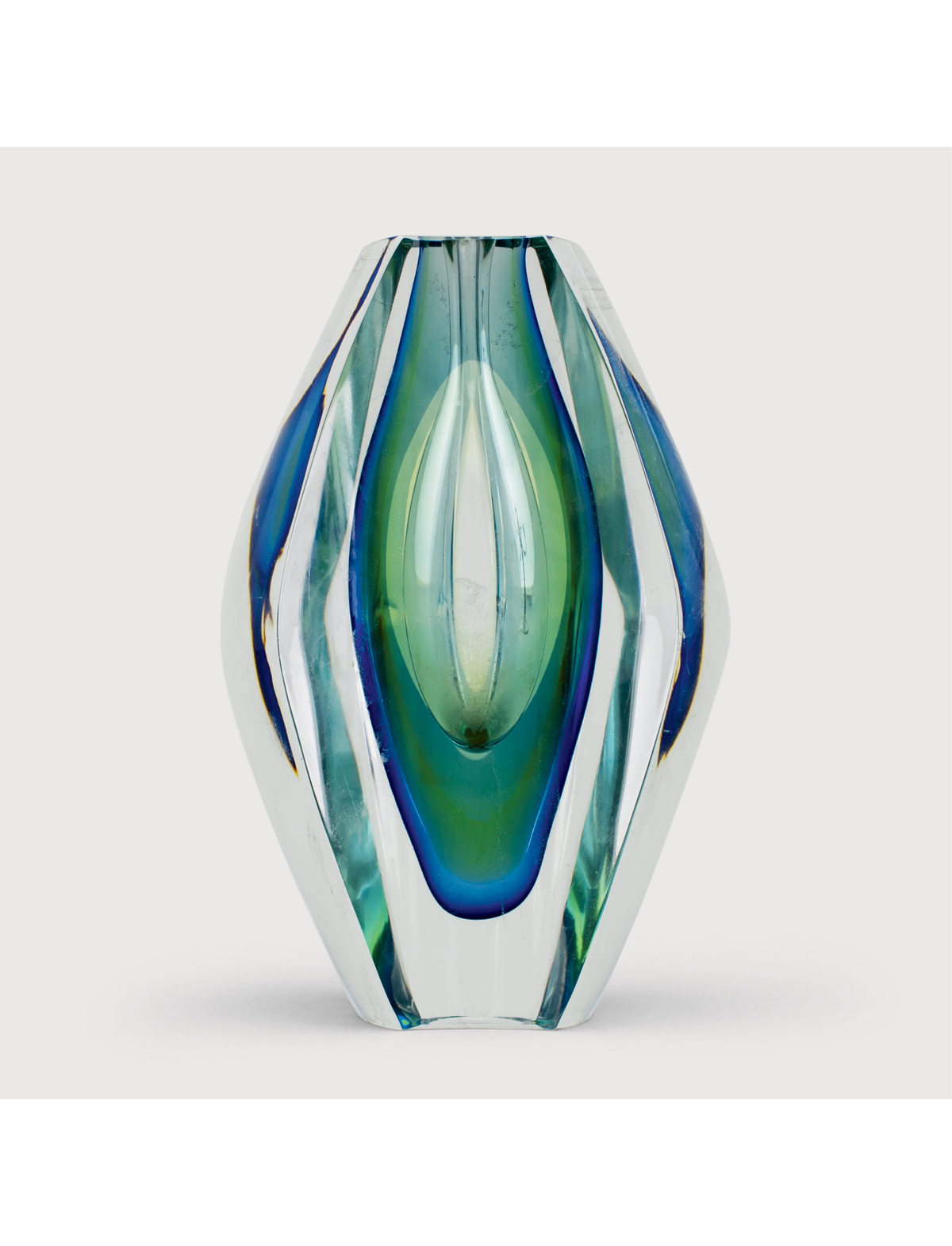
Mid-Century Modern Designers, a new book by Dominic Bradbury, compiles important creations by 300 designers. Wendell Castle’s yellow fiberglass Molar settee (1967) puts you into the mouth of modernism. And Charles and Ray Eames’s Hang-It-All, designed in 1953, whips you back to the days of blackboards and slide rules. —Elena Clavarino

Elena Clavarino is a Senior Editor at AIR MAIL