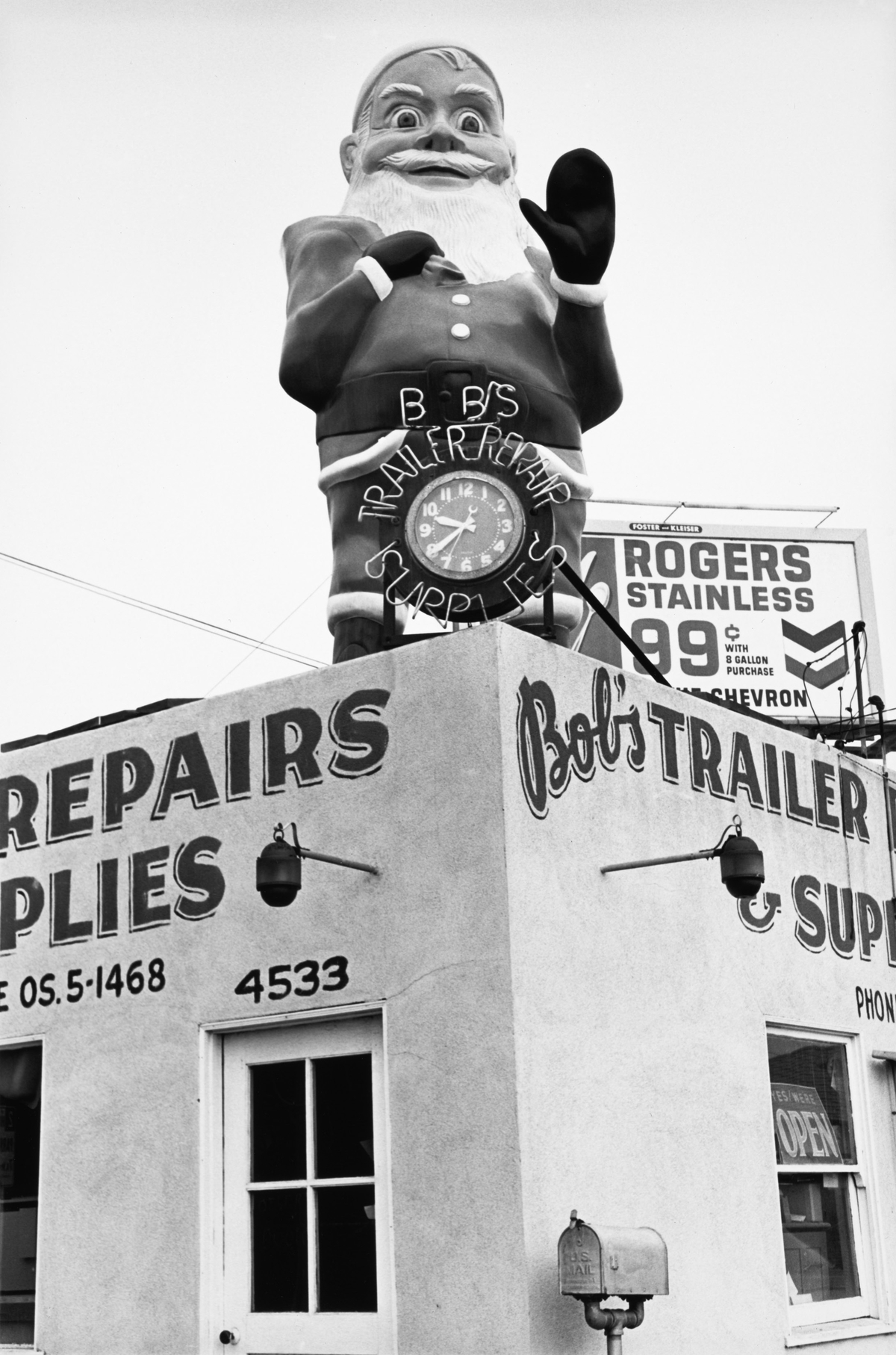
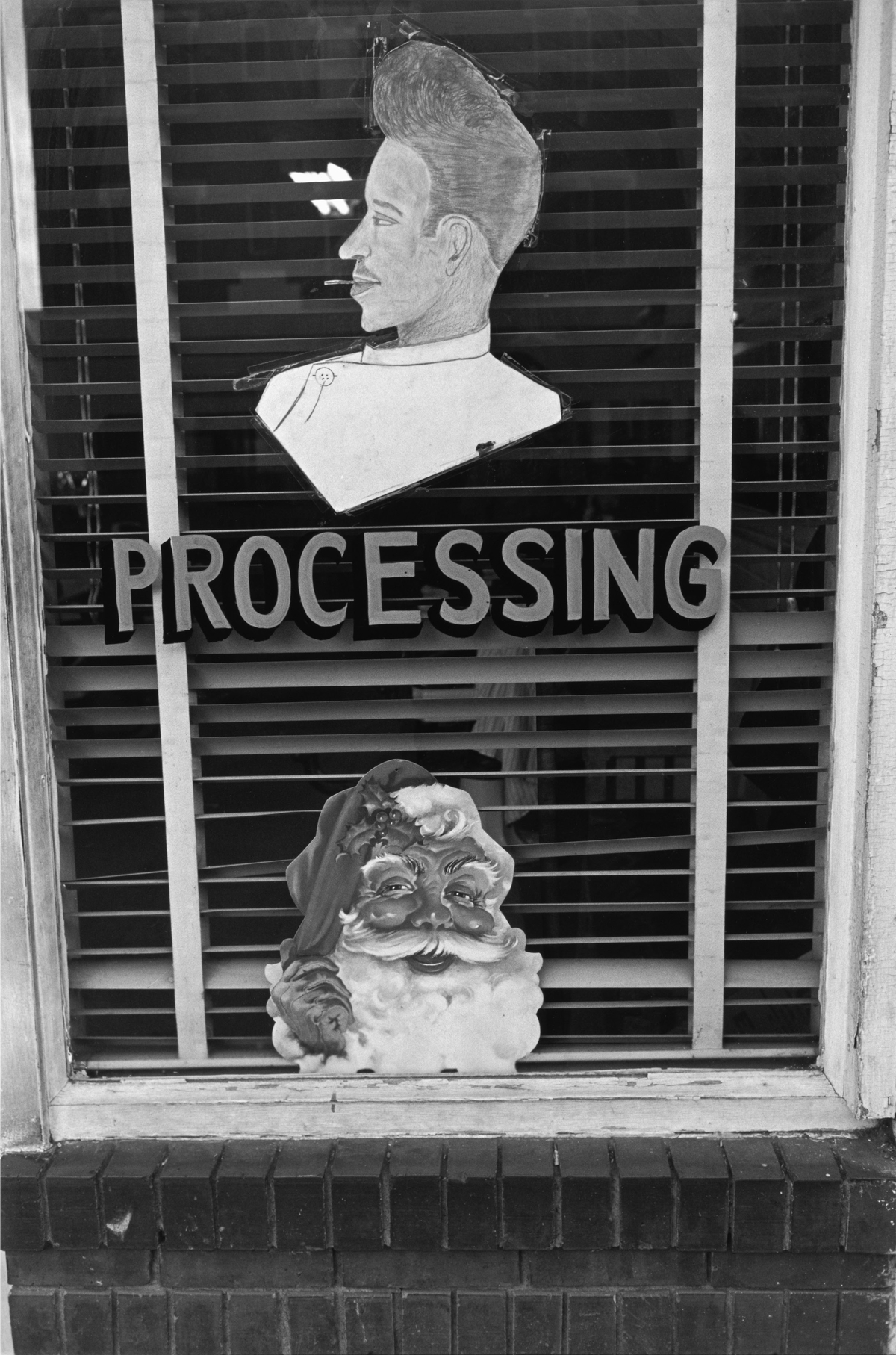
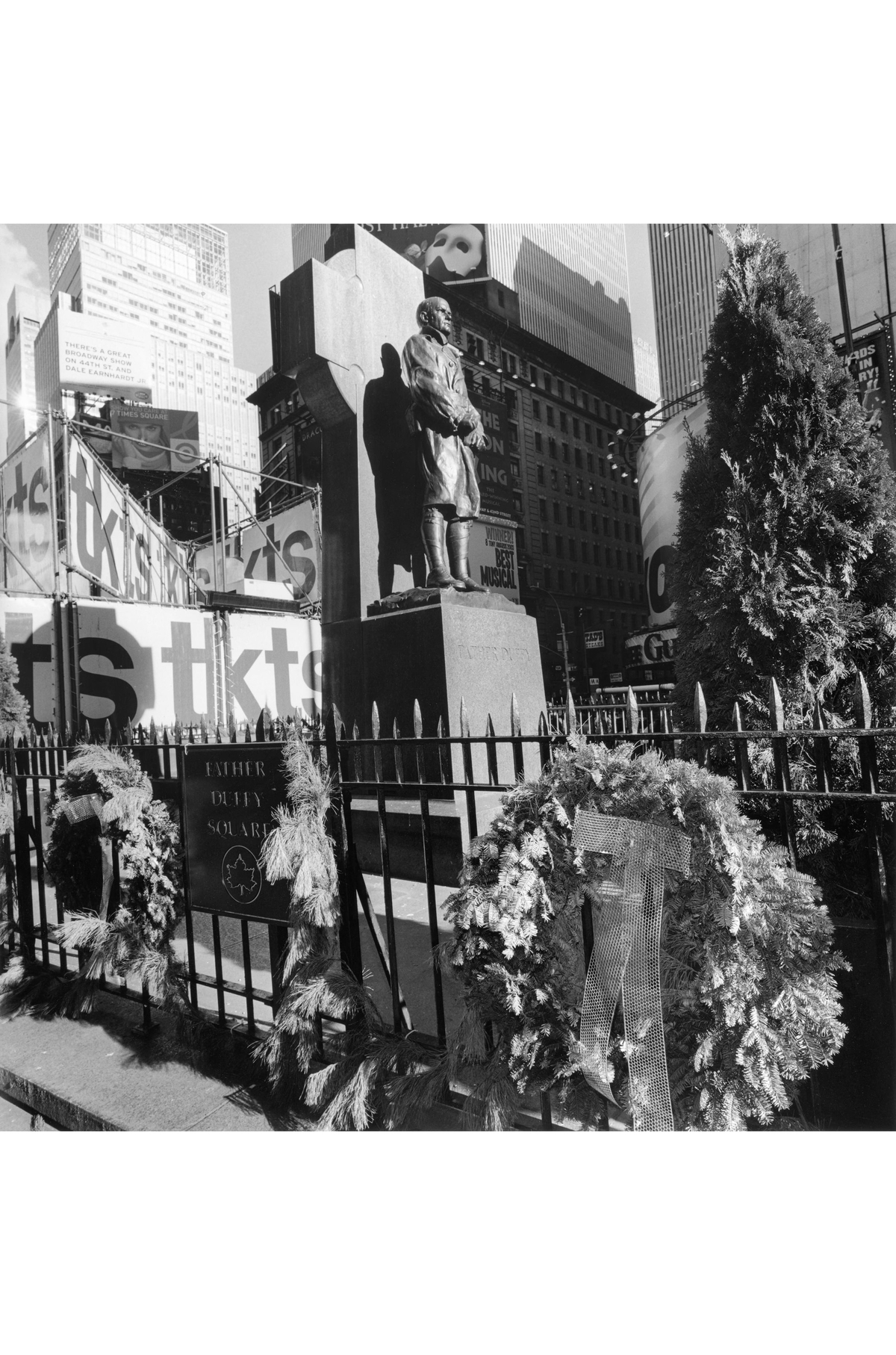
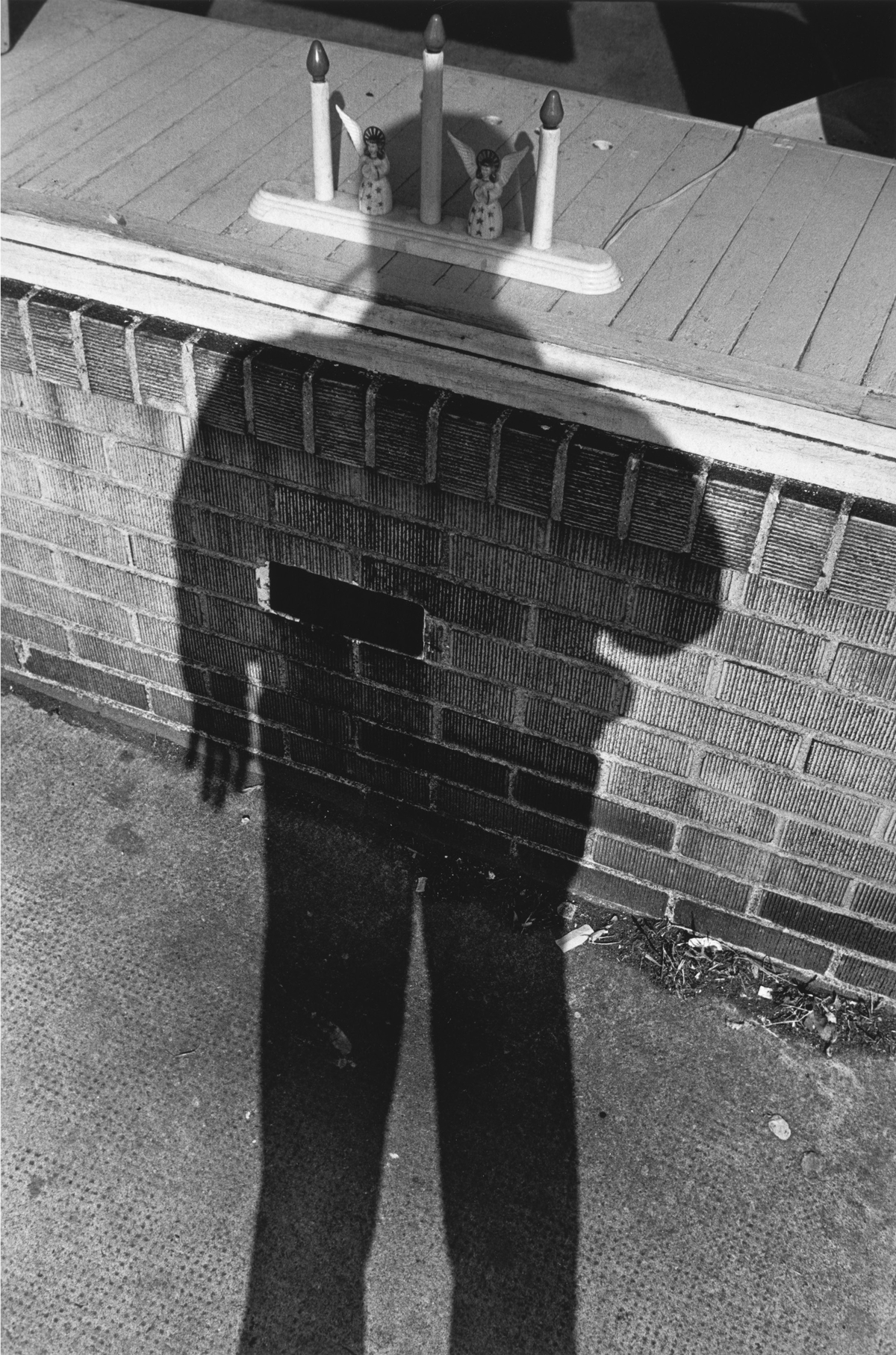
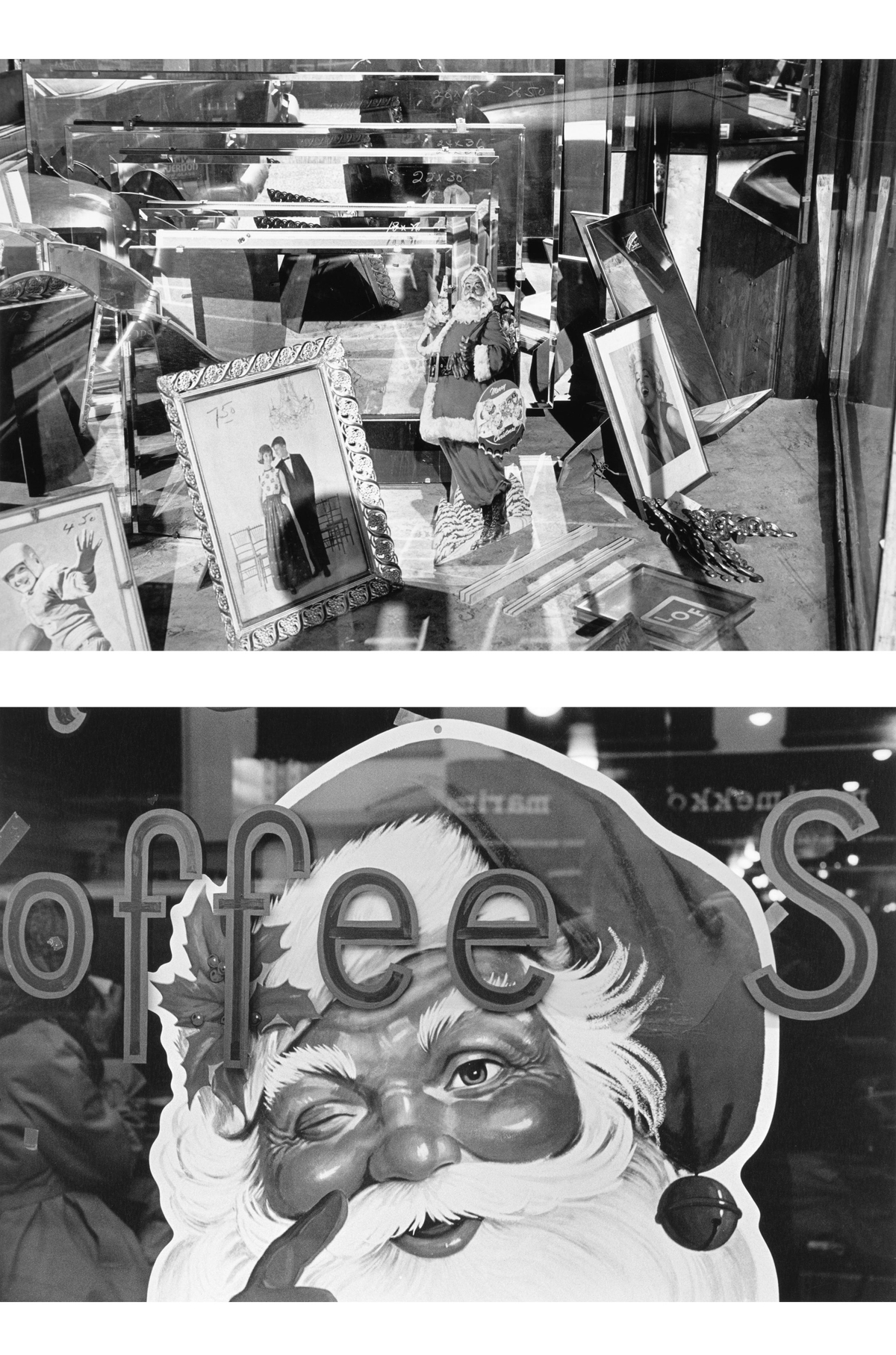
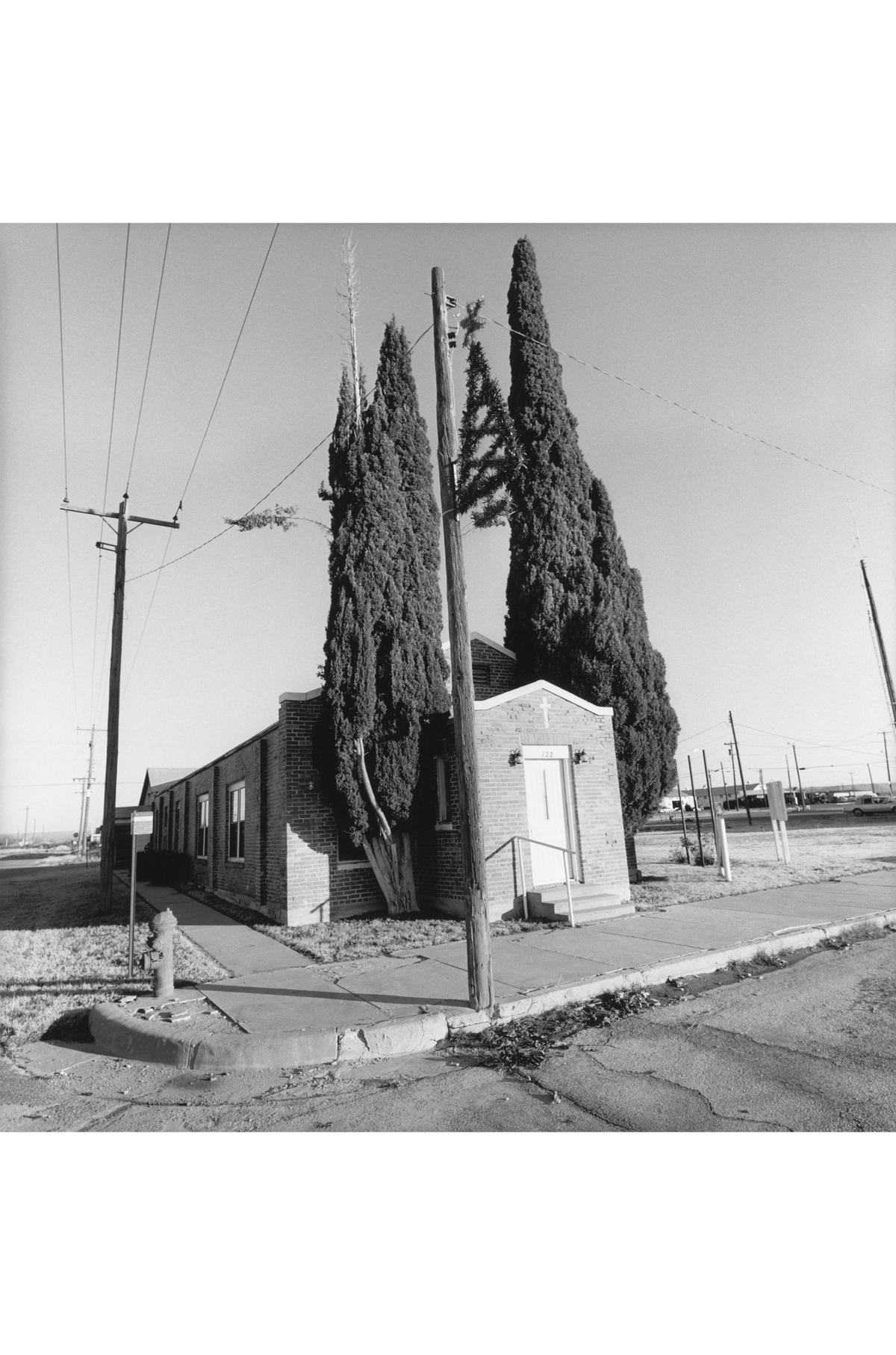
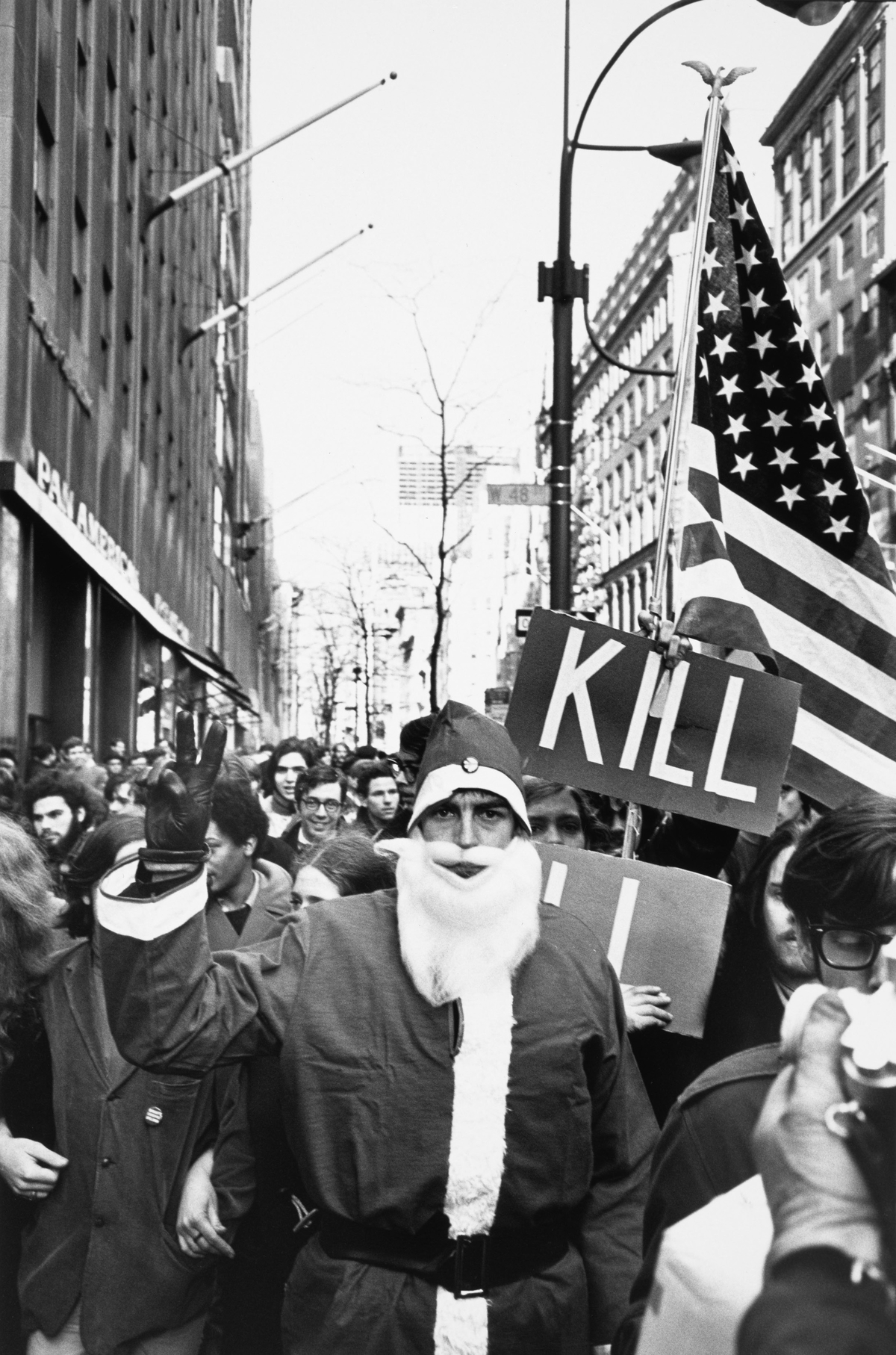
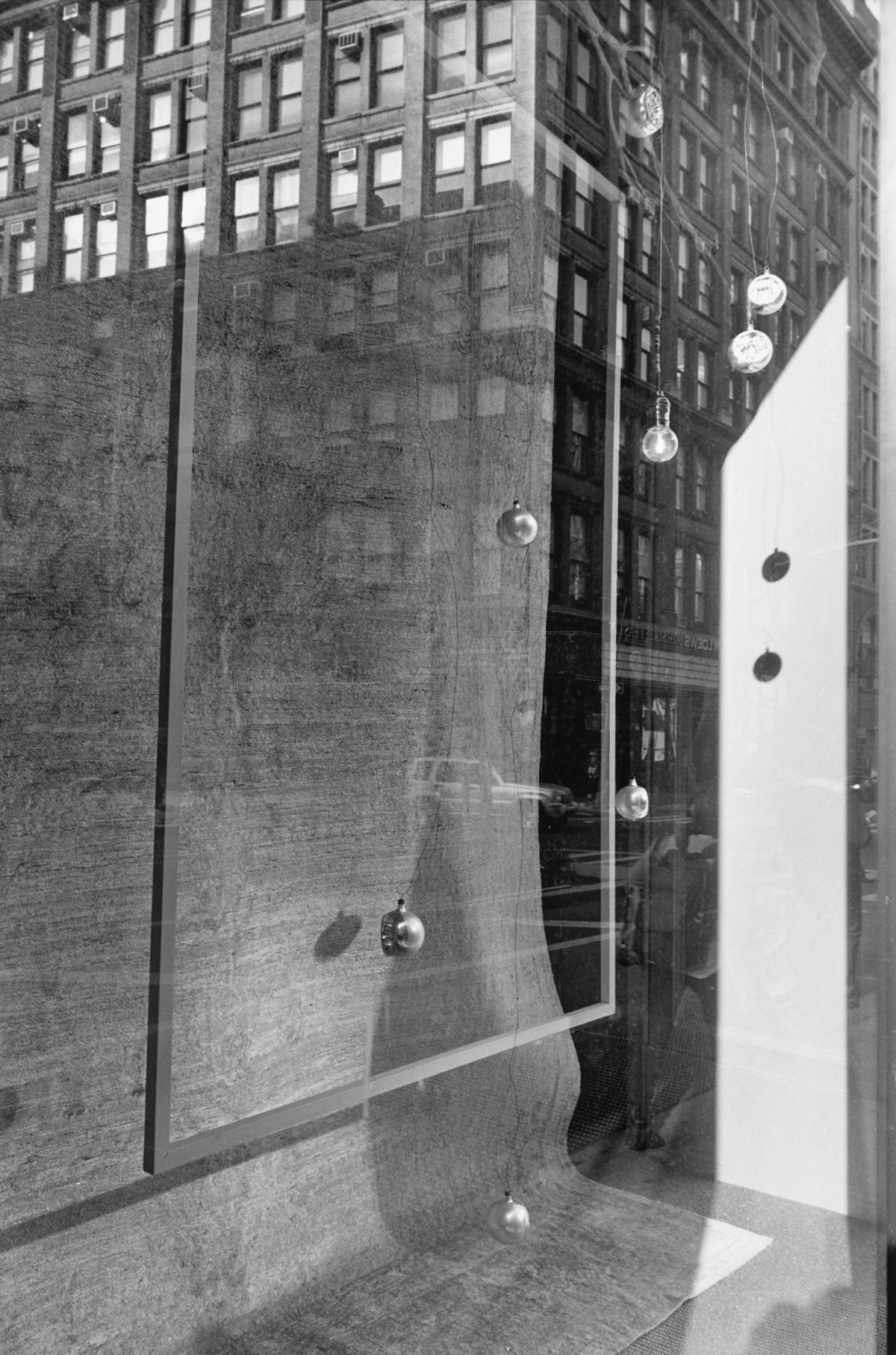
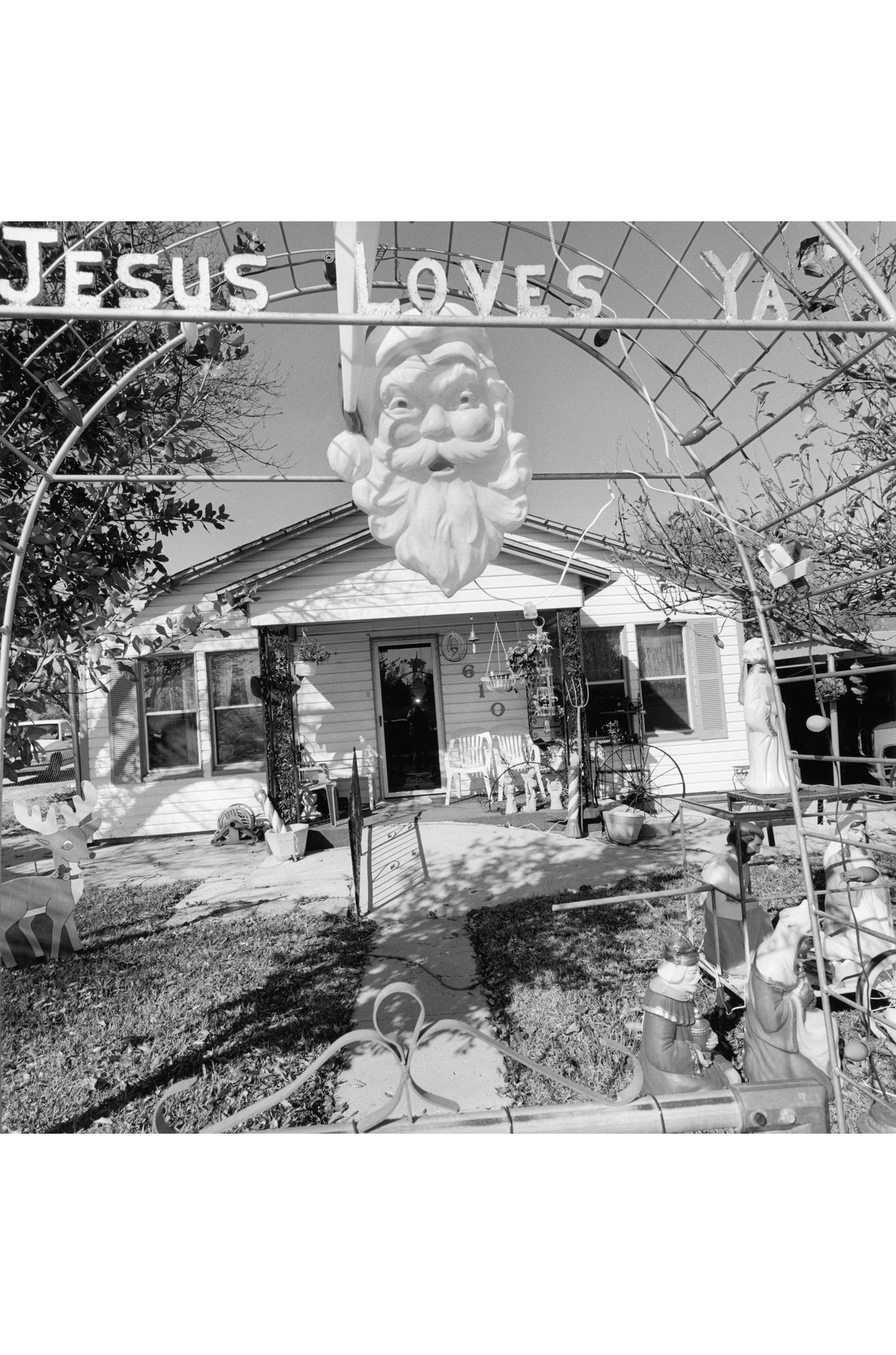
“Photographs are so loaded with information,” Lee Friedlander has said, “you get both the tree and the forest.” Media-shy and sparing with explanations, the American photographer was born in 1934 in Aberdeen, Washington, and began snapping pictures at 14. Fractured reflections, layered signage, fences, storefront windows, doors, roads, cars, front lawns, and incidental figures—Friedlander’s signature subjects, sometimes referred to as “social landscapes,” are most often shot in black and white with a 35-mm. Leica. He lets the images do the talking.
The same philosophy extends to his books, including a particularly festive one devoted to yuletide America, the just published Lee Friedlander: Christmas. “Whether or not you’ve celebrated Christmas at any point over the past seventy years—roughly the period covered by these photographs—you have no doubt encountered some of the things Lee Friedlander shows us here,” the photographer Peter Kayafas, who was mentored by the master, writes in the book’s afterword.