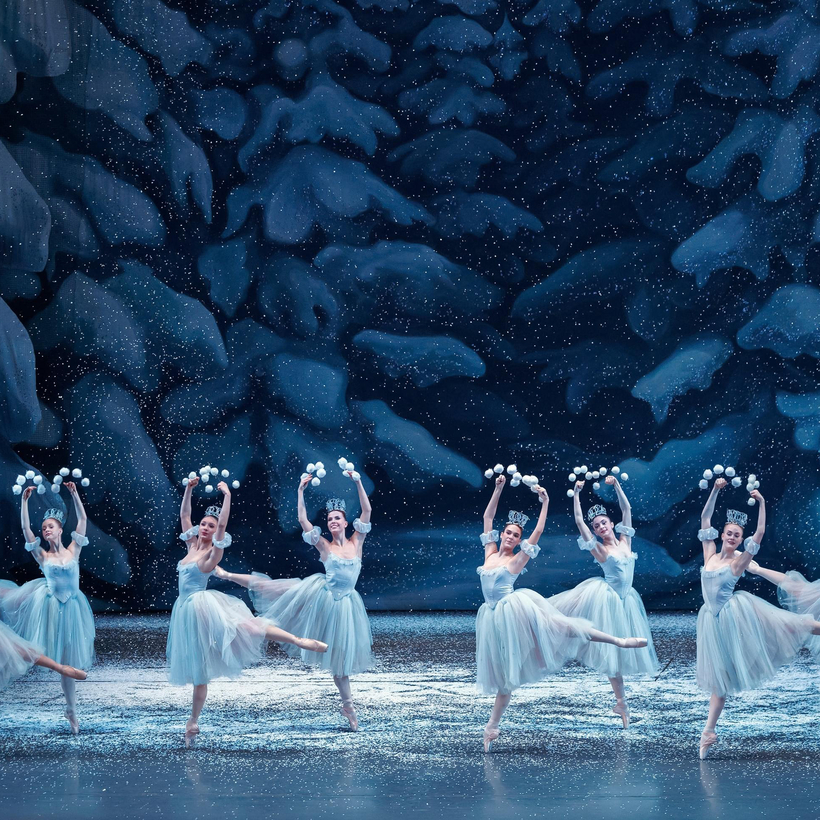
Swan Lake may be the work that spells “ballet” to most people, but it is The Nutcracker that keeps those swans—and the art form—financially afloat. New York City Ballet’s trademarked gold standard, George Balanchine’s The Nutcracker®, has run every December since its premiere, in 1954, barring one coronavirus gap year. It is through The Nutcracker, set to Pyotr Ilyich Tchaikovsky’s beloved score, that most children encounter classical dance for the first time. For many dancers—myself included—the dream of one day joining a ballet company took root at a Nutcracker performance. Although the professionals complain throughout each grueling annual run, most regard this holiday tradition—and cash cow—with affection.
It was only after I retired from the stage, some thousand Nutcracker shows later, that I realized the ballet tapped into the season’s spirituality as much as its economics. Sitting in the audience during the Mozartian overture for the first time in decades, I contemplated Rouben Ter-Arutunian’s painted scrim of a rosy angel reaching out to a shooting star. It hadn’t occurred to me before that the second act begins with a live-action iteration of this tableau.