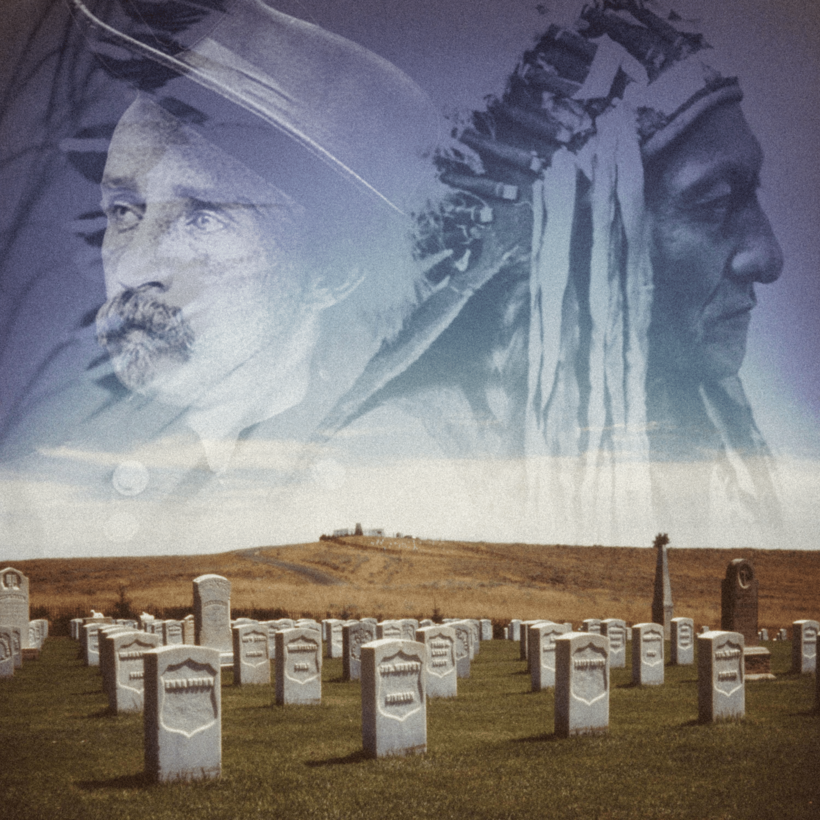
When Lieutenant Colonel George Armstrong Custer and more than 210 members of his Seventh Cavalry died at the Battle of the Little Bighorn 150 years ago, it was a stunning national tragedy. The “Boy General,” as he was known because of his Civil War exploits, was by June 1876 the most famous and successful commanding officer on the frontier. George, with his flowing locks, and his beautiful wife, Elizabeth Bacon “Libbie” Custer, were a glamorous couple fawned over by a worshipful press. Some prominent politicians at the time hoped that Custer would run for president, just as soon as he returned from Montana painted in glory.
Instead, his command was painted in blood at the end of that sizzling-hot Sunday, June 25. Many appalled Americans could not believe that not only had the dashing Custer been defeated, but he and five companies of his men had been wiped out by Sitting Bull, Crazy Horse, and their Sioux-Cheyenne coalition.