In 2010, as the Great Recession ravaged the local economy, San Francisco was desperate for jobs.
With its manufacturing industries long since departed for cheaper locales, the city by the bay had grown overly dependent on financial services, real estate, and tourism. Unemployment was now topping 10 percent, and the local Internet industry, which first emerged in the South of Market district more than a decade earlier, was still quite small. The big technology companies at the time—Intel, Apple, the fast-growing Google—were located an hour south in suburban Silicon Valley.
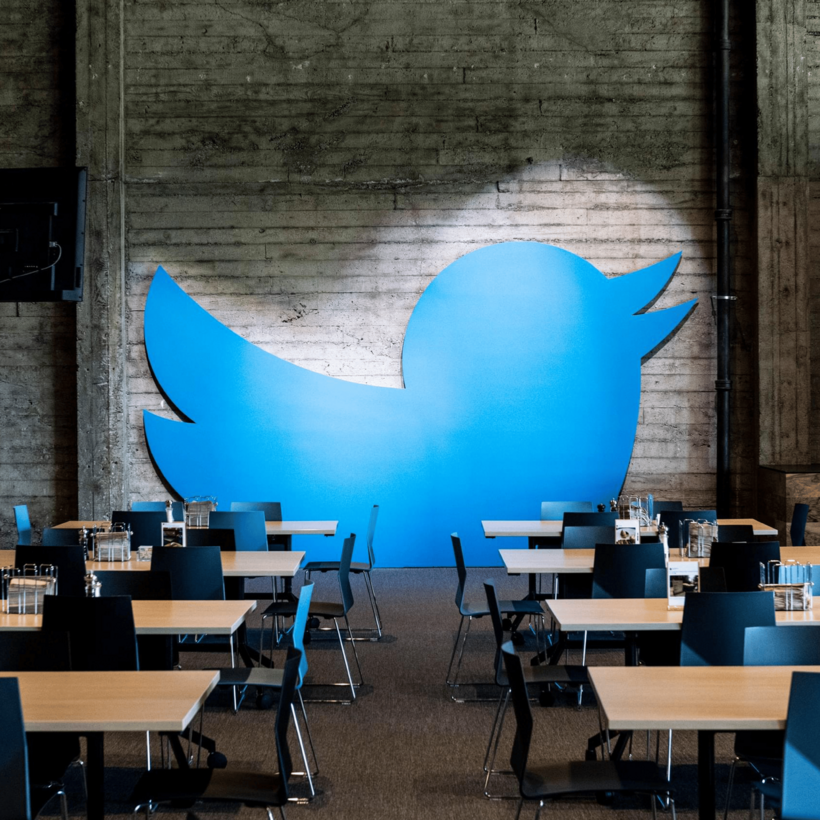
There was, however, one very fast-growing, high-profile Internet company—a three-year-old start-up called Twitter—that was creating a lot of jobs, and looked like it could be a catalyst for the city’s nascent tech industry. The social-media platform had a change-the-world mission, built on free expression and connection, that seemed made for San Francisco. C.E.O. Evan Williams wanted to change the city, too: the company was eyeing as its new headquarters a massive but run-down Art Deco–style building in the desolate, central neighborhood called Mid-Market.
The building was owned by a colorful New York developer named Alvin Dworman, founder of the ADCO Group, who’d made his fortune constructing high-rise apartments. The Mid-Market building, though, was something different: a cavernous, 12-story structure occupying an entire block that housed furniture and design showrooms and twice-yearly trade fairs.
Completed in 1937, the Western Furniture Exchange and Merchandise Mart, as it was formally known, was bought by Dworman in the 1960s and had carried on profitably even as the neighborhood deteriorated over the years into a grim tableau of homelessness, drug dealing, and poverty. But the jig was finally up in the early 2000s, when trade shows began departing for a competing furniture-showroom complex in Las Vegas. In 2008, Dworman decided to convert the property to retail and office space. Twitter would be a perfect first tenant.
There was a problem, though: San Francisco had a payroll tax, which cost all but the smallest companies 1.5 percent of their total payroll expenses. Twitter was moving toward a public stock offering that would shower money on top executives and employees, and the payroll tax, which no other Northern California cities imposed, would put the company on the hook for tens of millions of dollars for the I.P.O. gains alone.
If it was going to move to Mid-Market, Twitter wanted tax relief. Otherwise, company executives insisted, they would have to leave town. The cities of South San Francisco and Brisbane were only a few minutes away on Highway 101 and had much more hospitable tax policies.
Dworman, having learned the intricacies of how things worked in San Francisco, reached out to his buddy Willie Brown, the former mayor and State Assembly speaker who was now the most powerful lobbyist in town. They’d met decades earlier and hit it off—Brown even lived in one of Dworman’s buildings for a time—and he called the New Yorker his “best friend.”
Soon Brown convened a gathering that included Mayor Gavin Newsom, future mayor Ed Lee, a top Twitter executive, and a few others, and they hammered out a temporary payroll-tax break for any company that moved to Mid-Market. It would forever be referred to as “the Twitter tax break.”
But there was yet another twist. In March of 2011, just before the tax break was formally approved by the San Francisco Board of Supervisors—and to the surprise of everyone involved—Dworman abruptly sold the building to Shorenstein Properties, a San Francisco–based commercial-real-estate developer, whose patriarch, Walter Shorenstein, was a legendary political power player. (In 1991, he gave Newsom a job as a janitor in one of his buildings.) Dworman got $120 million plus a piece of any future profits. Shorenstein put $300 million into renovations. After the social-media company moved in the next year, it would become known as “the Twitter building.”
(Four years later, in 2015, Shorenstein sold 98 percent of its interest to JPMorgan for $900 million. It was among the biggest wins in the company’s history.)
The Twitter tax break ultimately cost the city about $70 million in forgone revenue before the policy expired in May of 2019. It did, in fact, bring a lot of new jobs and investment to Mid-Market—but most of those gains were reversed when companies shut down their offices during the pandemic, and never came back. In 2022, Twitter was acquired by Elon Musk, who stripped the company down, renamed it X, and relocated its headquarters to Texas.
Was it all worth it? The smartphone boom that was beginning just as the Twitter deal was being negotiated brought about an explosion of jobs that would have happened with or without the tax break. Twitter might not have followed through with its threat to move. For the tax’s critics, it was all a sad symbol of the city’s favoring corporate profits over people.
The tax break may not have been very costly for a town whose annual budget is almost $17 billion, and Mid-Market at least has some upgraded buildings now. Yet it rankles that the beneficiaries of the tax break, especially Twitter, ultimately took the money and ran. The struggling residents and remaining businesses of the neighborhood, alas, have nowhere to go.
Jonathan Weber is an editor at large at Newcomer and the former editor of the San Francisco Standard, the Bay Citizen, and the Industry Standard