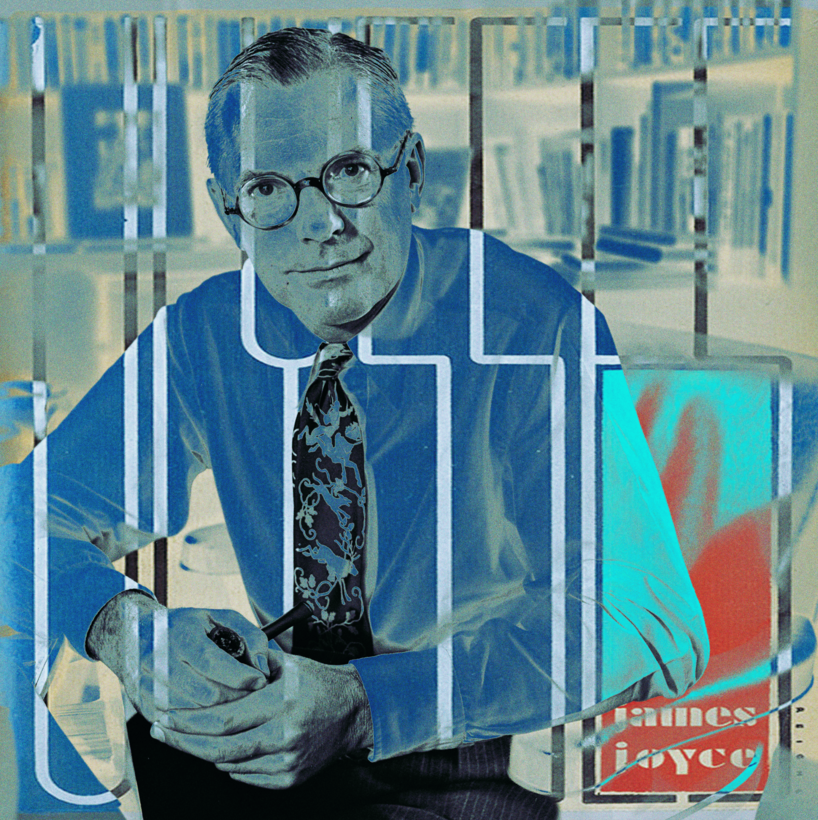
“[Bennett] Cerf was a great exaggerator.”

Arthur Gelb, a former managing editor at The New York Times and biographer of Eugene O’Neill, thought he was helping a neophyte (me) with this revelation when I was a year or so into writing Nothing Random, my biography centered on the life of Bennett Cerf, the co-founder of Random House and famed publisher of O’Neill, Truman Capote, Gertrude Stein, and so many other canonical authors. But it wasn’t quite the ta-da! Gelb had imagined. I’d already discovered that Bennett was an unreliable narrator of his own life when I did his genealogy and learned that the consummate New Yorker who’d boasted that his grandparents had all been born on the island of Manhattan knew full well that three of them were immigrants. To be fair, he didn’t exactly hide his proclivity for narrative embroidery: Bennett always maintained that, for him, the story was paramount (not a bad thing for a publisher, but not great for a biographer dependent on facts).

And so, when I began work on a keystone chapter about how thirtysomething Bennett and lifelong business partner Donald Klopfer set about mounting the landmark court case that allowed James Joyce’s previously banned Ulysses to be published legally in the United States—the signal achievement that would catapult Random House onto the literary map—my story-embroidering antennae were primed. Still, so many articles and books had been written about Ulysses, I could have been forgiven for assuming all the puzzle pieces were already in place. Certainly, I couldn’t imagine I’d find someone possessing unshared papers and memories that would add a new, even stronger New York slant to the story.

Since the 1910s, publishers had tried to bring out the novel in serial and book form in America. However, their magazines (homegrown issues of Margaret Anderson and Jane Heap’s The Little Review printing Joyce chapters) and books (an expatriate American bookseller, Sylvia Beach, had founded Shakespeare & Co. in Paris in 1919 and had succeeded in publishing Ulysses there in 1922) were confiscated, burned, and banned as obscene under the Comstock Act of 1873. Some thousands of copies had managed to slip through, hidden in trunks by travelers returning from Europe, or sold under the table by pirates who’d copied Beach’s edition, but U.S. publishers had been warned they’d face arrest and jail if they tried to bring out the book openly. Joyce, the self-exiled Irishman living in Paris, was earning nothing from pirated copies and desperately wanted the royalties that legitimacy would confer.

By the late 1920s, the censorship landscape had begun to shift. A canny New York lawyer, Morris Ernst, was winning court cases allowing books like Radclyffe Hall’s novel of lesbian love, The Well of Loneliness, to be published legally. In 1931, Ben Huebsch, whose eponymous publishing firm had brought out Joyce’s Dubliners and A Portrait of the Artist as a Young Man way back in 1916, and had now merged with Viking Press, considered mounting a court case to free Ulysses. So did others, including the much less experienced Bennett Cerf and Donald Klopfer.

After attending college at Columbia, Bennett had spent several years at a Wall Street brokerage house before going to work for the publisher Horace Liveright, a great defender of the First Amendment (and whose firm was the first to publish Ernest Hemingway’s and William Faulkner’s fiction). In 1925, Bennett and best friend Donald bought Liveright’s crown jewel, the Modern Library reprint series, and set up shop on their own. After reorganizing the series, in 1927 they founded Random House to publish new books. The Modern Library had purchased reprint rights to the two Joyce books from Huebsch, and had handled them well. Still, Bennett and Donald recognized that given Huebsch’s long history with Joyce, he had first crack, and proposed that should he succeed in legally publishing Ulysses, they’d license reprint rights for the Modern Library in the future.

Ernst and Huebsch met. Ernst very much wanted to go to court to free Ulysses. Huebsch made an offer to Joyce, but for various reasons, talks did not proceed, and Huebsch passed the torch to Bennett and Donald, who made their own proposal. However, Joyce himself already had a pair of transatlantic literary agents, the Pinker brothers, who managed to scare up a rival proposal, from William Morrow, a New York firm that had been started a year before Random House. The Pinkers favored Morrow likely for their own financial reasons, and also, perhaps, because it was a WASP firm, whereas Bennett and Donald were Jewish. At that time in the United States, anti-Semitism was widespread. Ernst would fight the case on behalf of whichever firm’s proposal was favored by Joyce. Both proposals were pretty similar. How was it that Random House succeeded in persuading Joyce to accept their offer, rather than Morrow’s?

Fast-forward to February 1934, shortly after the Random House edition of Ulysses was published in the U.S. That month, an article by Bennett appeared in a literary magazine, Contempo, detailing the story behind the book’s publication. Bennett mentioned two “remarkable” figures ensconced in a brokerage office downtown—one being Irving Sartorius, the other, Robert Kastor. The latter Bennett took pains to describe as “so shy that few outsiders have heard his name … and is said to possess one of the great fortunes,” et cetera, et cetera. In December 1931, Bennett wrote, he was summoned by Kastor, who was leaving for Europe and wanted to know if Bennett would like him to tell Joyce in person that he and Donald were ready to “take up the battle” for Ulysses.

My story-embroidering antennae began to buzz. Sartorius was a name I recognized immediately: he headed the eponymous Wall Street firm that Bennett had worked at before getting into publishing, and where he still had financial connections. Kastor, also a partner there, was a name I hadn’t encountered from Bennett’s days at the brokerage, but I soon recalled that Joyce’s son, Giorgio, had married a woman named Helen Kastor Fleischman, a wealthy New York–born divorcée, 11 years his senior. I began to do searches on Robert Kastor in the archival New York Times and also on Anywho, an online phone book. I found an address and a phone number—this was in 2007, by which time I was five years into a book that would take 23 years to finish. When I called the number, an elderly lady answered. I explained who I was, and she told me she was Kastor’s daughter. She had letters and telegrams that she thought might interest me.

Reader, I went to see her. We talked, and she also told me about relatives who would speak with me, too. She let me study the papers she had, which made it very clear that her father and her aunt Helen had worked to persuade Joyce and his son that, as Kastor would write in one letter, Joyce’s “best interest” lay with Bennett Cerf. By the way, Kastor had not been “possessed of a great fortune,” nor was he shy. His relatives assured me he was “gregarious,” even “stentorian.” Bennett liked to joke and play and exaggerate, and my sensitivity to that had told me something more important was afoot in this particular story. Without the persuasive involvement of Robert Kastor and Helen Kastor Joyce—who at a crucial juncture in the negotiations gave her father-in-law the much-desired grandson he’d longed for—would Random House, even with Bennett’s own persuasive powers and smarts, have won the day?

Ninety-two years ago, on December 6, 1933, when Judge John Munro Woolsey finally liberated Ulysses in a New York courtroom, its author was Irish. But the lawyers, publishers, and essential go-betweens were New Yorkers.

Gayle Feldman is a New York City-based author and books journalist