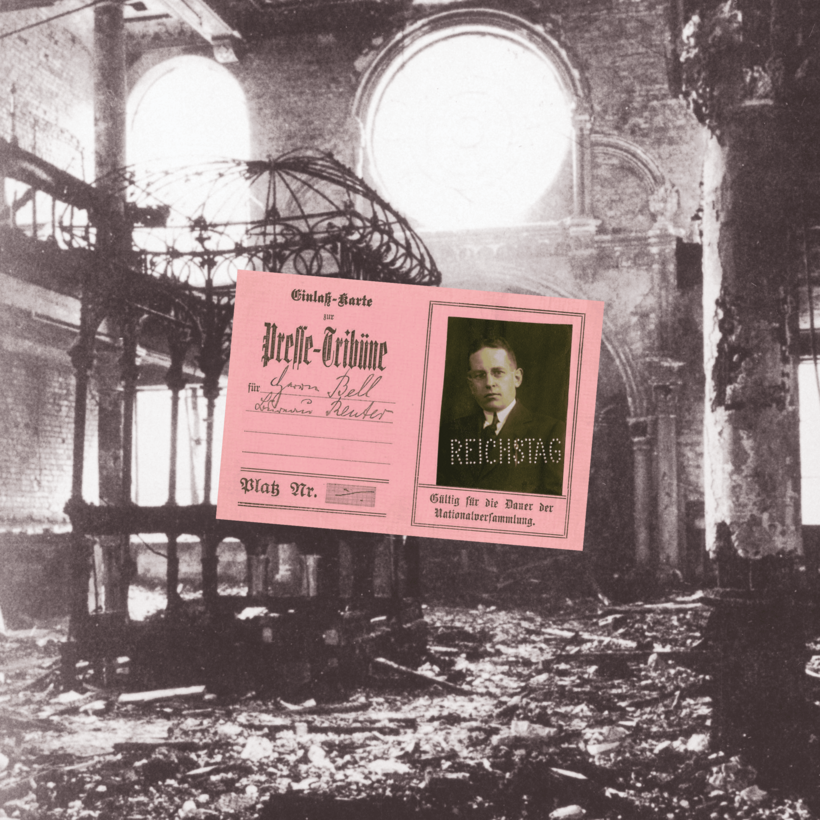
In 2008, at the University of Göttingen, in Germany, I came across a century-old dissertation written by Winthrop Bell. I instantly knew the unpublished manuscript, which examined the thoughts of America’s then most prominent philosopher, Josiah Royce, was of significant value to scholars of philosophy, pragmatism, and phenomenology. The professor directing the student’s dissertation was Edmund Husserl, who was becoming Germany’s most important philosopher.
Strangely, the work was missing two pages. The lost part, I learned, was in a classified archive in Canada, at Mount Allison University. Intrigued, I requested access to the archive. There, I not only found the missing pages and a treasure trove of philosophical documents, but was also astounded to learn that the mysterious author was a spy who issued early warnings about Adolf Hitler. In fact, in 1919, Bell was the first person to warn about the Nazis’ plans for World War II, 20 years before the conflict began.