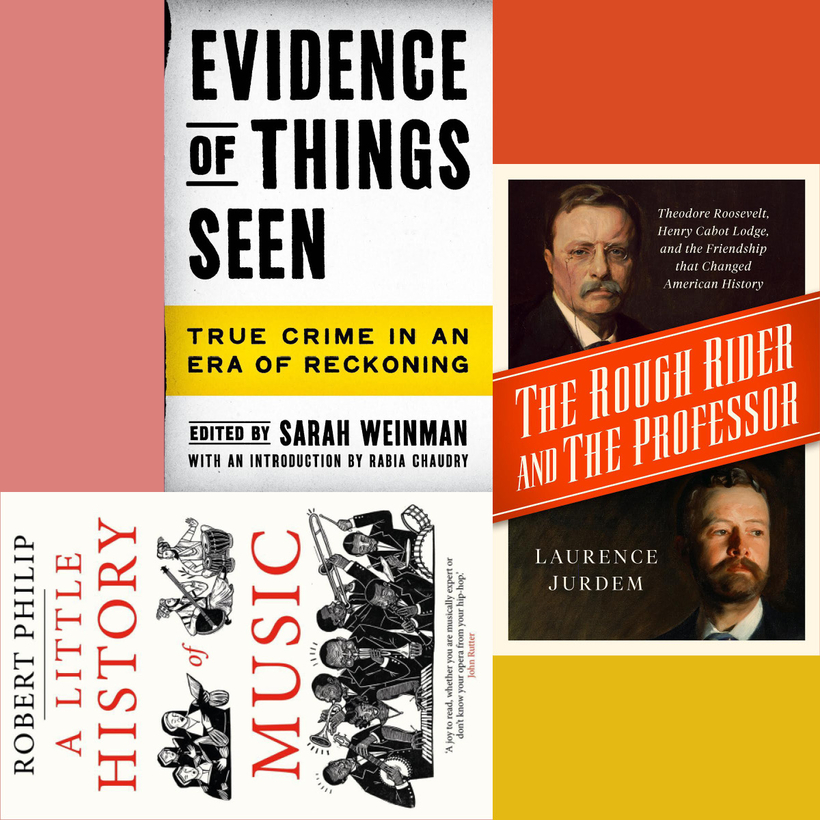
Few stories are as popular as true crime, whether the tales are told in books, documentaries, movies, podcasts, or (surely this will exist, if it does not already) tweets. How much one can play with the truth in these narratives is constantly debated, and so is whether our obsession with the genre is unhealthy. Sarah Weinman, the highly acclaimed writer of true-crime stories and the crime columnist for The New York Times Book Review, has put together a powerful anthology that illustrates how true-crime stories can, in fact, expose injustice and bring about social change. Ranging from how cases of missing and murdered Indigenous women and girls are shockingly under-investigated to how cops coerce bogus confessions, Weinman’s selected stories make a most powerful case that our obsession often has a moral purpose.
We all know the improbable rise of Teddy Roosevelt to the White House, an extraordinary path even before the assassination of William McKinley put the Rough Rider into the Oval Office, but rarely appreciated nowadays is just how much Roosevelt was aided and shaped by Henry Cabot Lodge, the powerful senator from Massachusetts who found common cause with his protégé in championing American exceptionalism. Their friendship suffered when Roosevelt became president and pursued policies more radical than Lodge could tolerate, but such is politics that they grew close again, thanks to their mutual hatred of Woodrow Wilson. Laurence Jurdem does a splendid job of showing how these two patricians shaped their times—and each other.