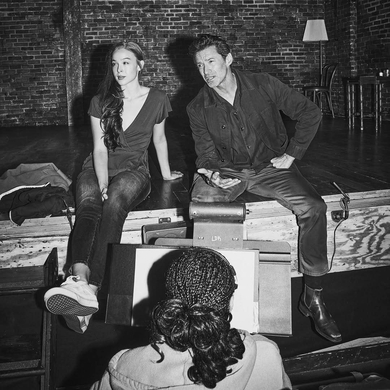
To rhyme or not to rhyme? In Molière, that’s an either-or question. Some of his masterpieces (The Would-Be Gentleman, Don Juan, The Imaginary Invalid) are composed in prose that just talks. Others (The Misanthrope, The School for Wives, The Learned Ladies) prance along in spiffy couplets that snap, crackle, and pop. What Molière did not do was mix modes within a single script. For Tartuffe, that wicked takedown of religious flimflammery and those who fall for it, his medium was the traditional French alexandrine, with all the prosodic and metrical polish that implies. For generations of Americans, Richard Wilbur’s rococo rhyming translation, introduced in Denver in 1963, is our Molière. But time does march on. Right now, Lucas Hnath’s new adaptation for New York Theatre Workshop is delivering a kind of snarkily colloquial American free verse of his own devising, with crisscrossed incidental rhymes that tintinnabulate over an ever shifting beat. Known for such motley, whip-smart entertainments as The Christians, Red Speedo, A Public Reading of an Unproduced Screenplay About the Death of Walt Disney, Hillary and Clinton, and A Doll’s House, Part 2, Hnath(pronounced “nayth”) has also gone in for some discreet script-doctoring while he was at it, filling in blanks in ways his Molière cast will surely appreciate. In the lopsided bromance that drives the plot, David Cross plays Orgon, head of a well-to-do household at sixes and sevens. Spending the first two of the play’s five acts in his dressing room, Matthew Broderick quickly makes up for lost time as Tartuffe, in whose reptilian mouth butter would not melt, even as he schemes to relieve Orgon of his property, his marriageable daughter, and his second trophy wife. —Matthew Gurewitsch
Arts Intel Report
Tartuffe
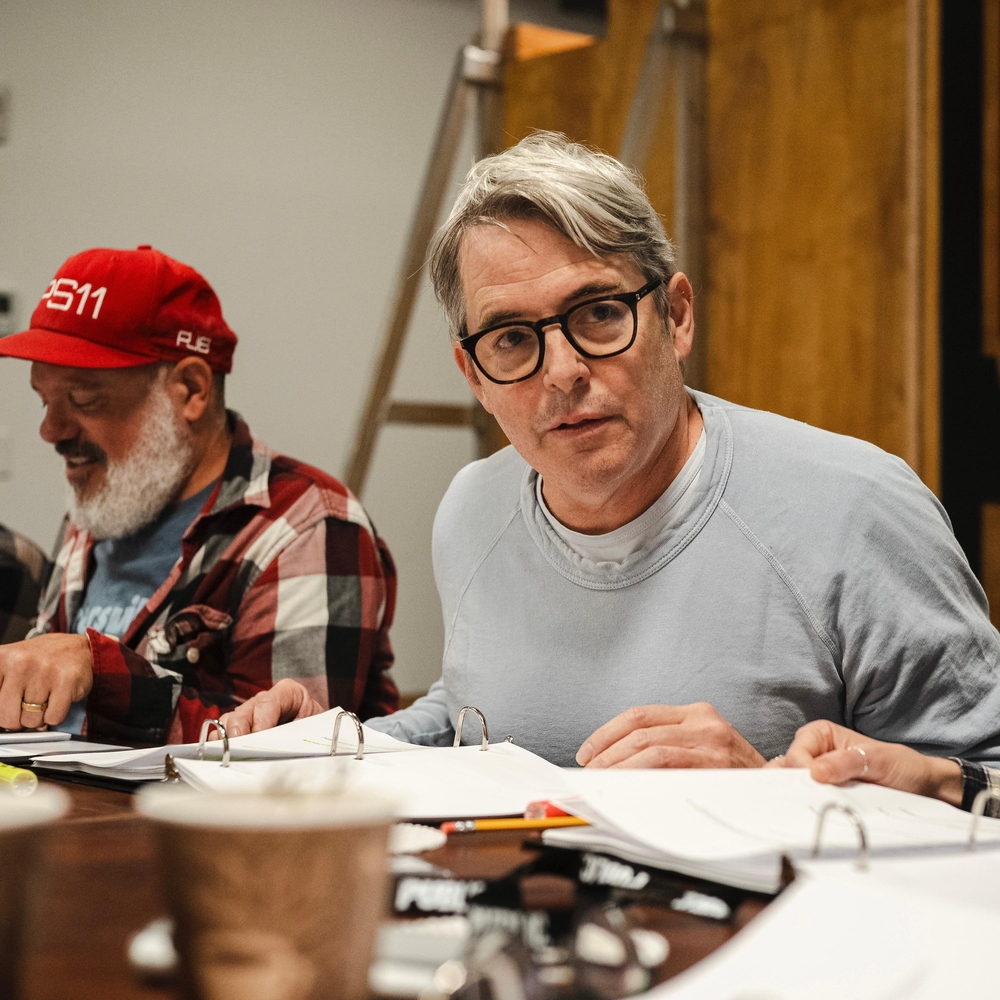
David Cross and Matthew Broderick in rehearsal for Tartuffe at New York Theatre Workshop.